News Broadcasting
India asks J&K to stop illegal channels, official unavailable

MUMBAI: The Indian government has asked the administration in Jammu and Kashmir to take stern action against private cable operators airing illegal Pakistani and Saudi Arabian channels. Union minister M. Venkaiah Naidu has reportedly directed the J&K government to submit a report at the earliest.
www.indiantelevision.com could not speak to the director (BP& L) in the information and broadcasting ministry Amit Katoch on the concrete plan of action in spite of several attempts last Friday as his assistant said he was busy.
Jammu and Kashmir operators reportedly broadcast several channels illegally such as Ary QTV, Saudi Sunnah, Karbala, Saudi Quran, Al Arabia, Paigham, Hidayat, Sehar, Hadi TV, Sehar, Noor, Madani, Bethat, Ahlibat, Falak, Dawn News, Geo News and Ary News. A senior official in New Delhi reportedly said that the Kashmir administration had been asked to file an ATR (action-taken report).

While the Pakistani channels show anti-India programmes, those from Saudi preach Wahhabism, a concept of the Sharia law including the banned Peace TV headed by Dr Zakir Naik. A majority of around 5,000 cable operators in the Valley reportedly run these channels. The minister of state for information and broadcasting Rajyavardhan Rathore reportedly said that he had asked the chief secretary Bharat Bhushan Vyas to submit a compliance report.
While the government of India has banned these channels, the operators in Kashmir cite the Ranbir Penal Code, a separate law in Kashmir, according to which the ban is not applicable. Reportedly, the I&B ministry meanwhile directed local cable operators (LCOs), multi-system operators (MSOs) and direct-to-home (DTH) platforms to stop the telecast of illegal channels.
Also Read:
Kashmir cable TV operators ordered to take off five TV channels
Ravi Shankar Prasad plans to create a digital ecosystem


News Broadcasting
CNN-News18 to host Fury in the Gulf conclave on West Asia crisis
Three-hour summit to unpack geopolitical fallout and impact on India
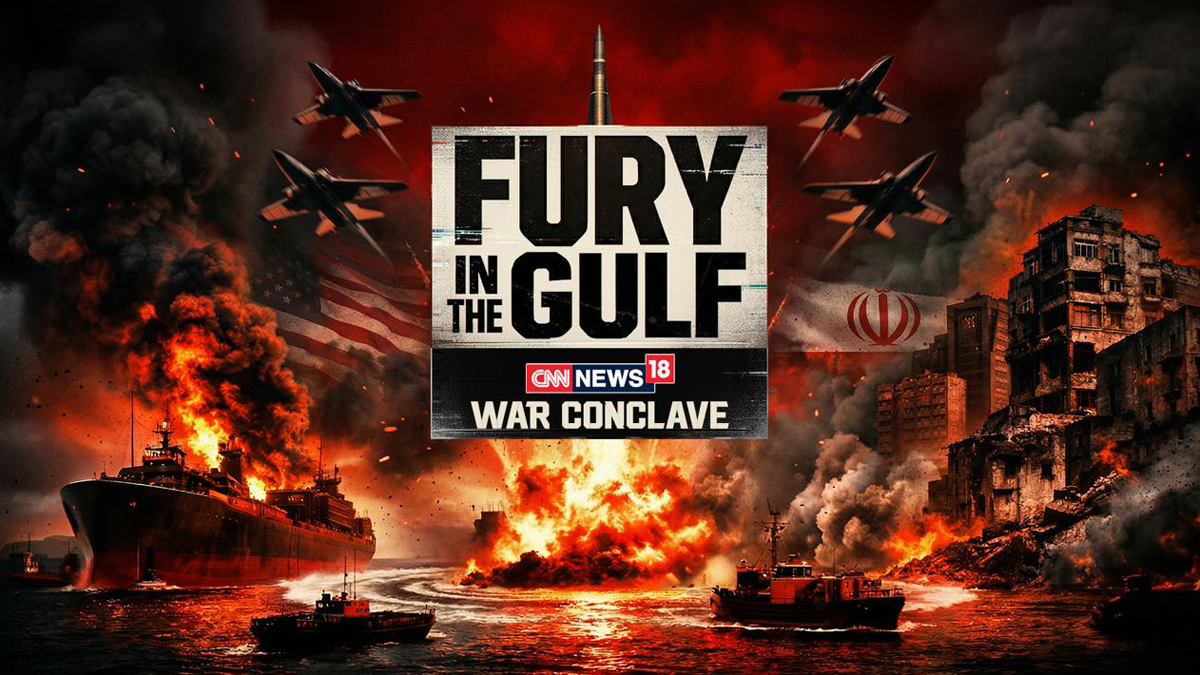
MUMBAI: CNN-News18 is set to host a special three-hour broadcast, Fury in the Gulf – War Conclave, on April 7, aiming to decode the escalating West Asia crisis and its far-reaching implications for India.
Scheduled from 4:00 PM to 7:00 PM, the conclave comes at a time when tensions between Iran and the United States are reshaping global geopolitics and triggering economic uncertainty. With India’s deep energy ties, trade links and large diaspora in the Gulf, the developments carry significant domestic relevance.
Built around the theme ‘Conflict, Consequences, and The Future,’ the programme will feature six curated sessions combining one-on-one interviews and panel discussions. The focus is to cut through the clutter and offer viewers a clearer understanding of the fast-evolving situation.
Key sessions include ‘Diplomacy in Times of War’ featuring Shashi Tharoor, and ‘World After the Iran Conflict’ with voices such as Ram Madhav, Reuven Azar, representatives from the European Union and the Iranian Deputy Envoy. Another session titled ‘Another Dunkirk?’ will bring together K. J. S. Dhillon and Jitin Prasada among others.
CNN-News18 editorial affairs director Rahul Shivshankar said, “In times of war, clarity becomes the most powerful tool. Fury in the Gulf – War Conclave brings together credible voices to address the questions and confusion that arise amid an overwhelming influx of information.”
He added that the initiative is aimed at delivering “facts, perspective, and insight” at a time when misinformation can easily cloud public understanding.
Echoing the sentiment, CNN-News18 CEO– English and business news Smriti Mehra said the conflict marks a defining global moment, with consequences that extend well beyond the region. She noted that the conclave seeks to present the crisis with “depth, nuance and responsibility” so audiences can better grasp its real-world impact.
As geopolitical tensions continue to dominate headlines, the conclave positions itself as an attempt to bring order to the noise, offering viewers a structured, insight-led look at a complex and rapidly shifting global situation.






