News Broadcasting
Import duty on foreign content in effect in Sri Lanka; local broadcasters hit


MUMBAI: In a conscious move to boost the island nation’s slipping local entertainment industry, the Sri Lankan government has introduced strict finance regulations on foreign content.
As per the regulations made by the president under section 8 of the Finance Act, No.11 of 2006, effective 16 July, all imports of Bollywood and Hollywood movies and television content are taxed in the country.
As per the new regulation, for every 30 minutes or part there of tele-drama or film if dubbed in the Sri Lankan native language Sinhala or Tamil will bear an import duty of Rs 90,000. For every 30 minutes or part there of tele-drama or film not falling within the above category will have to pay Rs 75,000 in tax.

The media tax also covers television commercials made abroad for local companies. This regulation mainly targets local firms, which have been outsourcing their promotional work to Indian advertising firms. Commercials are being charged Rs 1,000,000. This is for any number of telecasts, during the period of one year, commencing on the date of issue of the Certificate of Clearance.
Programmes with Tamil language content are exempt from the tax as Sri Lanka produces very little Tamil programming. The tax would also not apply to documentaries, educational dramas, movies screened in theatres and children’s entertainment.
News wire AFP has quoted market watchers as saying that, the local television stations air more than 1,500 movies, mainly English, Tamil and Hindu, each year. English content on local stations is limited to about four movies, four dramas, music programmes, adventure series, cartoons and a few sitcoms per week. Though native Hindi speakers are virtually non-existent in Sri Lanka, subtitled programmes made in Bollywood are hugely popular on local television and easily attract sponsors — unlike local productions which hardly draw any viewers.
President Mahinda Rajapakse, who also handles the finance portfolio, has been quoted in media reports as saying that, the money would be used to develop the local film industry. According to industry sources indiantelevision.com spoke to, the government move would put a virtual ban on the import of foreign content.
“The government wants to nurture the local entertainment industry. At present, foreign content enjoys a clear majority in local channels. For example, out of the 57 films aired on Sri Lankan TV each week, nearly 50 are foreign language ones. This is a matter of grave concern for the government as well as the local industry,” says a Tamil Nadu-based television producer, who put his plans to sell content to Sri Lankan TV on hold due to the new regulation.
The local Sri Lankan television players agree that the business will take a hit due to the almost “impossible” taxes. They are not buying Rajapakse’s contention that the move would boost the local entertainment industry. “The only way the local industry can achieve growth is by learning from the foreign players. Before competing with the foreign players, it needs to get itself updated with the global standards of production and storytelling. Now, if the government thinks otherwise, it will only narrow down the opportunities of growth for the local broadcast industry,” states Maharaja Television (MTV) CEO Mohan Nair.
From the Indian perspective, the new regulation will see the demand for Indian content hitting a low volume.
The ruling has forced Zee TV, which was about to kick off a content syndication deal with a Sri Lankan TV broadcaster, to stall the process. “We were about to sell a television soap in Sri Lanka. However, now we are told by our client in Sri Lanka that there was a virtual ban in effect in the country, and the deal has been delayed,” says a Zee source close to the developments.
However, Star India sounds least concerned by the developments. “We had completed our deals for certain television soaps such as Kahani Ghar Ghar Ki and Kasauti Zindagi Kay two years back. It will take three more years for the Sri Lankan versions of these soaps to catch up with the present storyline. So, at present, this is not a matter of concern for us,” says Star India EVP Marketing & Communication Ajay Vidyasagar.
MTV’s Nair argues that the local broadcasters have been making attempts to nurture local talent by devoting a certain portion of their content to locally produced shows. In the case of MTV, the broadcaster has two joint ventures in effect with the Chennai-headquartered Radaan Mediaworks and the Mumbai-based Sri Adhikari Brothers Television Network Ltd (SABTNL). Vasudha, a Sinhalese soap produced by the MTV-Radaan venture Talent Factory, has been on air since the last one year. Talent Factory is now all set to launch a new soap Kaavya in August, according to Nair.
Speaking to indiantelevision.com, SABTNL vice chairman Markand Adhikari said the company was not affected by the new regulation, since it was producing only local content. According to Adhikari, SABTNL’s JV with MTV, Broadcast Media, is presently telecasting five hours of locally produced content per week. “We are planning to take it up to seven hours,” Adhikari says.
Nair meanwhile, is hopeful that the government will show the inclination to understand the real picture. “At present we are weighing options for our future course of action. We haven’t called off any foreign deals as yet. Both Indian and American media companies have taken up this issue and they are supporting us in this cause. We are hopeful that, the government would understand the situation and give us justice,” says Nair.





News Broadcasting
CNN-News18 to host Fury in the Gulf conclave on West Asia crisis
Three-hour summit to unpack geopolitical fallout and impact on India
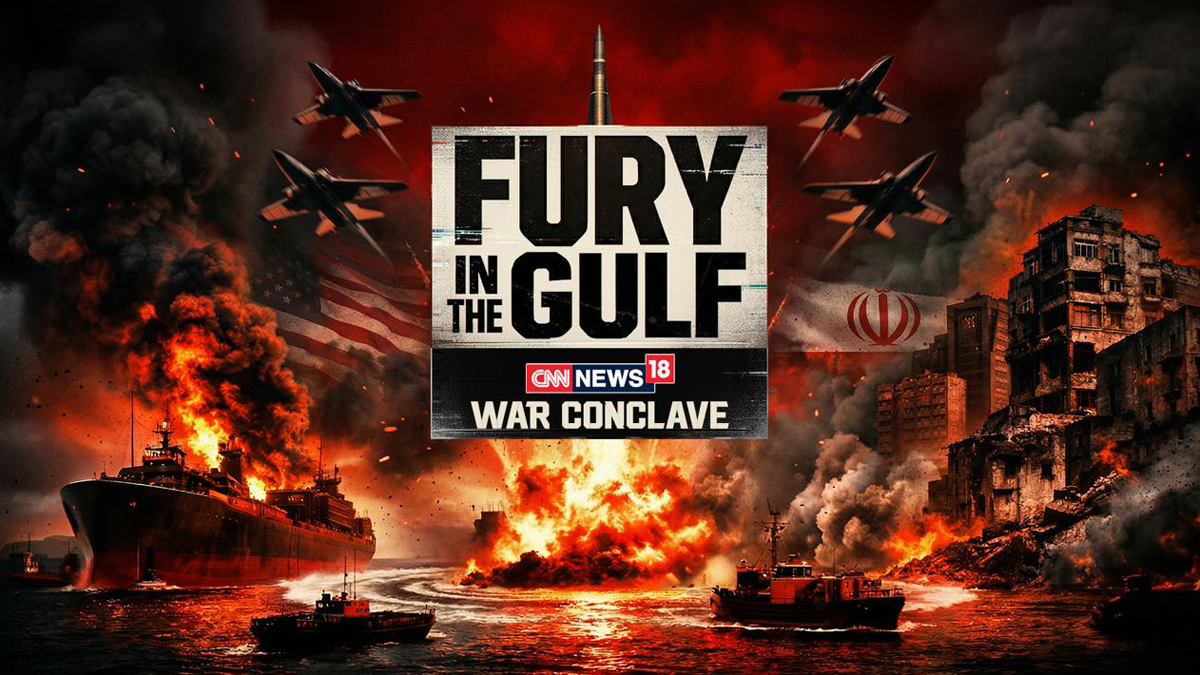
MUMBAI: CNN-News18 is set to host a special three-hour broadcast, Fury in the Gulf – War Conclave, on April 7, aiming to decode the escalating West Asia crisis and its far-reaching implications for India.
Scheduled from 4:00 PM to 7:00 PM, the conclave comes at a time when tensions between Iran and the United States are reshaping global geopolitics and triggering economic uncertainty. With India’s deep energy ties, trade links and large diaspora in the Gulf, the developments carry significant domestic relevance.
Built around the theme ‘Conflict, Consequences, and The Future,’ the programme will feature six curated sessions combining one-on-one interviews and panel discussions. The focus is to cut through the clutter and offer viewers a clearer understanding of the fast-evolving situation.
Key sessions include ‘Diplomacy in Times of War’ featuring Shashi Tharoor, and ‘World After the Iran Conflict’ with voices such as Ram Madhav, Reuven Azar, representatives from the European Union and the Iranian Deputy Envoy. Another session titled ‘Another Dunkirk?’ will bring together K. J. S. Dhillon and Jitin Prasada among others.
CNN-News18 editorial affairs director Rahul Shivshankar said, “In times of war, clarity becomes the most powerful tool. Fury in the Gulf – War Conclave brings together credible voices to address the questions and confusion that arise amid an overwhelming influx of information.”
He added that the initiative is aimed at delivering “facts, perspective, and insight” at a time when misinformation can easily cloud public understanding.
Echoing the sentiment, CNN-News18 CEO– English and business news Smriti Mehra said the conflict marks a defining global moment, with consequences that extend well beyond the region. She noted that the conclave seeks to present the crisis with “depth, nuance and responsibility” so audiences can better grasp its real-world impact.
As geopolitical tensions continue to dominate headlines, the conclave positions itself as an attempt to bring order to the noise, offering viewers a structured, insight-led look at a complex and rapidly shifting global situation.






