International
Image Entertainment acquires thriller ‘Odd Thomas’

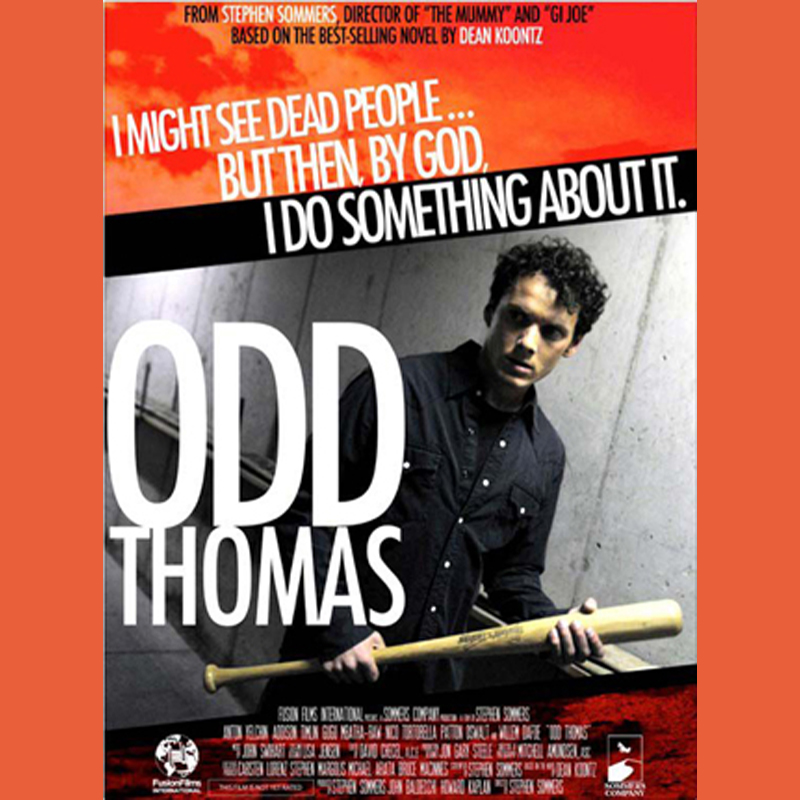
MUMBAI: Stephen Sommers wrote and directed Odd Thomas, the adaptation of the Dean Koontz New York Times bestseller that is has sparked a seven-novel series and perhaps a film franchise. The film stars Anton Yelchin as a short-order cook with clairvoyant abilities who encounters a mysterious man surrounded by dark, threatening forces. The cook’s unique abilities, which include an ability to speak with the dead, help him, protect his town and family. Sommers wrote the script before he had the rights from Koonz, who is wary of movie adaptations of his works, and kicked off production in May 2011 without a studio deal. Image Entertainment plans an early 2014 release.
Image Entertainment chief acquisitions officer Bill Bromiley, for made the announcement on Tuesday.
“Director Stephen Sommers’s spectacular style and extraordinary vision translates so well to the big screen for this material,” said Bromiley. “We are proud to distribute the film and introduce the magical world of Odd Thomas to a wider audience.”

The deal was negotiated by Bromiley, Mark Ward and Jess De Leo on behalf of Image Entertainment and Paul Hudson on behalf of the filmmakers.
Dean Koontz is an American author, known for his bestselling suspense thrillers. Fourteen of his novels reached the number one position on the New York Times hardcover and paperback bestsellers lists, including Odd Hours, Midnight, The Bad Place, Cold Fire, Hideaway, Dragon Tears, Intensity, Sole Survivor, From the Corner of His Eye, One Door Away From Heaven, The Husband, Relentless, What the Night Knows and 77 Shadow Street. Koontz is one of only a dozen writers that have achieved this milestone. His books have been published in 38 languages and he has sold over 450 million copies to date.
Recent Image Entertainment releases include The Colony with Laurence Fishburne, Bill Paxton and Kevin Zegers, Paradise with Julianne Hough, Russell Brand, Octavia Spencer and Holly Hunter, written, directed and produced by Diablo Cody and the upcoming The Adventurer: The Curse of the Midas Box starring Michael Sheen, Lena Headey, Sam Neill and Aneurin Barnard and Rage starring Nicolas Cage and Danny Glover.


International
Russia-India cinematic spectacle Persimmon of My Love set for grand Moscow debut
Hindi cinema style musical revives Indo-Soviet cinema ties for today

MUMBAI: A new chapter in cross-border storytelling is set to unfold as Persimmon of My Love gears up for its premiere in Moscow on 1 April 2026, marking the first large-scale cinematic collaboration between Russia and India in decades.
Positioned as a modern nod to the cultural exchange that once brought Indian classics to Soviet audiences, the film blends Hindi cinema flair with Russian storytelling, aiming to rekindle a long-standing cinematic friendship.
Directed by Marius Weisberg, the musical comedy follows two brothers navigating a lively world of music, family and romance. The lead roles are played by Demis Karibidis and Mikhail Galustyan, with Karibidis also contributing as a screenwriter.
Shot entirely in India, the production leans heavily into Hindi cinema style spectacle. Filming took place across Mumbai studios and the cities of Udaipur and Jodhpur, whose architecture was used to create the fictional setting of Khurmada. A crew of over 350 worked on the project, with large-scale sequences featuring up to 1,000 extras.
The film also brings Indian creative talent into the mix. Dance sequences are choreographed by Jay Kumar, while music by Zurab Matua features songs in both Hindi and Russian, adding to its cross-cultural appeal.
Backed by TNT channel, MyWayStudio and the Russian Cinema Fund, the project reflects a broader push to strengthen cultural ties between the two countries.
With its mix of colour, comedy and cross-border collaboration, Persimmon of My Love is not just a film release but a reminder that cinema, much like music, travels well across borders.






