News Broadcasting
IFJ slams attacks on journalists in subcontinent

NEW DELHI: The International Federation of Journalists (IFJ) has expressed grave concern over attacks on the freedom of the press in countries in the Indian subcontinent and the Saarc region.
The IFJ , supported by a coalition of international and Pakistan-based press freedom and journalists’ organizations , has demanded action from the government in response to the growing incidents of violence against journalists and the deteriorating press freedom situation.
This follows the visit to Pakistan by the mission for press freedom, led by the IFJ and its affiliate, the Pakistan Federal Union of Journalists (PFUJ), from 21 February to 25 February. The IFJ represents over 500,000 journalists in more than 115 countries.
At a roundtable conference on the “State of Press Freedom in Pakistan” held in Islamabad before its departure, the group , including IFJ president Christopher Warren, National Union of Journalists (NUJ) president Chris Morley, The Telegraph (India) editor Bharat Bhushan, Iqbal Khattak, bureau chief of The Daily Times and Pakistan’s representative to Reporters Sans Frontiers, Free Media Movement (Sri Lanka) convener Sunanda Deshapriya, and Pervez Shoukat, President of PFUJ, unanimously passed two resolutions.
One of the resolutions stated: “The right to press and broadcasting freedom, as well as freedom of expression, is fundamental in a civilised state. We believe these freedoms are under threat in Pakistan and action must be taken to ensure they are not lost.”
“The continuing killing, kidnapping and harassment of journalists in Pakistan is intolerable and must cease,” the group also noted.
In the second resolution, the participants condemned the non-implementation of the seventh Wage Board Award, which guarantees improved wages for journalists, and demanded the establishment of the eighth Wage Board Award.
At a press conference, the IFJ president said the media in Pakistan was facing a “crisis of safety” and called on the Pakistani government to provide greater security to journalists.
“Four journalists have lost their lives in the past 12 months, and we have also seen a deeply disturbing trend emerge where families of journalists have been brutally targeted,” said the president of the IFJ, the organization representing more than 500,000 journalists in over 115 countries.
“What makes this even worse is that the perpetrators of these horrific crimes have not been brought to justice, and the inaction of Pakistani authorities in these matters has allowed a culture of impunity to develop,” Warren said.
IFJ President Christopher Warren said the mission was also concerned about government policies that have promoted cross-media ownership, placed police in positions to regulate media and failed to properly implement independent public service broadcasting, all of which have potentially restrict the free media.
Meanwhile, the IFJ again called for greater protections for media workers in Nepal after reports of intimidation and violent attacks on journalists.
According to IFJ affiliate, the Federation of Nepalese Journalists (FNJ), two journalists were attacked by a group of students while they were reporting on an event at Butwal Multiple College on February 27. In an earlier and unrelated incident, two other mediapersons were reportedly stopped on February 24 by members of Tharu Kalyankari Sabha, an organization demanding a separate Tharu state.
“This sort of violent and aggressive behaviour interferes with the right of journalists to carry out their work in a safe and secure manner,” Warren said, adding “The IFJ supports the FNJ in condemning the attacks, and calls for a full investigation into both these incidents to ensure that journalists can travel and work freely without the threat of violent attacks.”
The IFJ has again slammed the Sri Lankan authorities for using controversial anti-terror legislation to silence critical voices, after a media executive was arrested on February 26.
According to local reports, the mediaperson became the second person affiliated with the publication to be detained under the new laws. Earlier another journalist was detained without charge by the Terrorist Investigation Division (TID) since November 22, 2006.
“We once again stress our concerns that the Terrorism Prevention laws are being used to oppress the media and silence vital independent voices,” Warren said.
Journalists’ organizations from around the world wrote to the Sri Lankan government on January 31 as part of a campaign led by IFJ affiliate, the Free Media Movement, which called for the mediaperson’s release.
“The IFJ again calls on the Sri Lankan government to make a stand for human rights and press freedom by securing the immediate release of the two journalists”.



News Broadcasting
CNN-News18 to host Fury in the Gulf conclave on West Asia crisis
Three-hour summit to unpack geopolitical fallout and impact on India
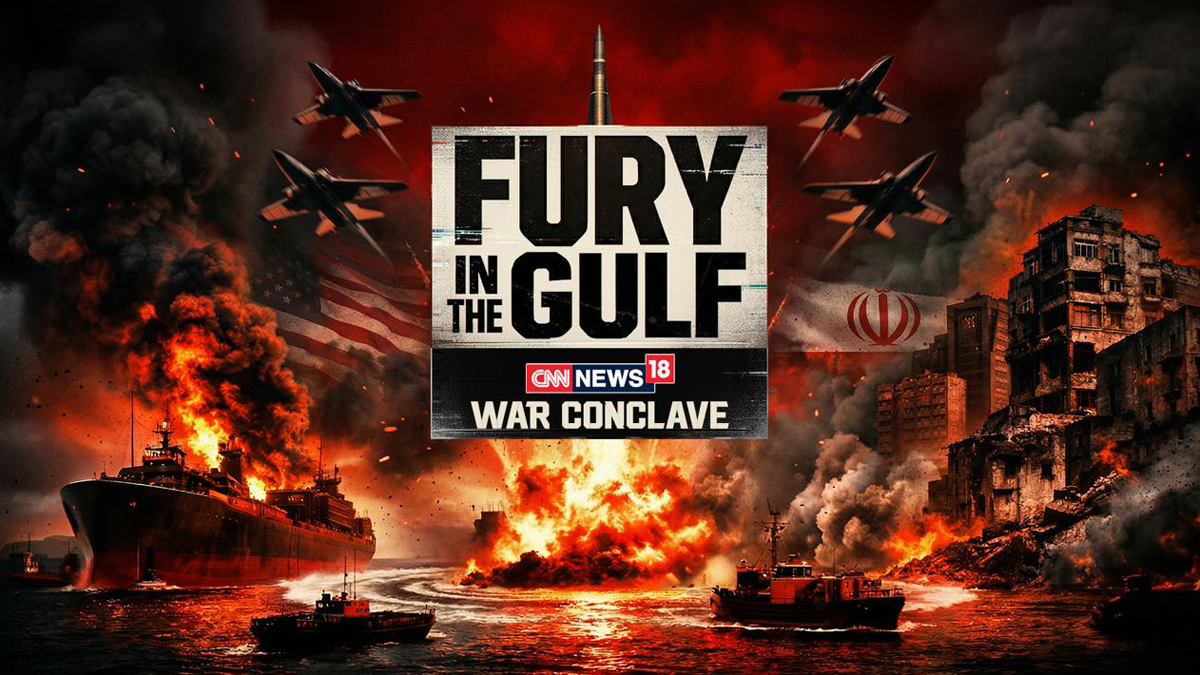
MUMBAI: CNN-News18 is set to host a special three-hour broadcast, Fury in the Gulf – War Conclave, on April 7, aiming to decode the escalating West Asia crisis and its far-reaching implications for India.
Scheduled from 4:00 PM to 7:00 PM, the conclave comes at a time when tensions between Iran and the United States are reshaping global geopolitics and triggering economic uncertainty. With India’s deep energy ties, trade links and large diaspora in the Gulf, the developments carry significant domestic relevance.
Built around the theme ‘Conflict, Consequences, and The Future,’ the programme will feature six curated sessions combining one-on-one interviews and panel discussions. The focus is to cut through the clutter and offer viewers a clearer understanding of the fast-evolving situation.

Key sessions include ‘Diplomacy in Times of War’ featuring Shashi Tharoor, and ‘World After the Iran Conflict’ with voices such as Ram Madhav, Reuven Azar, representatives from the European Union and the Iranian Deputy Envoy. Another session titled ‘Another Dunkirk?’ will bring together K. J. S. Dhillon and Jitin Prasada among others.
CNN-News18 editorial affairs director Rahul Shivshankar said, “In times of war, clarity becomes the most powerful tool. Fury in the Gulf – War Conclave brings together credible voices to address the questions and confusion that arise amid an overwhelming influx of information.”
He added that the initiative is aimed at delivering “facts, perspective, and insight” at a time when misinformation can easily cloud public understanding.
Echoing the sentiment, CNN-News18 CEO– English and business news Smriti Mehra said the conflict marks a defining global moment, with consequences that extend well beyond the region. She noted that the conclave seeks to present the crisis with “depth, nuance and responsibility” so audiences can better grasp its real-world impact.
As geopolitical tensions continue to dominate headlines, the conclave positions itself as an attempt to bring order to the noise, offering viewers a structured, insight-led look at a complex and rapidly shifting global situation.






