International
IFFLA to screen Paan Singh Tomar

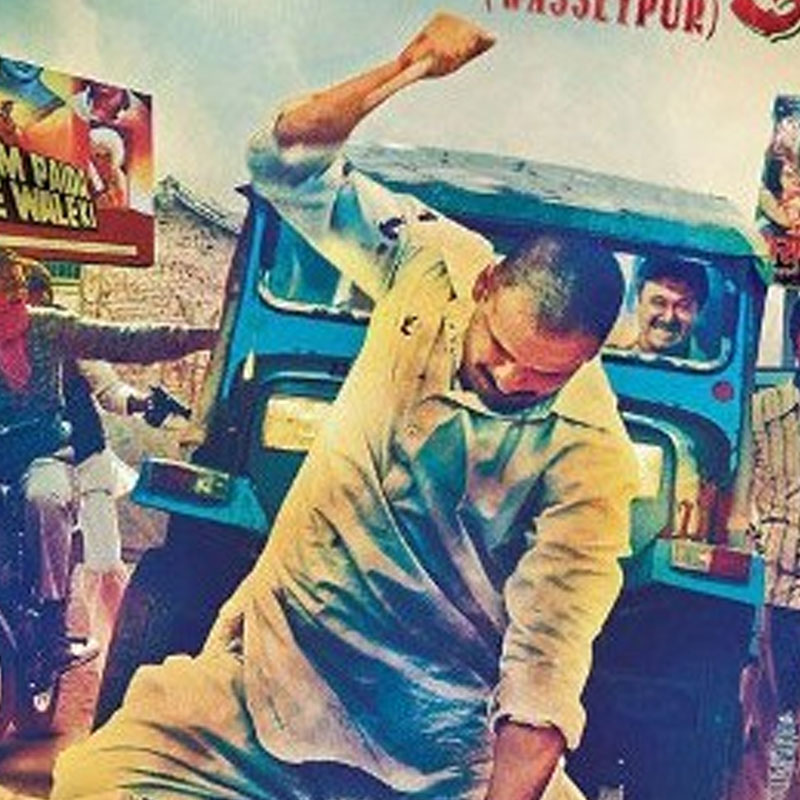
MUMBAI: The Indian Film Festival of Los Angeles (IFFLA) will celebrate its 10th year anniversary this year with the screening of Tigmanshu Dhulia‘s Paan Singh Tomar in the festival that will run from 10 to 15 April.
Paan Singh Tomar is the real-life story of Paan Singh Tomar, a seven-time national champion athlete and Army jawan who became one of India‘s most infamous bandits. The film stars Bollywood favorites Irrfan Khan, Mahi Gill, Vipin Sharma, Imran Hasnee and Nawazuddin Siddiqui.
The fest is also introducing a Family Day to this year‘s event line-up. This year, 14 April will mark the debut of IFFLA‘s new Family Day. “This year, as part of our ongoing commitment to provide a complete festival experience, IFFLA is excited to create a day of family fun and activities for adults and children alike. Our addition of a Family Day is a perfect complement to the screenings of GATTU and WATCH INDIAN CIRCUS. We want to invite everyone to join us at ArcLight Hollywood to celebrate Indian cinema and to connect those who may not have experienced India‘s rich heritage,” said IFFLA Board member Carla Sanders.
Family Day fun begins with the screening of Rajan Khosa‘s acclaimed film Gattu that garnered a special mention at the 2012 Berlin Film Festival.Following the screening a series of free events in the courtyard of ArcLight Hollywood which includes Story Time hosted by Parvesh Cheena (of Outsourced fame) who will read Gita Wolf‘s award-winning children‘s classic The Very Hungry Lion. Arts and Crafts hour which will be led by Los Angeles teachers and artists will culminate with a Bollywood dance lesson for the entire crowd.
Also free to festival-goers will be the addition of ‘From Script to Screen: The Making Of Patang. The film, the festival‘s closing night film, took years to get from script to screen and this discussion would be an intimate talk about that journey.
This year‘s 5th edition of Rhythm Village will feature a special commemorative event on 12 April at the Supper Club in Hollywood. The IFFLA Rhythm Village Anniversary Party will feature live performances by Bhangra superstar Jassi Sidhu, world music stars Bombay Dub Orchestra, the eclectic fusion band Elephants With Guns and DJ sets by DJ Ben G, and Doc Bladez.
On 13 April, Rhythm Village will move back to its traditional home at the ArcLight Hollywood courtyard for two days. The outdoor musical program promises to entertain audiences with world-class musicians, enchanting singer-songwriters, eclectic fusion bands, groovy DJ sets, and a variety of captivating dance forms. There will be a live dance lesson by contemporary Indian dance pioneer Achinta McDaniel of the Blue 13, on Saturday April 14th in the courtyard.




International
Russia-India cinematic spectacle Persimmon of My Love set for grand Moscow debut
Hindi cinema style musical revives Indo-Soviet cinema ties for today

MUMBAI: A new chapter in cross-border storytelling is set to unfold as Persimmon of My Love gears up for its premiere in Moscow on 1 April 2026, marking the first large-scale cinematic collaboration between Russia and India in decades.
Positioned as a modern nod to the cultural exchange that once brought Indian classics to Soviet audiences, the film blends Hindi cinema flair with Russian storytelling, aiming to rekindle a long-standing cinematic friendship.
Directed by Marius Weisberg, the musical comedy follows two brothers navigating a lively world of music, family and romance. The lead roles are played by Demis Karibidis and Mikhail Galustyan, with Karibidis also contributing as a screenwriter.
Shot entirely in India, the production leans heavily into Hindi cinema style spectacle. Filming took place across Mumbai studios and the cities of Udaipur and Jodhpur, whose architecture was used to create the fictional setting of Khurmada. A crew of over 350 worked on the project, with large-scale sequences featuring up to 1,000 extras.
The film also brings Indian creative talent into the mix. Dance sequences are choreographed by Jay Kumar, while music by Zurab Matua features songs in both Hindi and Russian, adding to its cross-cultural appeal.
Backed by TNT channel, MyWayStudio and the Russian Cinema Fund, the project reflects a broader push to strengthen cultural ties between the two countries.
With its mix of colour, comedy and cross-border collaboration, Persimmon of My Love is not just a film release but a reminder that cinema, much like music, travels well across borders.








