Hindi
IFFI 2016: India to encourage film co-production with other countries

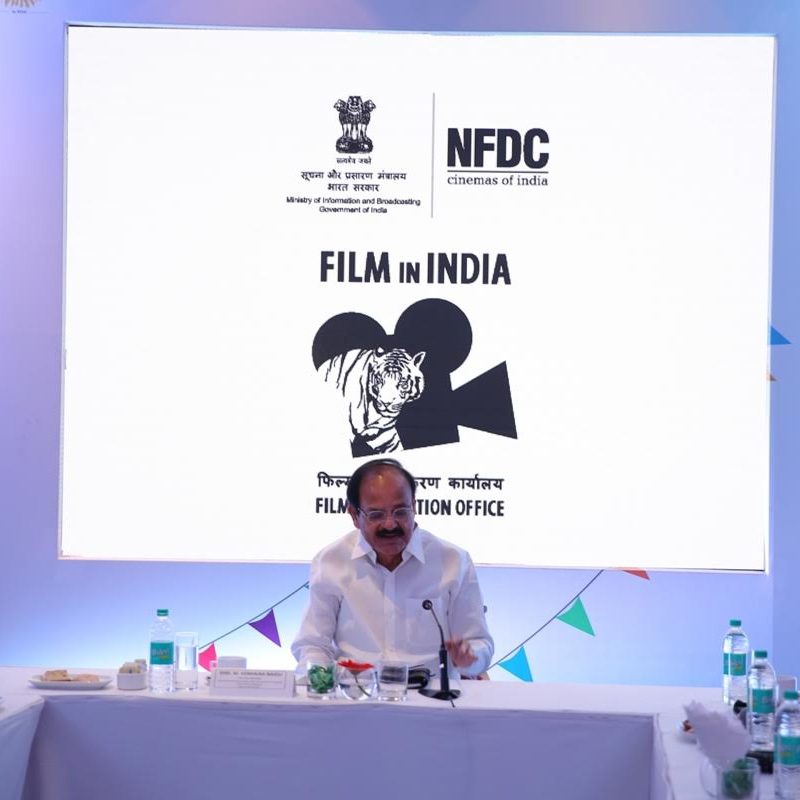
NEW DELHI: The Government will encourage film co-production agreements with other countries, information and broadcasting minister M Venkaiah Nadu said while speaking at Film Bazaar set up by the National Films Development Corporation that coincides with International Film Festival of India at Panaji in Goa that opened today.
He said, “Films are important because they are the cheapest form of entertainment. People need some relief; some sort of happiness. Secondly, films can portray our culture, our heritage. Films also can take the message of India to other places. We have entered into a co-production agreement with different countries as we seek collaboration. The government will definitely encourage this.”
Going around the Bazaar, he said, “I am very impressed by the Film Bazaar. It is like a film supermarket. You have everything — from incredible locations to screening of the films, along with opportunities to interact with producers. One can also experience seeing films in 3D. Everything required for filmmaking is available here. This will help go a long way in producing films in India and films, in turn, will also encourage tourism and culture of the country.”

Accompanying the minister were NFDC director – finance N J Shaikh and NFDC director Raja Chhinal, and they spent over an hour going through the Viewing Room, the Knowledge Series session, Producers’ Lab and Co-Production Market, Film Offices.
Apart from inaugurating a Multimedia Exhibition on ‘Azaadi 70 Saal’, Naidu also held a discussion on the co-production agreement and attendant issues with the delegation from South Korea, which is the focus country this year.
The NFDC Film Bazaar Virtual Reality lounge in particular was of special interest to him and he spent some time trying out the VR gear powered by Samsung Gear VR, after which he went on to launch the National Film Heritage Mission calendar and website.
Shaikh later said: “The minister’s walk was very inspiring and morale-boosting for the entire NFDC team. He took a keen interest in the various segments of the Bazaar and interacted with the officials in-charge of different segments, which was very encouraging.”
Celebrating its tenth edition this year, the annual NFDC Film Bazaar held from 20 to 24 November 2016 has become a beacon for budding filmmakers from South Asia. The platform has been tirelessly evolving into a one-stop shop that encourages collaboration between South Asian and international film fraternities; a confluence point for screenwriters, filmmakers, sales agents, distributors, film festival programmers and financiers from around the world.
The Bazaar is a platform exclusively created to encourage collaboration between the international and South Asian film fraternities. The market aims at facilitating the sales of world cinema in the region.
Naidu said cinema should reflect larger social concerns besides focusing on entertainment only. It should focus on promoting national consciousness and social integration as cinema is religion without boundaries. Films should illuminate the mind and heart, engaging audience both intellectually and emotionally. It should expose the people to ideas, problems and developments happening in the society and make them think critically and look for alternate solutions and actions. In a country like India, with its several social problems, a case could be made for social realism in our films. Cinema was a work of art and there has to be a certain ‘take away’ for the audience who gave over two hours of their valuable time for watching a film.
Speaking at the event held at the newly-constructed Shyama Prasad Mukherjee stadium, he said cinema needed to coexist with reality. It was necessary to pass the test of the ‘2Rs’ – Reason and Reality. Many of the commercial films were crashing because of lack of creative content.
Giving the example of the movie ‘Sholay’ (as its director Ramesh Sippy was the chief guest at the inauguration), he said the film was a huge success because it was not formulaic in the strict sense though it was a commercial production. The minister added that certain relationships and values were so finely woven into the theme that people across the country made it a landmark film.
About the role of cinema as a powerful mass communication medium, the minister said cinema spoke with the language of universality rising beyond the limitations of social and geographical boundaries. It promoted rapid diffusion of ideas which manifested themselves consciously or otherwise in the relaxing environments of cinema halls or homes, when the audiences were more susceptible.
The minister also spoke about the Government initiatives to support the film industry in the form of a single window Film Facilitation Office in National Film Development Corporation and a National Film Heritage Mission to restore and digitise film archives.
Goa Governor Mridula Sinha, union defence minister Manohar Parikkar, Goa chief minister Laxmikant Parsekar, Korean ambassador Cho Hyun, and I and B secretary Ajay Mittal were also present.
Parsekar said IFFI provided a common platform to cinematography of the world. The movie selection at IFFI reflected the diversity of world cultures.
Mittal said that films were one of the most powerful mediums to reach out to society today. IFFI was one of the most prominent film festivals in India and Asia endeavoring to encourage and uphold an exceptional film culture in India.
The opening film of the festival was the grand masterpiece, After-Image by the late writer and directo Andrzej Wajda from Poland. This movie is a passionate biopic about avant-garde painter Wladyslaw Strzeminski. The closing film or 47th IFFI would be the South Korean official entry for the Academy Awards, The Age of Shadows directed by Kim Jee Woon.
Apart from other awards, IFFI 2016 in collaboration with the International Council for Film, Television and Audiovisual Communication (ICFT), Paris and UNESCO would also present the “ICFT- UNESCO Gandhi Medal” to a film, which reflects the ideals of peace, tolerance and non-violence.



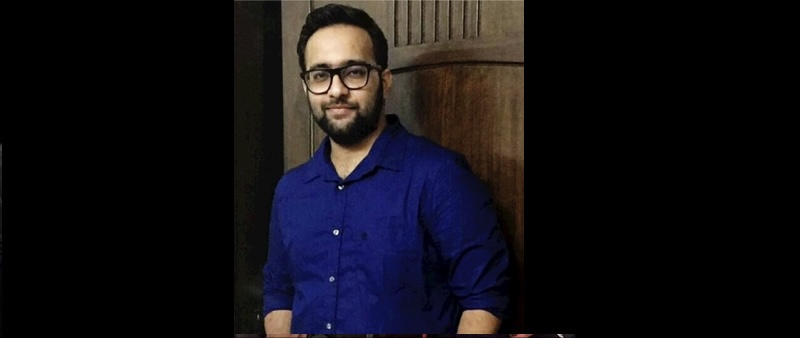
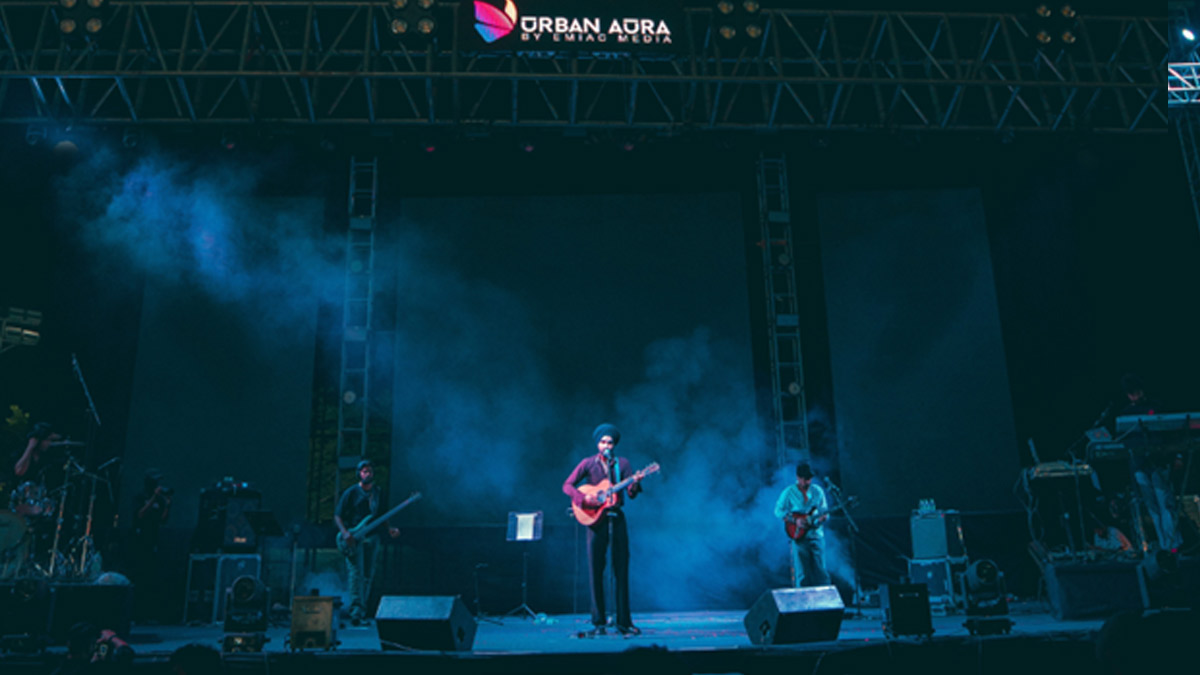
In a music industry that often rewards speed, spectacle, and instant recall, Navjot Ahuja’s journey feels refreshingly different. His story is not built on noise. It is built on patience, discipline, emotional honesty, and a quiet commitment to becoming better with every passing year. After 14 years of struggle, learning, performing, and writing, Navjot stands today as an artist whose success has not changed his centre. If anything, it has only made his purpose clearer.
For Navjot, music has never been about chasing fame alone. It has always been about expression. It is about writing more truthfully, singing more skillfully, understanding himself more deeply, and becoming a kinder human being in the process. That rare clarity is what gives his journey its beauty.
Where It All Began: A Writer Before a Singer
Indian singer and songwriter Navjot Ahuja’s musical journey began in the most familiar of places: school assemblies. But even then, what was growing inside him was not only the desire to sing. It was the need to write.
Long before he saw himself as a performer, he had already discovered the emotional release that writing offered him. For Navjot, words became the first true channel for feeling. Songwriting came before singing because writing was the only way he could let emotions flow through him fully. That inner pull shaped his artistic identity early on.
Like many young musicians, he sharpened his craft by creating renditions of popular songs.
Those experiments became his training ground. But the turning point came in 2012, when he wrote his first original song. That moment did not just mark the beginning of songwriting. It marked the beginning of self-definition.
A Calling He Did Not Chase, But Accepted
What makes the latest Indian singer-songwriter Navjot’s story especially compelling is the way he describes his relationship with music. He does not frame it as a career he aggressively pursued. In his own understanding, music was not something he chose. It was something that chose him.
There was a time when he imagined a very different future for himself. He wanted to become a successful engineer, like many young people shaped by ambition and conventional expectations. But life had a different script waiting for him. During his college years, around 2021, music entered his life professionally and began taking a firmer shape.
That shift was not driven by image-building or industry ambition. It came from acceptance. Navjot embraced the fact that music had claimed him in a way no other path could. That sense of surrender continues to define the artist he is today.
An Artist Guided by Instinct, Not Influence
Unlike many singers who speak openly about idols, icons, and musical role models, Navjot’s creative world is built differently. He does not believe his music comes from imitation or inherited influence. He listens inward.
He has never considered himself shaped by ideals in the traditional sense. In fact, he admits that he does not particularly enjoy listening to songs, especially his own. His decisions as a songwriter and singer come from instinct. He writes what feels right. He trusts what his inner voice tells him. He positions his music according to what he honestly believes in, not what trends demand.
That creative independence gives his work a distinct emotional sincerity. His songs do not feel calculated. They feel alive.
The Long Years of Invisible Struggle
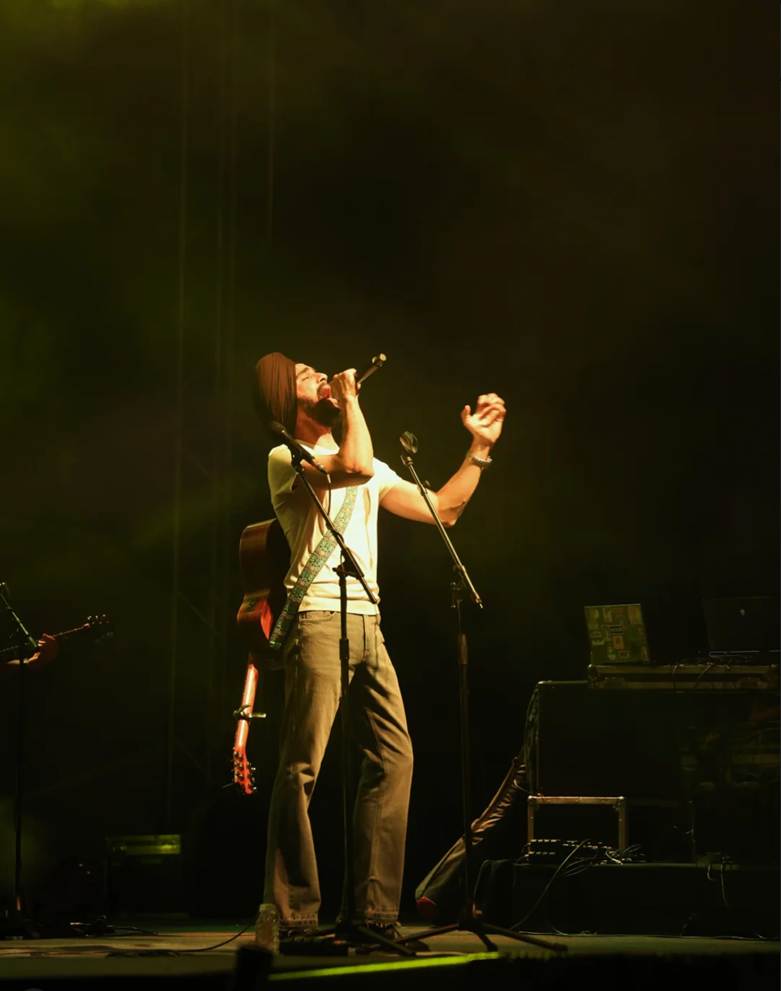
Every artist carries a chapter of struggle, and Navjot’s was long, demanding, and deeply formative. One of the biggest challenges he faced was building continuity as the best new indian singer songwriter in an era where musical collaboration is increasingly fluid.
For emerging singers, especially those trying to build with a band, consistency can be difficult. Instrumentalists today have more opportunities than ever to freelance and perform with multiple artists. While that growth is positive and well deserved, it can make things harder for singers who are still trying to establish a steady team and sound around their work.
For Navjot, one of the most difficult phases came during 2021 and 2022, when he was doing club shows almost every day. It was a period of relentless performance, but not always personal fulfillment. He was largely singing covers because clubs were not open to original songs that audiences did not yet know.
For a new Indian singer and songwriter, that can be a painful compromise. To perform constantly and still not have the freedom to share your own voice requires not just resilience, but restraint.
“Khat” and the Grace of Staying Unchanged
After 14 years of effort, Navjot’s new love song Khat became a defining milestone. Professionally, he acknowledges that the song changed how society viewed him as a musician. It strengthened his place in the public eye and altered his standing in meaningful ways.
Yet personally, he remains unchanged.
That is perhaps the most striking part of his story. Navjot says his routine is still the same. His calm is still the same. His writing process is still the same. He does not want success or failure to interfere with the purity of his art. For him, emotional detachment from public outcomes is essential because the moment an artist becomes too attached to validation, the writing begins to shift.
His joy comes not from numbers, but from the attempt. If he has tried to improve his skill today, if he has written his heart out more honestly than before, then he is at peace.
Growth, Not Glory, Remains the Real Goal
Even now, Navjot is not consumed by labels such as singles artist, performer, or digital success story. His focus remains deeply personal. He wants to sing better. He wants to play instruments better. He wants to understand himself more. And he wants to become a kinder person.
That is what makes Navjot Ahuja’s journey so moving. It is not simply the story of a musician finding recognition. It is the story of an artist who continues to grow inward, even as the world begins to look outward at him. In an age obsessed with applause, Navjot reminds us that the most meaningful success often begins in silence, honesty, and the courage to remain true to oneself.






