Event Coverage
IDOS 2014: Are STBs high on QC?

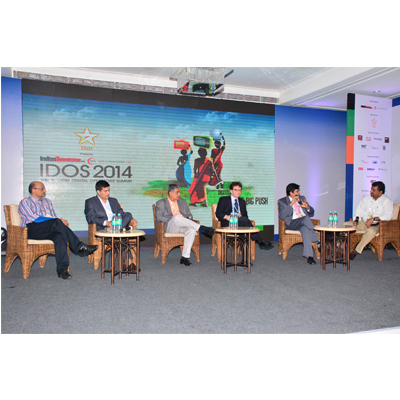
GOA: As high as 38 million set top boxes (STBs) have been rolled out in phase I and II of digitisation, but as for the quality, a lot of these boxes were described as ‘dabbas’. Of the total number of boxes, a tiny percentage was high definition boxes and even of those, several were found faulty. The session on ‘Technology Shifts in Indian Pay TV’ during the recently concluded India Digital Operators’ Summit (IDOS) 2014 at Goa, started with these crucial facts.
The government has decided to push digitisation of phase III and phase IV to December 2015 and December 2016 respectively, citing indigenous manufacturing of boxes as the main reason for the extension. The big question now is, ‘Are the Indian manufactures ready for the 100 million boxes needed in the next 24-30 months?’

“Contrary to the expectations of many, yes, we are ready,” said Mybox executive director Amit Kharbanda.
With the ‘Make in India’ concept, the government is not just promoting the Indian manufactures, but is asking the international manufacturers to come to India and create hardware here. “When you talk of manufacturing of STBs, the basic requirement, after the components, is the capacity for big production. According to our calculation, if there is a requirement for 100 million boxes, and we break it to 40-45 million boxes per year, the SMT capacity required is 26 machines, and if we remove all the big international manufactures, India will still have SMT capacity with an availability of 46 machines,” informed Kharbanda.
The next question which many have been asking is how has the extension benefited the STB manufacturers? “We have been growing from the time we entered the manufacturing space. After digitisation, we knew we had to supplement the market and so we increased our capacity by about 30-40 per cent. Right now we have the capacity of 5 million boxes per annum, of which 60 per cent is utilised by our captive customers and 40 per cent is for other consumers. But considering the experience we have, we can easily expand our capacity,” said Videocon Group head trend electronics Jagdish Bangad.
The question, according to Kharbanda is not about if we can manufacture 45 million STBs in one year, the question is, considering there are 300 components in a STB, “will we have those many Broadcom or other chips makers in India, and this, keeping in mind that we are not the only country buying it?” Kharbanda questioned.
For Broadcom MD Rajiv Kapur, the chip output is extremely high. “We produce more than two billion chips annually. The issue is not production of chips, neither is capacity an issue. The main thing now is that we should be a little careful about our expectations. One doesn’t want to go down the path of over preparing and over- producing and compromising on the maturity which is needed to develop quality in a supply chain,” said Kapur.
He also cautioned the industry, that in order to achieve the target of the 100 million boxes in the given time frame, one should not start cutting the corners on quality.
Cisco, which works closely with a number of multisystem operators (MSOs) in the country and also the STB manufacturers, is agnostic to whether the boxes are made in India, China or Korea. “We welcome the move that the Indian government is keen to promote manufacturing locally,” said Cisco director John McCorkindale adding that they haven’t changed their strategy for the country with delayed digitisation.
According to Logic Eastern CTO Vineet Wadhwa, one needs to keep the backend support ready. “One of the key points is that most of us are just concentrating on the manufacturing skills or strengths. But, this is just a part. More thoughts need to go when one plans on scaling,” he said adding that the industry needs funding.
“We are dealing with tier II and tier III markets. The amount of support needed for tier II and III markets don’t help me when I go to tier IV MSOs. For every three or four tier III MSOs, one needs at least one or two support personnel and for every five support personnel, you need one support manager,” informed Wadhwa.
He also highlighted that with the different types of CAS, boxes, networks etc, the complexity of managing a network 500-2000 km away over mobile phone is difficult. This means that the manufacturers will also need to set up a support team. “They will have to have deep pockets,” he added.
A very crucial point that came out during the session moderated by Castle Media director Vynsley Fernandes was that while the capability and technology exists in India, the fundamental challenge is that tier III and IV markets have huge pricing issues. One needs to understand from the LMOs, how much their subscribers will be ready to pay.
Kharbanda pointed out that the industry which has a target of manufacturing 100 million boxes, if it could even produce 50-60 million boxes, will start a cycle that will help them in the long run. “The fact is that we have to come together as an industry and we need support from the MSOs as well,” said he.
According to McCorkindale tier III and IV MSOs want to control everything on their own. “They want good quality and want more power to increase their ARPU,” he said.
For Kapur, delayed digitisiation is actually good. “I feel we were going too fast. The benefit of this delay is that now we can look at the experience of the first 20-30 million boxes which have been deployed. The common approach from vendors in the first two phases was of cutting corners, while only thinking of price and compromising on the quality,” he said.
MSOs, according to Kapur, have learnt a lot from the first two phases and are now upping their specs. “The difference in pricing of high quality and low quality boxes is not a very big dollar amount. One only needs to know what specs are needed for its STBs,” he added.
Another point which was highlighted during the session was that in the rush to seed boxes, no field trials were done in the first two phases. “This led to bad quality boxes being rolled out. Now we have the time to do all this and control the quality,” opined Kharbanda.
A very important component of the STB cost is the warranty and the support charge per hour from the box company, CAS company and SMS company etc. “And my belief is that the MSOs of tier II and tier III will not compromise on the quality of the box. But they might not be able to afford the dollar per hour charges for support,” said Wadhwa.
Kapur, is a firm believer that the STBs should have a long lifecycle. “India is a nation where TV moves from house to house but is never thrown, so we can’t be producing 100 million boxes, which are bad quality ones, with no support and element of future proof for different markets,” he said.
The session concluded with the remark: It is time we move away from speed and cost.







Event Coverage
Anime India announces Amazon MX Player as co-presenting partner for Anime India Kolkata 2026
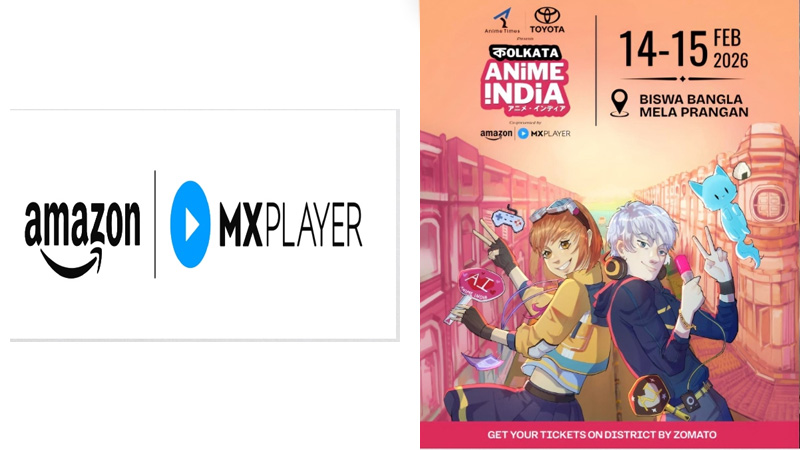
MUMBAI: Riding high on the success of its blockbuster Mumbai debut, Anime India is accelerating its nationwide expansion with the announcement of Amazon MX Player as the co-presenting partner for Anime India Kolkata. The partnership marks a significant step forward in the festival’s mission to deliver large-scale, accessible, and fan-first anime experiences across the country.
Scheduled for 14 and 15 February 2026 at the iconic Biswa Bangla Mela Prangan, Anime India Kolkata will launch the first regional chapter of what is set to be a year-long, multi-city tour. As the curtain-raiser for the 2026 circuit, the Kolkata edition aims to fuse the energy of global Japanese pop culture with India’s fast-growing community of anime, manga, and pop-culture fans.
A household name in digital entertainment, Amazon MX Player brings unmatched reach and cultural relevance to the Anime India platform. With its expanding focus on anime and youth-driven content, Amazon MX Player’s involvement as co-presenting partner reinforces Anime India’s vision of making anime culture more inclusive breaking barriers of language, geography, and accessibility to connect with fans nationwide.
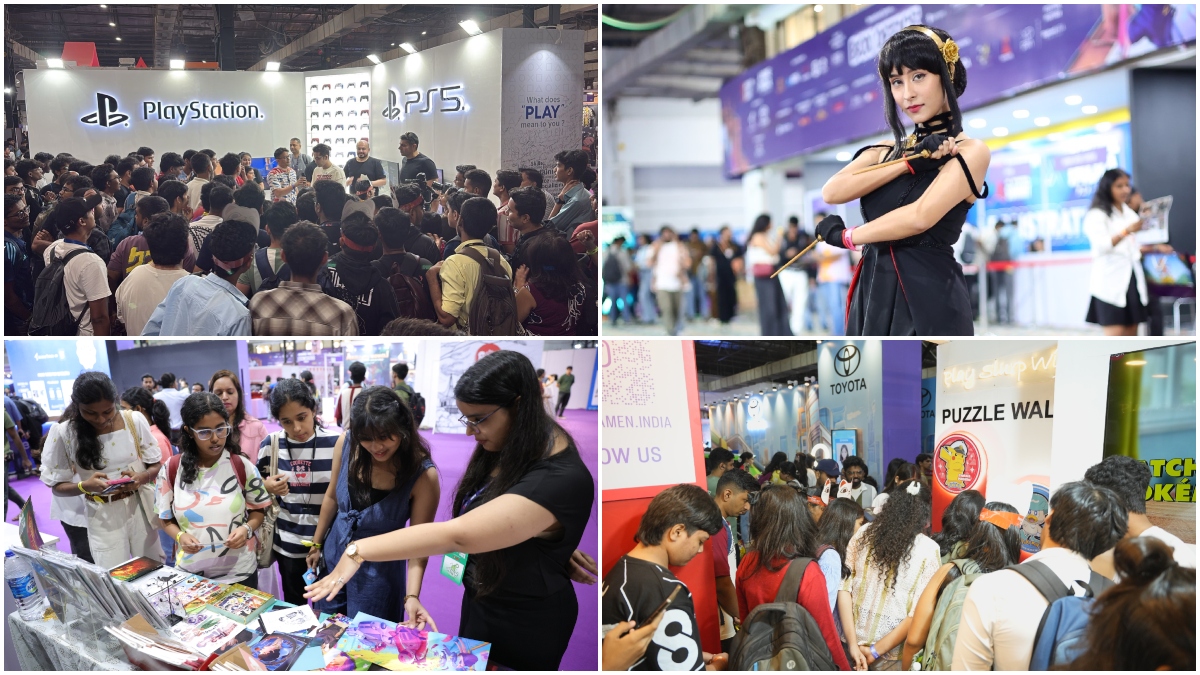
Anime India Kolkata 2026 will showcase cosplay competitions, interactive zones led by the Indian Gunpla Community, India-39 Vocaloid Community, The Japan Curry, and Adda-o-Otaku by The Otaku Guild. Fans can join tournaments across fighting games, Pokémon VGC, and more. Acclaimed Japanese director Susumu Mitsunaka (Haikyu!!) will attend as guest of honour, appearing in panels and live sessions. Positioned as an immersive celebration of fan culture and industry collaboration, the Kolkata edition marks the beginning of Anime India’s nationwide expansion.
Sharing their perspective on the partnership, Amazon MX Player director Aruna Daryanani expressed, “Anime in India has evolved from a niche interest into a mainstream cultural movement, driven by an increasingly engaged and passionate fanbase. At Amazon MX Player, our focus is on expanding access by bringing anime to audiences across the country for free and in multiple local languages. Our association with Anime India reflects our commitment to supporting the growth of anime in India and deepening connections with fans, while continuing to build Amazon MX Player as a trusted destination for free, high-quality entertainment.”
“Anime India Kolkata is a celebration of how anime has grown beyond entertainment into a powerful cultural and creative force. By bringing fans, creators, and industry leaders onto one shared platform, the festival is helping define the future of pop culture in India,” said Anime India co-founder and director Neha Mehta.
The debut edition of Anime India 2025 in Mumbai attracted over 29,000 fans, quickly cementing its status as a landmark celebration of anime and Japanese pop culture. Riding on this overwhelming response, the Kolkata chapter is projected to draw more than 40,000 visitors across two days, positioning it as one of the biggest anime conventions ever held in eastern India.
Anime India is focused on bringing together fans from across the country to create a truly pan-India celebration of anime, manga, cosplay, gaming, and Japanese culture. With plans to expand into four key metropolitan hubs in 2026—east (Kolkata), north (Delhi), west (Mumbai), and south (Hyderabad)—the festival seeks to deliver globally benchmarked experiences while supporting and uplifting creators, artists, and fan communities throughout India.








