News Headline
ICC Cricket WC 2015 gives economic boost to Australia, NZ: PwC


MUMBAI: The ICC Cricket World Cup 2015, hosted by Australia and New Zealand during February and March this year, was one the biggest events in the history of both countries and provided a significant positive boost to the local economies.
The findings of an economic impact and benefits analysis carried out by PricewaterhouseCoopers show that the tournament generated more than $AU 1.1 billion in direct spending, created the equivalent of 8,320 full time jobs, and had a total of 2 million bed nights across the two countries.

Attendance at tournament matches was 1,016,420, with 295,000 international and interstate/inter-regional visitors to Host Cities.
Of these, there were 145,000 international visitors to Australia and New Zealand for the tournament providing a huge boost to tourism, with the largest number of overseas visitors coming from Asia.
The tournament was watched by more than 1.5 billion people worldwide.
ICC chief executive David Richardson said the outstanding success and popularity of the tournament proved that cricket was not only popular across both countries but a significant contributor to the local economies.
“The ICC Cricket World Cup 2015 was the most popular ever played,” said Richardson.
“The venues were world class, the host cities were world class and the two countries delivered a world class tournament which was watched by more people around the world than ever before,” he added.
Australian Sports Minister Sussan Ley said the Australian and New Zealand governments had worked closely with the World Cup organisers to ensure the greatest spectacle for sports fans while also maximising the trade and tourism opportunities created by the tournament.
“While fierce rivals on the field Australia and New Zealand have a proud tradition of working together to deliver world-class sporting events,” Ley said.
“The Cricket World Cup has been an outstanding success across all measures which is highlighted by the contribution it has made to the economies of both countries through trade and tourism as well as the unique benefits of sport diplomacy with key partners and markets around the world,” Ley added.
Cricket World Cup 2015 chief executive officer John Harnden, said the $1.1 billion in direct spending converted into an increase in gross domestic product of $AU460 million across the two countries.
“This was the biggest event in Australia since the Sydney Olympics in 2000 and it has changed cricket in New Zealand forever,” Harnden said.
“The Cricket World Cup generated two million bed nights across the two countries and around $855 million was spent by visitors while here for the tournament which is great for the tourism industries of both countries.
“The Australian and New Zealand Governments were great supporters of the event. The introduction of a single visa for the Cricket World Cup was a significant initiative which made it easier for international guests to visit New Zealand and Australia. Most importantly, both countries provided a safe, warm and welcoming experience for all fans from around the world and provided them with an experience they would not forget.
“When you consider the TV audience of over 1.5 billion, saturation of coverage across all digital platforms and the mainstream media coverage of the event across the 14 host cities, the Cricket World Cup has not only showcased the best of Australia and New Zealand but has enhanced the tournament’s reputation as a major global driver for economic and community benefit,” concluded Harnden.







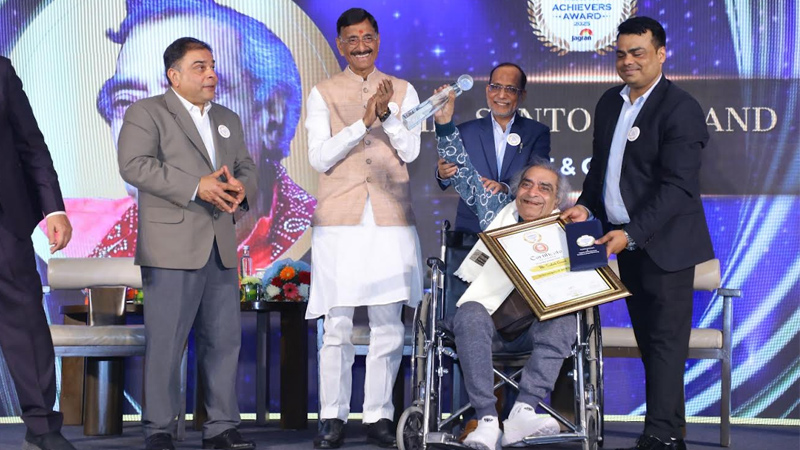
NEW DELHI: Hamdard Laboratories gathered a cross-section of India’s achievers in New Delhi on Friday, handing out the Hakeem Abdul Hameed Excellence Awards to figures who have left their mark across healthcare, education, sport, public service and the arts.
The ceremony, attended by minister of state for defence Sanjay Seth and senior officials from the ministry of Ayush, celebrated individuals whose work blends professional success with a sense of public purpose. It was as much a roll call of achievement as it was a reminder that influence is not measured only in profits or podiums, but in people reached and lives improved.
Among the headline awardees was Alakh Pandey, founder and chief executive of PhysicsWallah, recognised for turning affordable digital learning into a mass movement. On the sporting front, Arjuna Awardee and kabaddi player Sakshi Puniya was honoured for her contribution to the game and for pushing women’s participation onto bigger stages.
The cultural spotlight fell on veteran lyricist and poet Santosh Anand, whose songs have echoed across generations of Hindi cinema. At 97, Anand accepted the honour with characteristic humility, reflecting on a life shaped by perseverance and hope.
Healthcare honours spanned both modern and traditional systems. Manoj N. Nesari was recognised for strengthening Ayurveda’s place in national and global health frameworks. Padma shri Mohammed Abdul Waheed was honoured for his research-backed work in Unani medicine, while padma shri Mohsin Wali received recognition for his long-standing contribution to patient-centred care.
Education and social development also featured prominently. Padma shri Zahir Ishaq Kazi was honoured for decades of work in education, while former Meghalaya superintendent of Police T. C. Chacko was recognised for public service. Goonj founder Anshu Gupta received an award for his dignity-centred rural development initiatives, and the Hunar Shakti Foundation was honoured for empowering women and young girls through skill development.
The Lifetime Achievement Award went to former IAS officer Shailaja Chandra for her long career in public healthcare and governance, particularly in the traditional systems under Ayush.
Speaking at the event, Hamdard chairman Abdul Majeed said the awards were a tribute to those who combine excellence with empathy. “These awardees reflect Hakeem Sahib’s belief that healthcare, education and public service must ultimately serve humanity,” he said.
Minister Seth struck a forward-looking note, saying India’s young population gives the country a unique opportunity to become a global destination for learning, health and wellness by 2047.
The ceremony also featured the trailer launch of Unani Ki Kahaani, an upcoming documentary starring actor Jim Sarbh, set to premiere on Discovery on 11 February.
Instituted in memory of Unani scholar and educationist Hakeem Abdul Hameed, the awards have grown into a national platform that celebrates those building a more inclusive and resilient India. For one evening at least, the spotlight was not just on success, but on service with substance.






