News Headline
IBF seeks to formulate guidelines for cable ops on CAS

NEW DELHI: Conditional access system (CAS) keeps on throwing up different issues and aspects that serve to make matters more complicated and confusing.
Now the Indian Broadcasting Foundation (IBF) wants to formulate guidelines for cable operators regarding CAS. The intention is noble, but it seems that some members have questioned the grounds on which such a policy can be framed by the IBF.
During a meeting here today, this aspect, including other technical issues related to CAS, was discussed by IBF members, though no consensus, according to information available, was reached.
It is also learnt that a note regarding CAS was circulated. Though indiantelevision.com does not have a copy of the note, according to some members, the note stated that the key objective of broadcasters under CAS regime will be to usher in transparency so as to lead to more equitable distribution of revenues.
A key concern of IBF members is the loss of revenue on account of piracy and misreporting of subscriber base to broadcasters.
On the issue of piracy control, it was suggested at today’s meeting that if at any given point the extent of piracy goes beyond five per cent of the total subscribers, the operator concerned will have to replace pronto all VC cards with newer ones or take steps that will arrest the growth of signal piracy.
But, who will decide the quantum of piracy and on what basis? This is a million dollar question that IBF members are still grappling with as participating members are suggesting various numbers in this regard.
According to some IBF members, at today’s meet, spread over two sessions, it was mooted that an agreement be drafted that would be signed between the
service provider (MSOs and cable ops) and broadcasters. However, no time frame has been set for the drafting of this agreement.
This, as pointed out to indiantelevision.com, has been suggested to safeguard leakage of various data that would get collected through the subscriber management system in a post-CAS regime.
For example, it has been pointed out that data of subscribers and any trends collected cannot be used by the service provider or sold to any individual or an organisation except when the local laws require to do so and that too after permission has been obtained from the broadcasters.
Apart from this, other highly technical aspects of CAS were also discussed, including the vendor that would supply the CA software and the various types of servers that can and ought to be used.
Are the broadcasters managing pay channels coming out with a joint statement on their resolution on not turning free to air in a post CAS regime, which had been planned earlier and is still being discussed amongst the broadcasters?
It seems there is some confusion on this aspect too.
Though a senior executive of Star India today confirmed to indiantelevision.com that a non-encrypted dual feed of Star News has been started, apart from the one in an encrypted form. “This has been done to increase viewership of Star News in non-urban areas where the purchasing power of consumers may not be as high as those in urban areas.
So, technically, Star News has not turned FTA, but a separate feed has been started for which cable ops don’t have to pay anything for downlinking and redistribution of signals. Similar dual feeds have been also started by the likes of FTV, though Zee denied that it has done any such thing with the Alpha series of regional language channels.





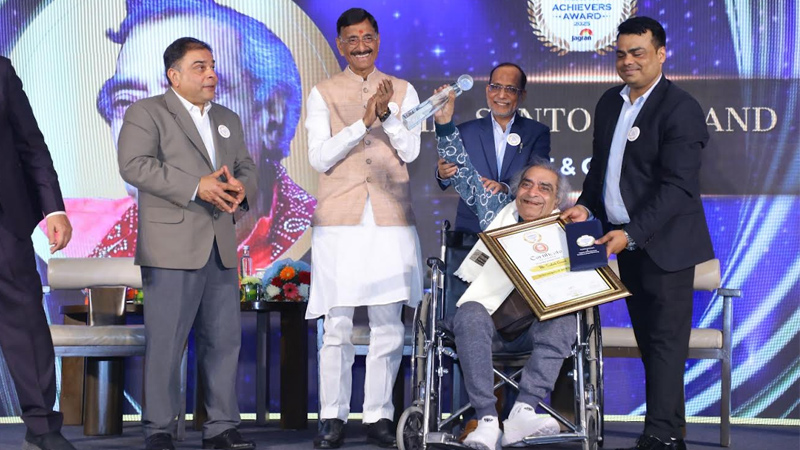
NEW DELHI: Hamdard Laboratories gathered a cross-section of India’s achievers in New Delhi on Friday, handing out the Hakeem Abdul Hameed Excellence Awards to figures who have left their mark across healthcare, education, sport, public service and the arts.
The ceremony, attended by minister of state for defence Sanjay Seth and senior officials from the ministry of Ayush, celebrated individuals whose work blends professional success with a sense of public purpose. It was as much a roll call of achievement as it was a reminder that influence is not measured only in profits or podiums, but in people reached and lives improved.
Among the headline awardees was Alakh Pandey, founder and chief executive of PhysicsWallah, recognised for turning affordable digital learning into a mass movement. On the sporting front, Arjuna Awardee and kabaddi player Sakshi Puniya was honoured for her contribution to the game and for pushing women’s participation onto bigger stages.

The cultural spotlight fell on veteran lyricist and poet Santosh Anand, whose songs have echoed across generations of Hindi cinema. At 97, Anand accepted the honour with characteristic humility, reflecting on a life shaped by perseverance and hope.
Healthcare honours spanned both modern and traditional systems. Manoj N. Nesari was recognised for strengthening Ayurveda’s place in national and global health frameworks. Padma shri Mohammed Abdul Waheed was honoured for his research-backed work in Unani medicine, while padma shri Mohsin Wali received recognition for his long-standing contribution to patient-centred care.
Education and social development also featured prominently. Padma shri Zahir Ishaq Kazi was honoured for decades of work in education, while former Meghalaya superintendent of Police T. C. Chacko was recognised for public service. Goonj founder Anshu Gupta received an award for his dignity-centred rural development initiatives, and the Hunar Shakti Foundation was honoured for empowering women and young girls through skill development.
The Lifetime Achievement Award went to former IAS officer Shailaja Chandra for her long career in public healthcare and governance, particularly in the traditional systems under Ayush.
Speaking at the event, Hamdard chairman Abdul Majeed said the awards were a tribute to those who combine excellence with empathy. “These awardees reflect Hakeem Sahib’s belief that healthcare, education and public service must ultimately serve humanity,” he said.
Minister Seth struck a forward-looking note, saying India’s young population gives the country a unique opportunity to become a global destination for learning, health and wellness by 2047.
The ceremony also featured the trailer launch of Unani Ki Kahaani, an upcoming documentary starring actor Jim Sarbh, set to premiere on Discovery on 11 February.
Instituted in memory of Unani scholar and educationist Hakeem Abdul Hameed, the awards have grown into a national platform that celebrates those building a more inclusive and resilient India. For one evening at least, the spotlight was not just on success, but on service with substance.








