News Broadcasting
IBF raises CAS rollout issue with Prasad


NEW DELHI: New minister of state for information and broadcasting Ravi Shankar Prasad today impressed upon the broadcasting fraternity that content on television should be such that it can be viewed by the whole family and also also touched upon the lampooning of Gandhiji by MTV for which the company has already apologised.
In turn, the broadcasting fraternity, under the aegis of the Indian Broadcasting Foundation (IBF), brought the minister up to scratch on the various issues the industry was concerned about. In the course of the discussions it was mentioned that DTT (digital terrestrial telecast) and terrestrial transmission should also be thrown open to private participation, a la FM radio.
In a rare show of bonhomie, maybe because of difficult times being faced by the broadcasting and cable industry, the top IBF delegation comprised representatives from all the top media/broadcasting companies operating in India.

“The introductory meeting with the minister was positive, “Sony Entertainment TV India’s chief executive Kunal Dasgupta, told indiantelevision.com after coming out of the meeting with Prasad.
He added: “Our concerns like the smooth implementation of conditional access and the resulting transparency that has been promised to broadcasters was also conveyed to the minister. The minister was appreciative of the concerns.”
The talking points during the meeting also included a clear and smooth roadmap for CAS rollout, a transparent and equitable distribution of revenue amongst the stakeholders (not happening at the moment as per the broadcasting industry), the slow pace of growth of the ad industry and a the continued need for a proactive minister (like Sushma Swaraj).
Essel group’s additional vice-chairman and Siti Cable head Jawahar Goel, younger brother of Zee supremo Subhash Chandra, said: “The meeting was more of us listening to what the new minister had to say. But some important issues were brought up which the minister said he’d look into like the news channel uplinking issue.”
According to an IBF member, who did not want to be identified, “The minister listened to us, but made clear that if he is assuring a transparent functioning of the ministry, he expects that the broadcasters should also be sensitive to the need of India and its culture and hinted that some self-censorship is needed.”
According to Star India’s chief executive Peter Mukerjea, “We presented an industry-wise viewpoint instead of individual assertions and pleas. It was our first meeting with the minister and we are hopeful that he would speed up various pending issues related to the industry concerning his ministry.”
Hallmark India Pvt. Ltd’s general manager Amitabh said, “The minister listened and did offer some advise.”
Pointed out Television Eighteen Ltd’s chief executive Haresh Chawla, “That a proactive minister is always welcome was conveyed to the minister who said that he would ensure accessibility to everybody from the industry as also helping the industry grow.”
It was also pointed out to the minister that the CAS task force should ensure that the paying consumer is not overburdened and that inconvenience should not be caused to him in the name of CAS.
The star-studded IBF XI (that surprisingly did not include a representative from Sahara group), which met up with Prasad at the I&B ministry’s headquarters in Shastri Bhawan for about 30 minutes included Star India’s Mukerjea, SET India’s Dasgupta, Prasar Bharati CEO KS Sarma, Essel Group’s Goel, ESPN India’s country head Manu Sawhney, Turner International India’s head Anshuman Misra, Discovery India’s managing director Deepak Shourie, TV Today Network’s chief G. Krishnan, TV18’s Chawla, MTV India MD Alex Kuruvilla and a senior representative from the Mid-day group, apart from IBF’s Bhuvan Lal.
The delegation could have been a photographer’s delight even as Mukerjea and Dasgupta shook hands like long lost friends (“we are good friends,” asserted Dasgupta) and also when Siti Cable’s Goel and Dasgupta hugged each other warmly though Siti Cable and SET India cross words often over various issues.
The bonhomie was such that when Goel overheard in the lift that Mukerjea was pained to see Star India not represented on the task force constituted for pricing and composition of the basic tier of service for CAS regime, Goel offered that Star India representative can replace him on the panel as there is another Siti Cable executive also on the panel. An offer that Mukerjea smilingly declined.
Though the IBF members said that no company-specific matter was discussed, but broad hints were dropped to the minister that the industry is ready to co-operate with the government on all initiatives and in turn the government should also speed up various industry-related pending issues.




News Broadcasting
CNN-News18 to host Fury in the Gulf conclave on West Asia crisis
Three-hour summit to unpack geopolitical fallout and impact on India
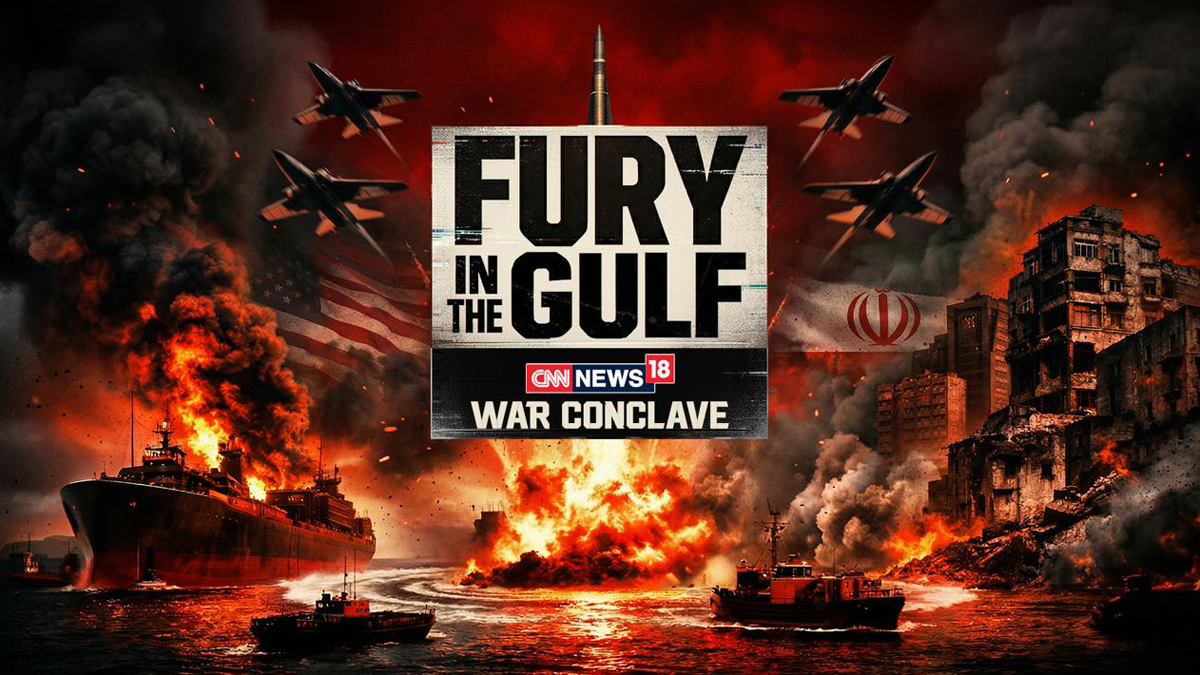
MUMBAI: CNN-News18 is set to host a special three-hour broadcast, Fury in the Gulf – War Conclave, on April 7, aiming to decode the escalating West Asia crisis and its far-reaching implications for India.
Scheduled from 4:00 PM to 7:00 PM, the conclave comes at a time when tensions between Iran and the United States are reshaping global geopolitics and triggering economic uncertainty. With India’s deep energy ties, trade links and large diaspora in the Gulf, the developments carry significant domestic relevance.
Built around the theme ‘Conflict, Consequences, and The Future,’ the programme will feature six curated sessions combining one-on-one interviews and panel discussions. The focus is to cut through the clutter and offer viewers a clearer understanding of the fast-evolving situation.
Key sessions include ‘Diplomacy in Times of War’ featuring Shashi Tharoor, and ‘World After the Iran Conflict’ with voices such as Ram Madhav, Reuven Azar, representatives from the European Union and the Iranian Deputy Envoy. Another session titled ‘Another Dunkirk?’ will bring together K. J. S. Dhillon and Jitin Prasada among others.
CNN-News18 editorial affairs director Rahul Shivshankar said, “In times of war, clarity becomes the most powerful tool. Fury in the Gulf – War Conclave brings together credible voices to address the questions and confusion that arise amid an overwhelming influx of information.”
He added that the initiative is aimed at delivering “facts, perspective, and insight” at a time when misinformation can easily cloud public understanding.
Echoing the sentiment, CNN-News18 CEO– English and business news Smriti Mehra said the conflict marks a defining global moment, with consequences that extend well beyond the region. She noted that the conclave seeks to present the crisis with “depth, nuance and responsibility” so audiences can better grasp its real-world impact.
As geopolitical tensions continue to dominate headlines, the conclave positions itself as an attempt to bring order to the noise, offering viewers a structured, insight-led look at a complex and rapidly shifting global situation.






