News Broadcasting
IBF comes out in support of CAS


NEW DELHI / MUMBAI: It would have been surprising if it hadn’t happened thus. Simply because of the big stakes for which some of the members are playing. So the inevitable was made public today: “The Indian Broadcasting Foundation (IBF) unanimously supports the Indian government’s move to introduce conditional access system in the country and bring about addressability in Indian cable homes.”
“The IBF board of directors is of the view that the Indian Parliament and the public should be apprised of the ground realities of the cable industry,” a statement from the IBF stated today.
“The IBF feels that the Indian Government and public should be made aware of the two areas of concern in the cable industry – transparency in subscriber numbers and existing monopolies of cable operators.”

The statement further added that the IBF board of directors feel that the consumers should be informed that the Pay TV broadcasters are recovering a small percentage of the revenues from cable operators “who are (to be held) responsible for the arbitrary hikes in prices.”
The IBF also took the opportunity to deny a report published to the contrary in a section of the media a few days ago that the IBF, led by the foundation’s chief, Prasar Bharati CEO KS Sarma, is against the implementation of CAS.
Speaking to indiantelevision.com, SET India CEO Kunal Dasgupta explained the IBF came out with the statement to correct a misconception among some sections in the information and broadcasting (I&B) ministry that broadcasters were opposed to CAS in any way. “We want to send across a clear message that whatever the fulminations on the subject in Parliament may be, the broadcasters have a clear position on it.” Referring to the problems the Bill was having in getting discussed in Parliament despite being listed on the agenda, Dasgupta made the point that “if the Bill is not coming (forward), it is not because of us.”
Another IBF member told indiantelevision.com this evening: Even if some members (of the IBF) or individual broadcasters are not so much for CAS, or the way it is being sought to be implemented, there is no way the Foundation can come out openly against CAS as this will mean taking on the government head on which will not be a good move for many.”
As far as the CAS discussion in Parliament is concerned, indiantelevision.com learns from government sources that the government (read the I&B ministry) has very little time to get the issue of CAS through the Rajya Sabha (Upper House of Parliament) where it does not have a majority.
According to the sources, tomorrow (Friday) is a holiday because of Eid and on Saturday no business is transacted in the House. I&B minister Sushma Swaraj is slated to go out on a tour of Gujarat again from 8-10 December because of the impending elections which are to be held between 12 and 14 December.
That leaves just four days for the government to get the RS okay for CAS before Parliament adjourns sine die on November 18 to be reconvened again in February for the budget session.
But then the firebrand Swaraj is known to push through things which she believes is for the larger benefit of the public. So, don’t write off CAS yet.
IBF is an apex body of broadcasters who operate and/or have business interests in India. Recently the Foundation was in the news for allegedly refused membership to Fashion TV, which has been a target of government barbs accusing the channel of showing things that are “contrary to Indian culture”.






News Broadcasting
CNN-News18 to host Fury in the Gulf conclave on West Asia crisis
Three-hour summit to unpack geopolitical fallout and impact on India
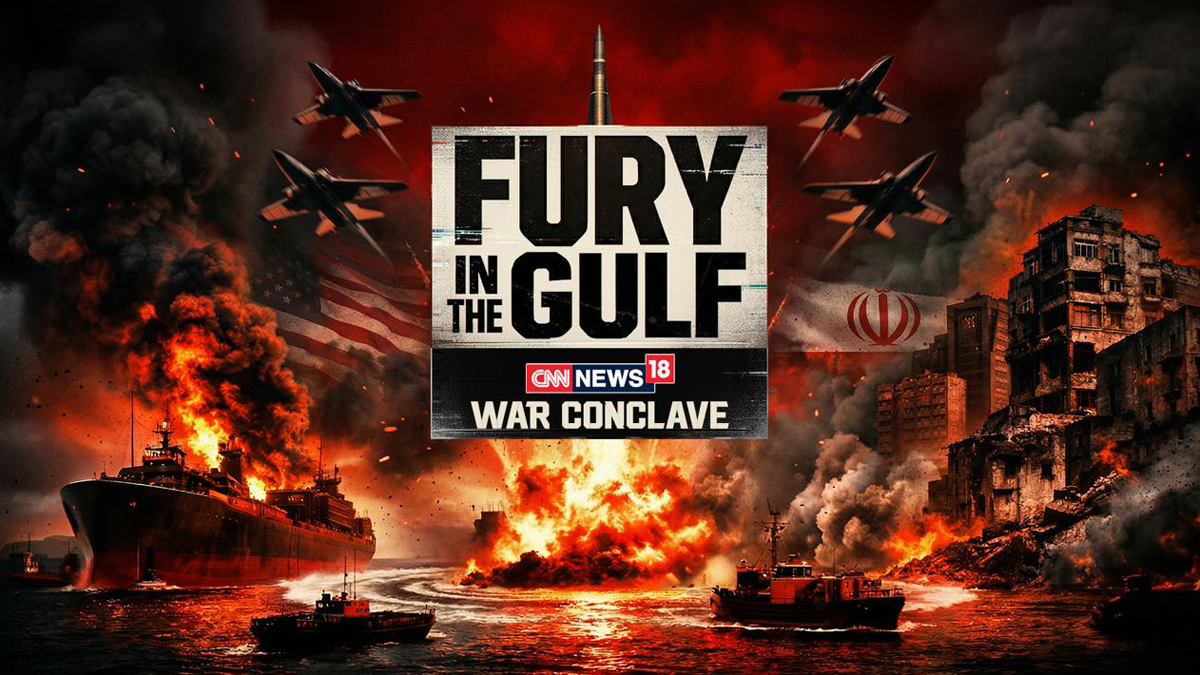
MUMBAI: CNN-News18 is set to host a special three-hour broadcast, Fury in the Gulf – War Conclave, on April 7, aiming to decode the escalating West Asia crisis and its far-reaching implications for India.
Scheduled from 4:00 PM to 7:00 PM, the conclave comes at a time when tensions between Iran and the United States are reshaping global geopolitics and triggering economic uncertainty. With India’s deep energy ties, trade links and large diaspora in the Gulf, the developments carry significant domestic relevance.
Built around the theme ‘Conflict, Consequences, and The Future,’ the programme will feature six curated sessions combining one-on-one interviews and panel discussions. The focus is to cut through the clutter and offer viewers a clearer understanding of the fast-evolving situation.
Key sessions include ‘Diplomacy in Times of War’ featuring Shashi Tharoor, and ‘World After the Iran Conflict’ with voices such as Ram Madhav, Reuven Azar, representatives from the European Union and the Iranian Deputy Envoy. Another session titled ‘Another Dunkirk?’ will bring together K. J. S. Dhillon and Jitin Prasada among others.
CNN-News18 editorial affairs director Rahul Shivshankar said, “In times of war, clarity becomes the most powerful tool. Fury in the Gulf – War Conclave brings together credible voices to address the questions and confusion that arise amid an overwhelming influx of information.”
He added that the initiative is aimed at delivering “facts, perspective, and insight” at a time when misinformation can easily cloud public understanding.
Echoing the sentiment, CNN-News18 CEO– English and business news Smriti Mehra said the conflict marks a defining global moment, with consequences that extend well beyond the region. She noted that the conclave seeks to present the crisis with “depth, nuance and responsibility” so audiences can better grasp its real-world impact.
As geopolitical tensions continue to dominate headlines, the conclave positions itself as an attempt to bring order to the noise, offering viewers a structured, insight-led look at a complex and rapidly shifting global situation.






