News Headline
IBF, AIDCF say STB interoperability unviable in current conditions


MUMBAI: Universal interoperability of STBs in cable and DTH is not viable in the given conditions, Indian Broadcasting Foundation (IBF) and All India Digital and Cable Federation (AIDCF) said in response to Telecom Regulatory Authority of India (TRAI)’s consultation paper on the (set top box) STB interoperability.
Both associations suggested the authority to understand and analyse the transition of STB interoperability on the broadcasting ecosystem, with no disruption to the pay TV system before proceeding further on the consultation paper.
The authority on 11 November had released a consultation paper on interoperable STBs for digital TV broadcasting services. It had sought comments from all stakeholders on the best solution to implement the STB interoperability.

AIDCF brought to TRAI’s notice that DPOs and MSOs have invested a huge amount in the STB system to adapt the process of digitisation. And, any sudden change could put DPOs and MSOs in financial risk, which eventually could lead to job losses.
The associations urged the authority to review the adherence of license conditions of the DTH operators at the field and analyse the behaviour of subscribers with respect to migration from one DTH Player to another.
Even after the merger of Videocon and Dish TV the platforms are maintaining their separate systems and set top boxes due to no interoperability.
AIDCF in its comments said, around 40 million households, availing Free Dish broadcasting services, are using the non-interoperable STBs. The implementation of STB-interoperability would force subscribers to purchase new STBs while shifting to alternate service providers/DPOs.
Similarly, investment of interoperable STBs is likely to be passed on to the subscribers, which would lead to a rise in consumer price for viewing cable services, added AIDCF.
Meanwhile, IBF said: “The authority, in the present consultation paper has stated that though there is de-jure technical interoperability but there is de-facto technical non-interoperability. Despite the presence of provisions relating to interoperability in the existing DTH guidelines, the concept has not yet been implemented owing primarily to the inability to provide get solutions.”
IBF has also requested the authority to consider the preliminary submissions related to the viability of implementation of STBs: cost, safeguarding content, and no compromise on security, while contemplating any options for the implementation of STB interoperability.
“To proceed any further with the consultation, it would be most useful and relevant to conduct a technical and operational session to get a better understanding of the technology and possibly emerge with a proof of concept, prior to commenting on the technology and viability,” IBF suggested.
The association believes that the introduction of STB interoperability would require a number of technological as well as operational capabilities and change thereby fostering the necessity to introduce content security provisions and anti-piracy mechanisms.
They have also asked the authority to ensure that the expenditure incurred in acquainting the STBs with interoperability features, does not get irrationally passed on to consumers and that they are not burdened with the increased costs incurred.
Most importantly, any regulatory provisions should be mandated after confirming viability, quality and standards of the emerging technology and should ensure that the security of the CAS, SMS and other related addressable systems of the DPOs is not compromised and is not susceptible to piracy.
IBF also raised a concern over Embedded Common Interface (ECI), a solution considered by TRAI to achieve interoperability.
“ECI does not meet the content security and technology needs of major content providers. ECP includes strong content security features and the ability to forensically watermark content distributed on home devices, set-top boxes, etc. ECI falls short of the ECP requirements. In particular, ECI does not require watermarking and does not create a secure location for a watermark,” IBF added.





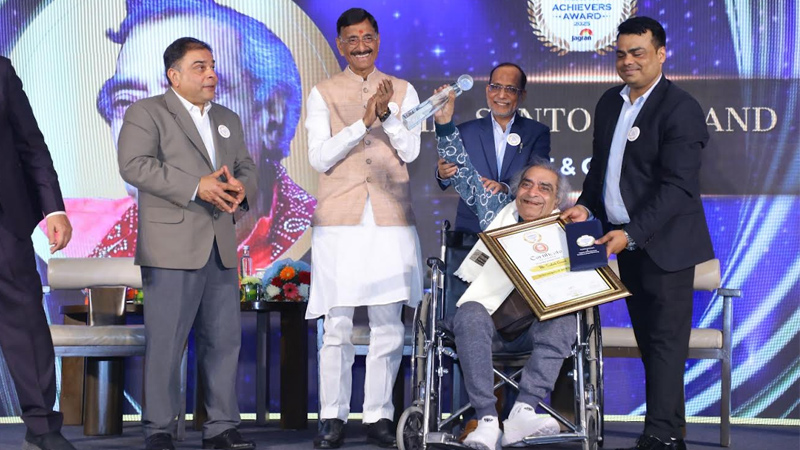
NEW DELHI: Hamdard Laboratories gathered a cross-section of India’s achievers in New Delhi on Friday, handing out the Hakeem Abdul Hameed Excellence Awards to figures who have left their mark across healthcare, education, sport, public service and the arts.
The ceremony, attended by minister of state for defence Sanjay Seth and senior officials from the ministry of Ayush, celebrated individuals whose work blends professional success with a sense of public purpose. It was as much a roll call of achievement as it was a reminder that influence is not measured only in profits or podiums, but in people reached and lives improved.
Among the headline awardees was Alakh Pandey, founder and chief executive of PhysicsWallah, recognised for turning affordable digital learning into a mass movement. On the sporting front, Arjuna Awardee and kabaddi player Sakshi Puniya was honoured for her contribution to the game and for pushing women’s participation onto bigger stages.
The cultural spotlight fell on veteran lyricist and poet Santosh Anand, whose songs have echoed across generations of Hindi cinema. At 97, Anand accepted the honour with characteristic humility, reflecting on a life shaped by perseverance and hope.
Healthcare honours spanned both modern and traditional systems. Manoj N. Nesari was recognised for strengthening Ayurveda’s place in national and global health frameworks. Padma shri Mohammed Abdul Waheed was honoured for his research-backed work in Unani medicine, while padma shri Mohsin Wali received recognition for his long-standing contribution to patient-centred care.
Education and social development also featured prominently. Padma shri Zahir Ishaq Kazi was honoured for decades of work in education, while former Meghalaya superintendent of Police T. C. Chacko was recognised for public service. Goonj founder Anshu Gupta received an award for his dignity-centred rural development initiatives, and the Hunar Shakti Foundation was honoured for empowering women and young girls through skill development.
The Lifetime Achievement Award went to former IAS officer Shailaja Chandra for her long career in public healthcare and governance, particularly in the traditional systems under Ayush.
Speaking at the event, Hamdard chairman Abdul Majeed said the awards were a tribute to those who combine excellence with empathy. “These awardees reflect Hakeem Sahib’s belief that healthcare, education and public service must ultimately serve humanity,” he said.
Minister Seth struck a forward-looking note, saying India’s young population gives the country a unique opportunity to become a global destination for learning, health and wellness by 2047.
The ceremony also featured the trailer launch of Unani Ki Kahaani, an upcoming documentary starring actor Jim Sarbh, set to premiere on Discovery on 11 February.
Instituted in memory of Unani scholar and educationist Hakeem Abdul Hameed, the awards have grown into a national platform that celebrates those building a more inclusive and resilient India. For one evening at least, the spotlight was not just on success, but on service with substance.






