I&B Ministry
I&B minister Arun Jaitley asks media to strike a balance

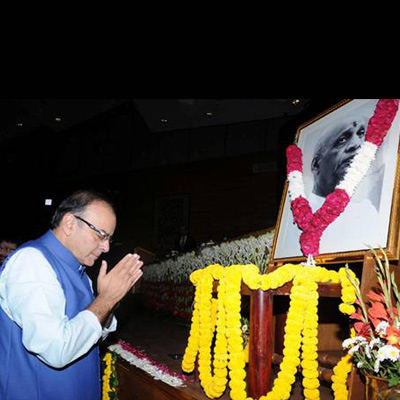
NEW DELHI: Information and Broadcasting Minister Arun Jaitley today cautioned the media to strike a fine balance between freedom of speech and expression and the reasonable restrictions so as to maintain public order and integrity and sovereignty of India.
He said free speech is an aid to good governance in view of the changes taking place in the media landscape and the scope and content of issues related to Right to Freedom of Speech and Expression.

The overall scenario was also influenced by technological tools that brought about a change in the form, style and method of dissemination. These developments also impacted the definition of news, which today was increasingly being influenced by the camera and channel driven mode.
Jaitley made these remarks while delivering the Sardar Patel Memorial Lecture 2015 on: “Is it possible to impose reasonable restriction on Freedom of Speech & Expression given today’s media landscape,” which was organised by All India Radio on behalf of Prasar Bharati.
The Minister referred to the evolution of media and the right to freedom of speech and expression. Citing global examples, Jaitley brought out the finer aspects of the freedom of speech vis-?-vis privacy; need to protect the source of information in public interest and media restraint with regard to matters that were sub-judice. He said that these issues had generated discussions amongst academicians, media fraternity and other concerned stakeholders.
The Minister lauded the judiciary for its role in expanding the scope of Right to Freedom of Speech and Expression over the years. Various judicial pronouncements had underlined the spirit of the idea behind the Right to Freedom of Speech and Expression under the Constitution and correlated contemporary developments, issues and changes in the media space.
Judicial pronouncements subsequently in specific cases focused on issues pertaining to the idea of reasonableness related to restrictions under the Article 19 (2) of the Constitution in the interest of sovereignty, security and public order. Nonetheless due to the pluralistic character of the media space, it was important to exercise caution taking into account public order and sensibilities. He said that these restrictions could only be imposed by law and were specific rather than general so as to prevent misuse.
Regarding the media landscape, Jaitley said satellite television had brought about a sea change in the presentation of news. In the current scenario, the recipient of information had the right to information and knowledge which was also being considered part of the debate under Right to Freedom of Speech and Expression.
The dissemination process in the social media space had also impacted the information flow and contributed to the public debate and setting of agendas in the policy framework. Social media had led to the empowerment of citizens by giving them a voice. Decision makers were increasingly using social media to gauge public sentiments on government policies making public reactions, among other things, the new agenda setters for governance.
Jaitley touched upon the global practices being followed in the context of social media restrictions. He referred to the ‘right to be forgotten’ incorporated by the European Court of Human Rights, which empowered the state authority to remove the reference of the aggrieved person from internet citing citizen’s right to privacy. He also spoke about the jurisdictional principles with respect to reasonable restrictions on Freedom of Speech and Expression in the light of changes and issues that had been raised in this context.
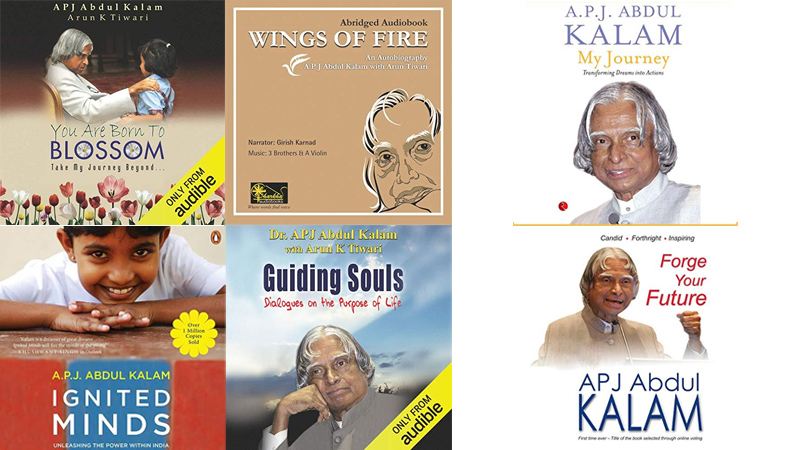
These lectures started in 1955 and the first Memorial lecture was delivered by Sri C. Rajagopalachari. In this series, the speakers in the previous years included Dr. Zakir Hussain, Morarji Desai, and Dr. A.P.J. Abdul Kalam.


I&B Ministry
Digital radio, D2M tech set to reshape broadcasting and public messaging
Govt pushes next-gen delivery while TRAI tightens grip on spam ecosystem
NEW DELHI: India’s broadcasting and telecom landscape is undergoing a quiet but significant upgrade, with digital radio and Direct-to-Mobile (D2M) technologies emerging as powerful tools for mass communication, while regulators step up efforts to tackle spam calls.
According to the Ministry of Information and Broadcasting, digital radio and D2M are poised to transform how content reaches audiences by making more efficient use of spectrum. In simple terms, multiple channels can now be delivered over a single frequency, opening the door to a wider range of free-to-air content.
D2M technology takes this a step further by enabling video, audio and data to be broadcast directly to mobile handsets without relying on SIM cards or mobile data. The result is a resilient and cost-effective data pipe that can deliver everything from entertainment and education to critical emergency alerts, even in low-connectivity scenarios.
At the same time, the Telecom Regulatory Authority of India is tightening its grip on unsolicited commercial communication, better known as spam calls. The regulator has deployed a distributed ledger technology platform to bring transparency and accountability into the system.
Through this blockchain-based setup, consumers can register their preferences on receiving promotional messages, while businesses and telemarketers must also sign up and operate within defined rules. The platform also includes a complaint mechanism that allows users to report spam, with complaints shared across telecom operators for coordinated action.
The government’s broader push is being supported by infrastructure upgrades under the Broadcasting Infrastructure and Network Development scheme. Implemented through Prasar Bharati, the initiative focuses on modernising networks such as Akashvani and Doordarshan, including digitisation and adoption of next-generation broadcast equipment.
In a written reply in the Lok Sabha, Ministry of Information and Broadcasting minister of state for information and broadcasting L. Murugan said these steps are part of a larger effort to promote emerging technologies and strengthen the country’s broadcasting backbone. The response came to a query raised by member of Parliament Rao Rajendra Singh.
Together, these developments point to a dual-track strategy: expanding access to reliable, low-cost content while cleaning up the communication ecosystem. As digital pipes get smarter and spam filters sharper, India’s airwaves may soon feel a lot less noisy and far more useful.






