iWorld
“I don’t think of filmmaking being gender-specific:” Mitakshara Kumar

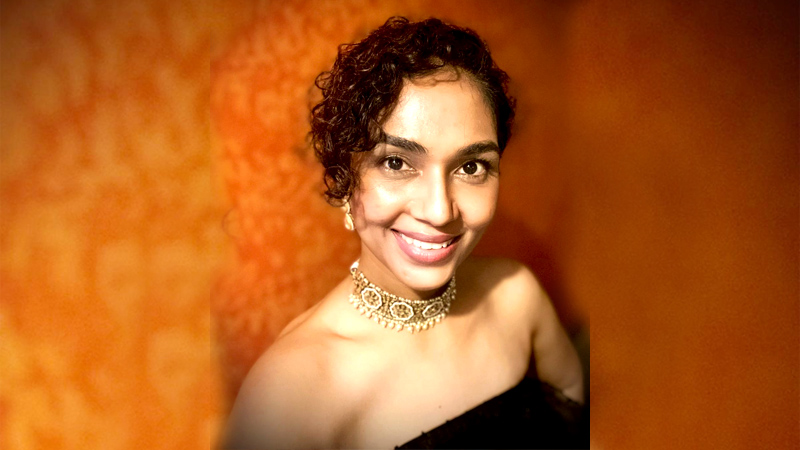
Mumbai: In the world of Indian cinema, where grandeur and storytelling often collide, Mitakshara Kumar stands out as a filmmaker whose journey is as captivating as her creations. With a background in Economics from Lady Shri Ram College and prestigious training from the Film and Television Institute of India, Kumar has seamlessly transitioned from a promising student to a celebrated director and writer. Her cinematic journey began as an assistant director with the iconic Bluffmaster! and has since soared to the grand stages of working on Sanjay Leela Bhansali’s epics and helming Disney+Hotstar’s The Empire.
Indiantelevision.com’s Suman Baidh caught up with filmmaker Mitakshara Kumar as she took the helm of Netflix and Sanjay Leela Bhansali’s highly anticipated Heeramandi as episodic director, Kumar reflects on her career, her passion for diverse storytelling, and the future she envisions for herself and the industry.
Edit Excerpts:

On your entry into the film business working with Emmay Entertainment, and collaborating with Sanjay Leela Bhansali.
I must agree that God and my parents have been kind, to say the least. Even before graduation, I had decided to write the FTII entrance exams, much to the disappointment of my father because I was an economics student. However, when I cleared FTII and thankfully because it is a premier Government Institution, my father’s disappointment soon turned into pride, especially because I was awarded a scholarship. After that, the decision to move to Mumbai was a natural step. I am thankful to all the filmmakers I had the opportunity to work with, be it Rohan Sippy, Onir, Nikhil Advani or Sanjay Leela Bhansali, each one of them have taught me so much and have helped me be the filmmaker I am today. I cannot say I had it tough, because the reality is that I did not… I definitely worked hard to get here, but the truth is also that the people I worked with were generous to let me learn.
On directing the magnum opus Empire and then becoming the episodic director for Heeramandi, was there any difference for you, considering both were grand period pieces
Honestly speaking, not quite. Because thanks to my training with Sanjay Sir on the films he made, I was comfortable with working on the scale and grandeur of these series. I am grateful to Nikhil Advani, Monisha Advani and Madhu Bhojwani for entrusting me with The Empire. It was my first and their confidence in me, in a way, bolstered mine as well. Then when Heeramandi happened, because it was Sanjay Sir, the world and the script was to the minutest of detail. So as a filmmaker for me on both fronts, it was easy, also as we had the best of crew and talent working on them with the utmost of passion. What more can a filmmaker ask for. (Laughs)
On your concern towards being labelled as a filmmaker who only does period pieces
There are days when I do think about it, I will not lie. But then I think that is the nature of the business. We are quick to slot people as to what they can and cannot do, till you break that for yourself. As a filmmaker, I want to be known for my quality of work and the legacy I will get to leave behind. I am working on my next, feature debut which is a contemporary, off-beat subject and have written another thriller that I am working on. So for myself, I am exploring different genres of cinema. I want to keep challenging myself to grow as a filmmaker.
On the most difficult thing about being a filmmaker
I think growing up, my parents much like everyone else’s, always told me that no matter what you do, do it to the best of your ability. That is something I try and do on every piece of work I do. I think I am now conditioned in a manner wherein I look at the difficulties presented on a set as an opportunity and find solutions around them. I think that is the best way to tackle a problem be it on set or off. On a day to day basis every film set will have something or the other that poses as a problem, the key for me is to be able to not lose focus on the larger picture and more importantly the story being told.
On that note, you are one of the few female filmmakers in the country
I don’t think of filmmaking being gender specific. That being said, yes there are fewer women filmmakers in the country, but that is something I also believe is on the path of change. Today we have the likes of Zoya Akhtar, Anjali Menon, Payal Kapadia, Kiran Rao, Meghna Gulzar, Farah Khan and so many others who are championing Indian cinema not just here but globally. I think what is crucial is that more press highlights the achievements of all these brilliant storytellers, which in turn can inspire a whole new breed of women storytellers.
On inspiring a new breed of storytellers
As an art form, Cinema is meant to inspire and evoke emotions. If through my work I can even influence one person for the good, then why not? Something I am more conscious about in my filmmaking is having more women part take in the making of my films and content. Just like I was given the platform, I only think it is fair and just to pave the way for others and pass it forward. Knowledge is always to share and that is something that I have learnt both from my parents and all my collaborators across everything I have done so far. The only thing I keep telling everyone is never stop dreaming and if you fail, keep trying till you succeed. “Himmat harne ki cheez nahi hai” (“Courage is not something that one loses”).
Could you tell us a bit about what’s next
I have a couple of interesting things lined up. Like I mentioned, one of them is a feature film with Emmay Entertainment. Collaborating with Nikkhil, Monisha and Madhu is always fun, for me they are home. I have a women-centric comedy I am working on and then there is also a thriller and musical that I am working on. I think it would be a little early in the day to share more details and I would leave that to my producers to do when the time is right. I want to focus on the creative and storytelling.







eNews
Piyush Thakur steps down as Inshorts’ chief revenue officer
Former vice president and cro says exit marks a new chapter after close to a decade of building revenue and partnerships at Inshorts Group.
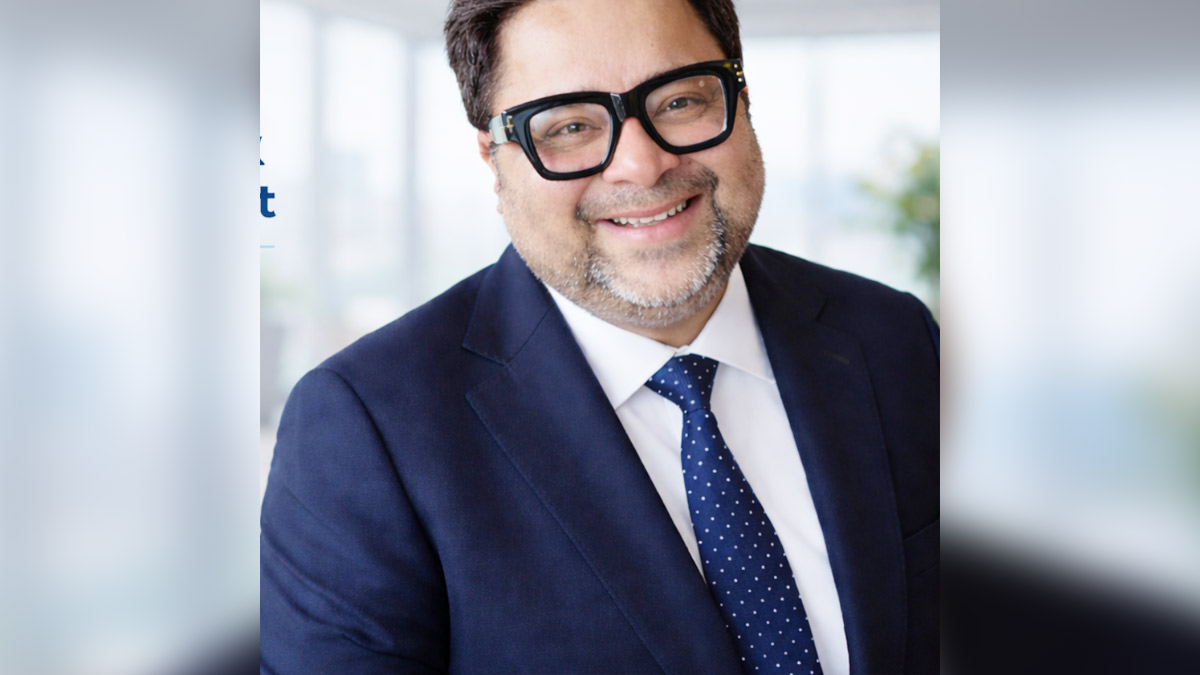
NOIDA: Piyush Thakur has stepped away from Inshorts Group after nearly 10 years with the company, marking the end of a long tenure that culminated in his role as chief revenue officer.
In a farewell note, Thakur said he was “turning a new page” after almost a decade at Inshorts, calling it one of the hardest professional decisions he has made. He added that his exit was not driven by uncertainty about the future, but by reflection on a long association with the company.
Thakur joined Inshorts in October 2016 as vice president and spent around seven years in the role before being elevated to chief revenue officer in April 2024, a position he held until April 2026.
He said his tenure was defined by “thousands of mornings, late nights, product debates and breakthrough moments”, as the company evolved into a large-scale digital news platform used by millions.
In his note, Thakur emphasised that Inshorts’ growth was a collective effort across teams, adding that engineers, designers, sales teams and customer support staff all contributed to building the platform. He said the company’s success was not the result of individuals but of “everyone who stayed, passed through, and left their mark”.
Before Inshorts, Thakur worked across several digital media and business development roles. At ESPN, he served as senior regional manager from October 2015 to October 2016, focusing on growth initiatives, strategic opportunities and video distribution.
At Times Internet, he worked for nearly three years, including as head of business development from April 2015 to September 2015 and chief manager from January 2013 to March 2015. His responsibilities included monetisation of mobile platforms, managing media and developer partnerships, and driving revenue across digital properties such as The Times of India and The Economic Times.
Earlier, he worked at Brandmovers as head of business development from June 2012 to June 2013, handling digital, mobile and social media marketing solutions, client development and strategic consulting. During this period, he also worked on advertising revenue, brand strategy and CRM-based solutions.
At Inshorts, Thakur’s role focused on revenue strategy, mobile and media partnerships, and growth initiatives across platforms. His profile highlights experience in mobile product management, digital business models, partner ecosystems and revenue expansion in high-growth environments.







