News Broadcasting
I am not stepping into Arnab Goswami’s shoes at Times Now – Rajdeep Sardesai

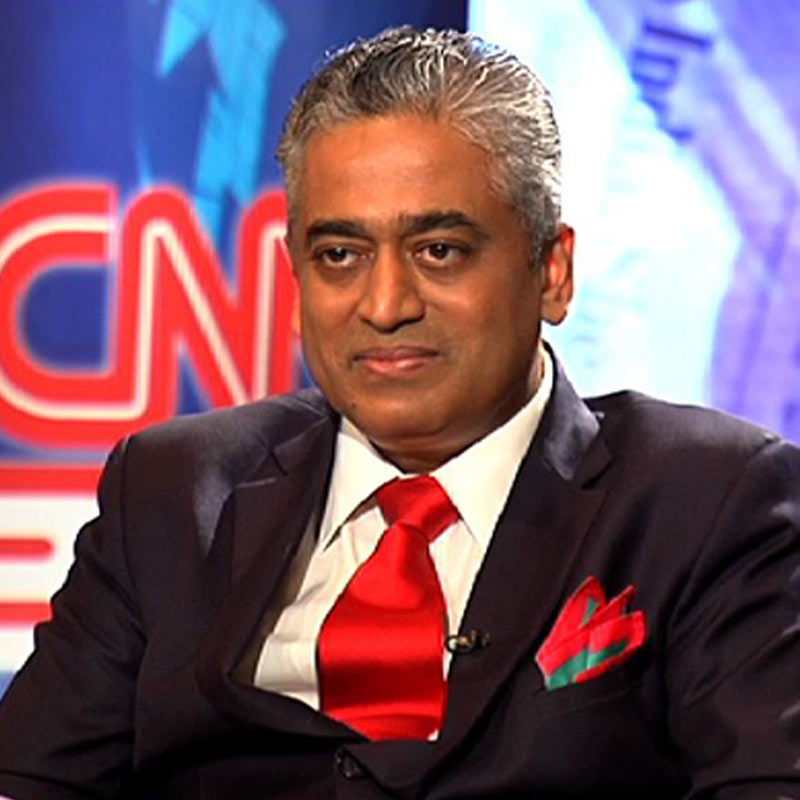
MUMBAI: Arnab Goswami’s Times Now exit has sent tremors through the news television industry, something that many can’t believe as yet as his name was so strongly associated with the channel. Speculation is rife about who will be his replacement, and who will fill the big fat void that has been created owing to his departure. And, questions are being asked about where he is headed.
Among the names being mentioned as someone who will hop into his chair is that of Rajdeep Sardesai, who is currently with the Aroon Purie’s TV Today Network. Rajdeep cut his teeth early on in his career at The Times of India and ended up being the city editor of the Mumbai edition. So, it will be like a homecoming for him or so is what the grapevine is muttering.
Television happened, and the son of the former Indian test bat Dilip Sardesai, and even an Oxford cricketer himself, Rajdeep plunged heavily into it. After stints in NDTV, he went on to found the channel GBN (now CNN News18) before quitting and becoming the consulting editor at TV Today Network.

Rajdeep, however, was pretty candid when indiantelevision.com got in touch with him about the strong buzz that he was replacing Arnab as the editor-in-chief at Times Now. “Rubbish,” he said. “I have not even met anyone for anything of that kind to happen. I am just coming back from a teaching assignment in Georgetown, and there is no way that I will step in for Arnab. At least for now…”
That there is no love lost between the two is no doubt, but Arnab’s style of opinionated journalism is a total antithesis of what classical Rajdeep purports he practices.
Other names being bandied about include Barkha Dutt, and Rahul Joshi. The facts are not forthcoming as the Times Television Network has not put out an official statement as yet.
The expectation was that Rajdeep would reportedly take over as the Times Now editor-in-chief, and enable the smooth transition. When indiantelevision.com reached out to Times Network MD MK Anand, he said, “I have no comments to make at this juncture.”
Have we heard the last of L’affaire Arnab? Most unlikely as the media does indeed want to know! This time at least!
Also Read: From reporting news to becoming news
The after-effect of Arnab Goswami’s exit




News Broadcasting
Kamlesh Singh receives Haldi Ghati Award from MMCF
India Today Group editor honoured for three decades of journalism at Udaipur ceremony.
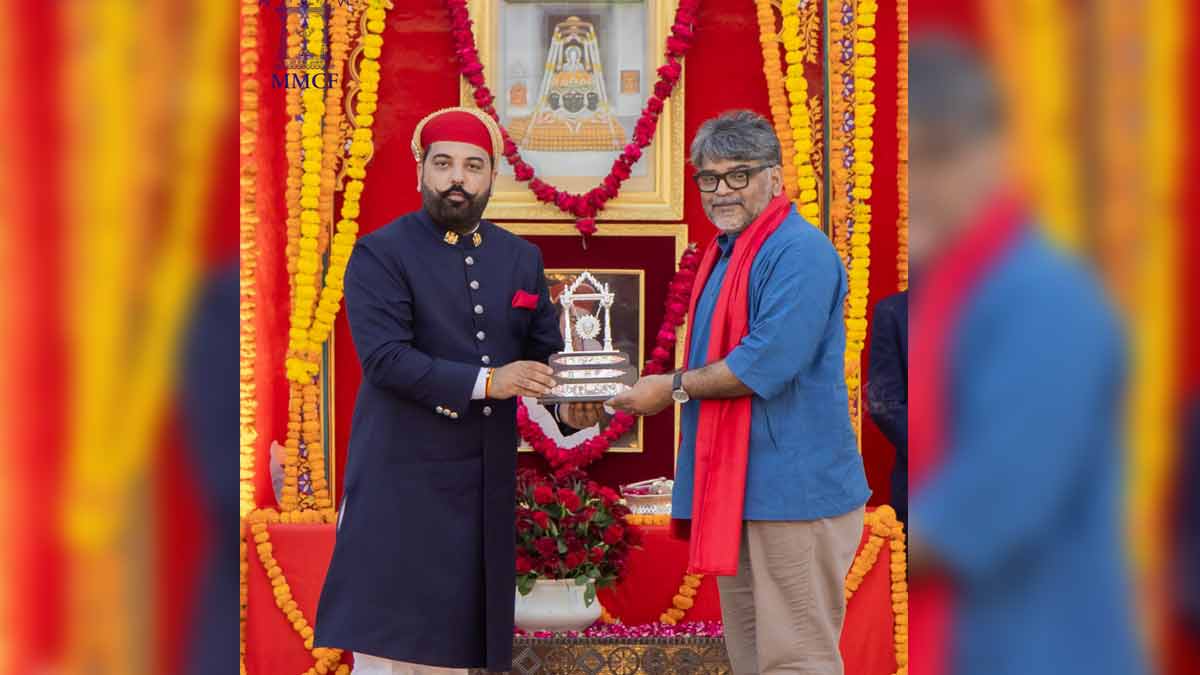
MUMBAI- Kamlesh Singh just turned a lifetime of sharp words into a shiny shield because when journalism wakes up a society, even the Maharana of Mewar wants to pin a medal on it.
The Maharana of Mewar Charitable Foundation (MMCF) conferred its prestigious Haldi Ghati Award on Kamlesh Singh, a senior editor at the India Today Group, during a ceremony in Udaipur on 15 March 2026. The national award, instituted in 1981-82, recognises “work of permanent value that initiates an awakening in society through the medium of journalism.”
Singh, who leads several editorial initiatives including Aaj Tak Radio, the Teen Taal community and The Lallantop, was presented the honour by Lakshyaraj Singh Mewar, Managing Trustee of MMCF. The citation highlighted his three decades of contributions to Indian media, innovations in digital journalism, mentoring young reporters, and his popular podcast persona “Tau” on Teen Taal, which fosters thoughtful public discourse.
The Haldi Ghati Award, named after the historic Battle of Haldighati symbolising valour and resilience, is one of four national awards given annually by MMCF. Past recipients include Tavleen Singh, Piyush Pandey and Raj Chengappa.
Other honourees this year included Padma Vibhushan Pt Hari Prasad Chaurasia, Vedamurti Devvrat Rekhe, Treeman of India Marimuthu Yoganathan, Vir Chakra Capt Rizwan Malik, and US-based researcher Molly Emma Aitken, who received the Colonel James Tod Award for contributions to understanding Mewar’s spirit and values.
In an era where headlines often shout louder than substance, the MMCF quietly reminded everyone that real journalism isn’t about noise, it’s about the quiet, persistent work that stirs society awake, one thoughtful story at a time.







