Gaming
Hyderabad levels up as Comic Con and DreamHack unite for epic pop fest

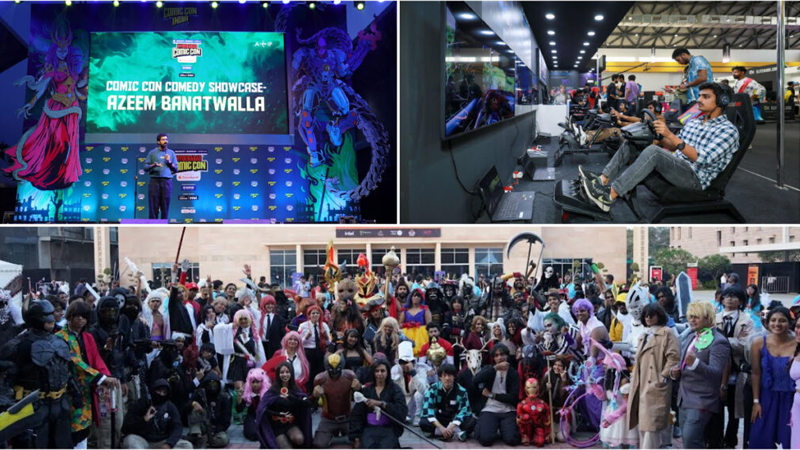
MUMBAI: Heroes, gamers, and dreamers assembled Hyderabad just turned into a real-life multiverse. The Maruti Suzuki Arena Hyderabad Comic Con, powered by Crunchyroll and paired with Dreamhack India, transformed Hitex Exhibition Centre into the capital of cool from 31 October to 2 November.
Over 40,000 fans including 400-plus cosplayers descended on the venue for three packed days celebrating everything from anime and comics to esports and AR-fuelled fun. Organised by Comic Con India under Nodwin Gaming, the event fused nostalgia and next-gen tech in equal measure.
Comic lovers geeked out with Mike Costa, writer and executive producer of Lucifer, and J. Gonzo, the artist behind striking covers for Teenage Mutant Ninja Turtles and Ghost Rider. Joining them were 17 homegrown comic creators, 9 performers, and 80 exhibitors, ensuring every corner buzzed with creative energy.

Maruti Suzuki kept things fast and fun with a reflex challenge and display zone, while Crunchyroll’s booth had anime fans grooving to a non-stop playlist. Android Land’s Panfest drew BGMI warriors into live open lobbies, where digital battles matched the on-ground adrenaline.
Meanwhile, Amar Chitra Katha and Tinkle blended the old with the new, offering fans a VR-powered dive into India’s mythological universes. The Running Man Rage Room let visitors smash their stress away, while the Predator Badlands Zone and Zootopia 2 Zone kept the high-octane vibes going.
Adding star power, DreamHack India celebrated its sixth anniversary with a gamer’s paradise of retro titles, KO Fight Night, chess blitz tournaments, and BYOD arenas. KMR YoshiKiller claimed victory in Tekken 8, pocketing Rs 1 lakh, while JLQ Hallmark took home Rs 40,000 as the Super Smash Bros champ.
The cosplay highlight came with the Hyderabad qualifiers for the Indian Championship of Cosplay 2026, where Pracheta Banerjee bagged the city crown and Rs 50,000, earning a spot in the national finals.
Gaming icons like Scout, Kaashvi, Ghatak, and Trace God met fans at packed meet-and-greet zones powered by Revenant Esports, while Red Bull athletes and Godlike creators including Jonathan, V3nom, Zgod, Sharkshe, and Payal lit up the Red Bull Tetris National Finals. Even childhood favourite Rob (Harun Robert) of M.A.D. fame joined the party.
Performers such as Syed Bashaar, Vivek Muralidharan, Karan Singh, Celinedee Matahari, and Kayden Sharma brought music, magic, and mischief to the stage, turning the convention into a festival of pure fandom.
Reflecting on the success, Comic Con India CEO Shefali Johnson said, “Hyderabad’s energy was phenomenal, people of all ages came together to celebrate pop culture. From Shinchan to Ironman, fans showed up in full spirit.”
Nodwin Gaming co-founder & MD Akshat Rathee added, “We’ve once again brought pop culture and gaming together like never before. The enthusiasm from Hyderabad fuels us to make every season bigger and bolder.”
With the capes folded and controllers powered down, Comic Con India now heads east with its first-ever Guwahati edition on 22–23 November 2025 proving that India’s pop culture universe is only getting larger, louder, and infinitely more legendary.






Gaming
India’s broadcasters say no to Fifa World Cup 2026
Fifa has slashed its asking price by 65 per cent but India’s broadcasters are still not buying
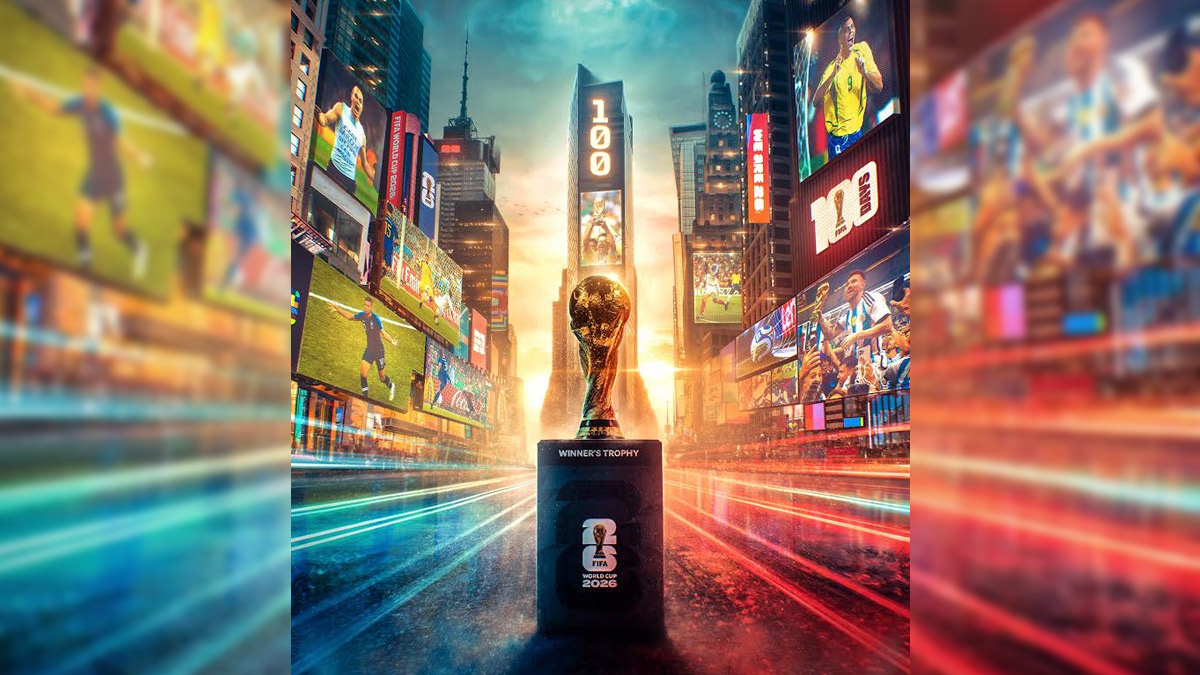
MUMBAI: The world’s biggest sporting event cannot find a single taker in the world’s most sports-mad nation. Fifa’s television rights for the 2026 World Cup remain unsold in India, and the clock is ticking loudly.
To shift the property, world football’s governing body has already swallowed hard and cut its asking price from $100m to $35m, bundling in the 2030 edition as a sweetener. It has not worked. Indian broadcasters have looked at the offer, done the sums and quietly walked away.
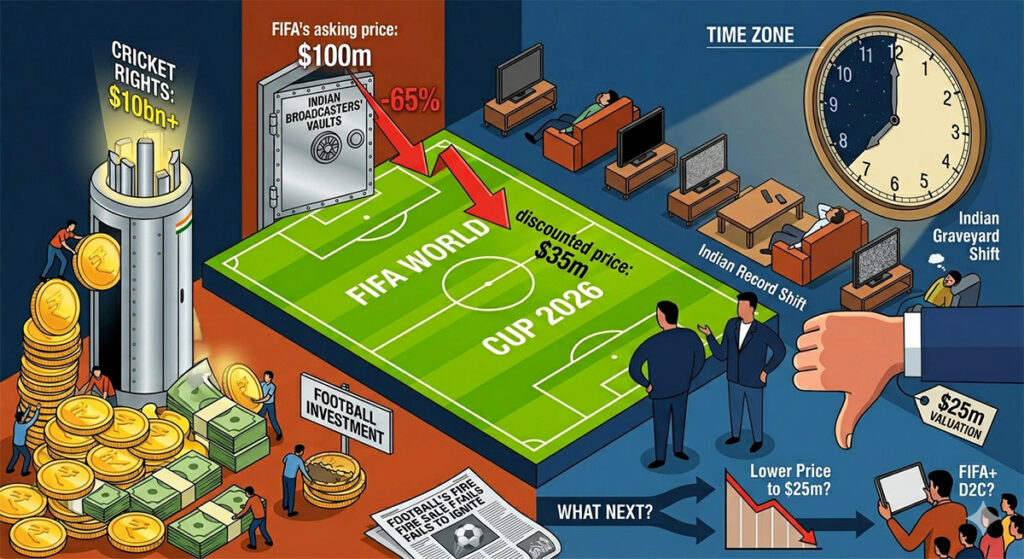
The reasons are brutally simple. The 2026 tournament, co-hosted by the United States, Canada and Mexico, kicks off in a time zone that turns India’s primetime into a graveyard shift. Most matches will air between midnight and 7am IST, a scheduling catastrophe for advertisers chasing mass reach. The 2022 Qatar edition was a gift by comparison, with matches dropping neatly into Indian evenings. North America offers no such luxury.
The market itself has also changed beyond recognition. The merger of Star India and Viacom18 into JioStar has gutted the competitive tension that once sent sports rights prices soaring. Where rival bidders once slugged it out, there is now a single dominant buyer, and it is in no hurry. JioStar has valued the rights at roughly $25m, a full $10m below Fifa’s already-discounted floor price. That gap has so far proved unbridgeable.
Broadcasters are also nursing a ferocious cricket hangover. Between 2022 and 2023, Indian media houses committed well over $10bn to cricket rights alone, covering IPL, ICC events and BCCI domestic fixtures combined. After a binge of that scale, appetite for a football package that delivers a fraction of the ratings, in the dead of night, is close to zero.
The economics of football broadcasting make the maths even harder. Cricket, with its natural breaks every few overs, is an advertiser’s paradise. Football offers a 15-minute halftime and precious little else. Recovering a nine-figure rights fee from a single half-hour ad window is a stretch at the best of times. These are not the best of times: the Indian government’s tightening grip on real-money gaming and gambling advertising has vaporised a category that once underwrote the economics of big sporting events.
Nor is the World Cup an anomaly. Indian Super League valuations have cratered. English Premier League rights have softened across successive cycles. The cooling of football as a broadcast commodity in India is structural, not cyclical.
With the tournament opening on 11th June, Fifa is running out of road. It may yet blink and meet JioStar at $25m. Or it may go direct, streaming the entire tournament on its own platform, Fifa+, or cutting a digital deal with YouTube, and hoping that a generation of Indian football fans finds its way there without a broadcaster to guide them.
Either way, the beautiful game’s Indian chapter is looking decidedly ugly.







