Cable TV
HVL reports lower loss for fiscal ’17, media & communications segment revenue up


BENGALURU: Hinduja Ventures Limited (HVL) reported lower consolidated loss of Rs 566.08 million for the fiscal ended 31 March 2017 (FY-17, current fiscal) as compared to the consolidated loss of Rs 812.068 million for the previous financial year (FY-16). HVL’s consolidated total revenue increased 21.47 percent in FY-17 to Rs 8,260.06 million as compared to Rs 6,799.789 million in the previous year.
The company’s media and communications segment reported 24.5 percent higher revenue at Rs 6,131.949 million in the current year as compared to Rs 4,925.454 million in the previous fiscal. Loss from the Media and Communications segment operating loss in the current year was higher at Rs 3,148.046 million as compared to Rs 1,858.129 million as compared to the prevision financial year.
As reported by www.indiantelevision.com, HVL had informed the stock exchanges yesterday that the National Company Law Tribunal (NCLT) has sanctioned the Scheme of Arrangement for the vesting of its direct subsidiary Grant Investrade Limited’s (GIL) Head-end-in-the-sky (HITS) business undertaking to its indirect subsidiary Indusind Media & Communications Limited. Consequently, the company has filed revised financial results for fiscal 2017.

The company said that the arrangement is expected to strengthen HVL’s investment in the media business, which will in turn unlock the value of its shareholders. Accordingly, pursuant to the aforesaid arrangement, the Headend-in-the- Sky (HITS) business undertaking of GIL vested in to IMCL with effect from 01 October 2016, being the appointed date.
GIL had received the HITS licence in March 2014. Last year in September, the Hinduja Group had received shareholders’ approval to restructure its media business, which includes cable TV business under IndusInd Media and headend-in-the-sky (HITS) under GIL.
ALSO READ :
HVL receives NCLT nod for GIL’s HITS to de-merge into Indusind Media
Hinduja Ventures PAT rises marginally Q1FY18, Nxt Digital HITS 640 districts
Hinduja’s NXT Digital enters Fastway-dominated Punjab
Retransmission law contravened: Sidhu, Fastway refutes ‘monopoly’ charge






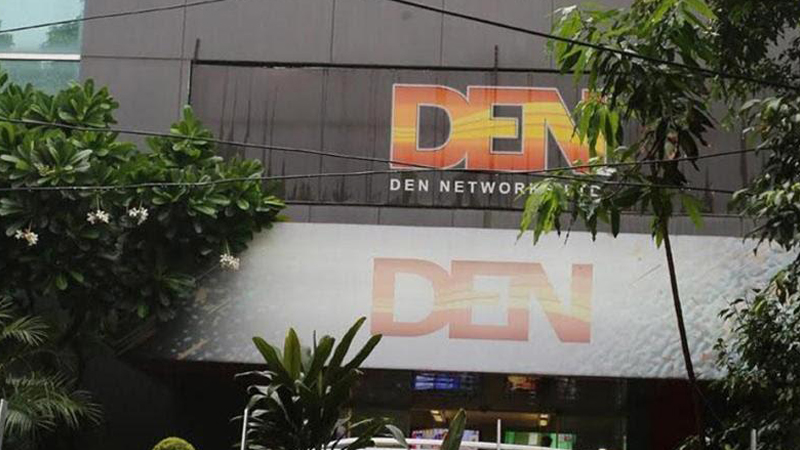
MUMBAI: When margins wobble, liquidity talks and in Q3 FY25-26, cash did most of the talking. Den Networks Limited closed the December quarter with consolidated revenue of Rs.251 crore, marginally higher than the previous quarter but down 4 per cent year-on-year, even as profitability stayed resilient on the back of strong cash reserves and disciplined cost control.
Subscription income softened to Rs.98 crore, slipping 3 per cent sequentially and 14 per cent from last year, while placement and marketing income offered some cheer, rising 15 per cent quarter-on-quarter to Rs.148 crore. Total costs climbed faster than revenue, up 7 per cent QoQ to Rs.238 crore, driven largely by higher content costs and operating expenses. As a result, EBITDA dropped sharply to Rs.13 crore from Rs.19 crore in Q2 and Rs.28 crore a year ago, pulling margins down to 5 per cent.
Yet, the bottom line refused to blink. Profit after tax stood at Rs.40 crore, up 15 per cent sequentially and only marginally lower than last year’s Rs.42 crore. A healthy Rs.57 crore in other income helped cushion operating pressure, keeping profit before tax at Rs.48 crore, broadly stable quarter-on-quarter despite the tougher cost environment.
The real headline-grabber, however, sits on the balance sheet. The company remains debt-free, with cash and cash equivalents swelling to Rs.3,279 crore as of December 31, 2025. Net worth rose to Rs.3,748 crore, while online collections accounted for 97 per cent of total receipts, underscoring strong cash discipline across operations, including subsidiaries.
In short, while Q3 showed signs of operating strain, the financial backbone remains solid. With zero gross debt, steady profits and a formidable cash war chest, the company enters the next quarter with flexibility firmly on its side proving that in uncertain markets, balance sheet strength can be the best growth strategy.






