News Broadcasting
HTMT consolidates media subsidiaries, spins off IT/ITES biz


MUMBAI: Hinduja TMT Limited (HTMT) is unifying its media subsidiaries under one umbrella while spinning off its IT/ITES business into a separate entity. The demerger exercise is to bring independent focus to the two lines of activities, a senior company executive said.
The residual HTMT (without IT/ITES) will house the media business and have a cash of $125 million. This will be used for new business initiatives, acquisitions and funding the expansion of the media and entertainment business.
As part of the restructuring, In2Cable (subsidiary which is into broadband business) and InNetwork Entertainment (content) are being merged into IndusInd Media & Communications Ltd (cable TV distribution under Incablenet brand).

“The parent company for the consolidated media business will be HTMT (an existing listed entity),” said HTMT global chief financial officer Yagnesh Sanghrajka. HTMT will have 60.5 per cent equity of the merged media and entertainment entity while Intel and Kudelski will hold 5 per cent.
The demerged IT/ITES company, HTMT Technologies Ltd, is expected to list in February-March 2007. It will have a cash of $140 million. The funds will be used for acquisition opportunities overseas, particularly the US, as the company plans to add to its geographical reach and domain competencies.
The IT/ITES business has a strong presence in Healthcare, Telecom, Consumer Electronics and BFSI segment. It is present in 5 different countries and has a successful track record in acquiring and integrating overseas ITES-BPO companies in the past two years. It is now looking for more such acquisitions in the USA-UK-Latin American markets to consolidate its position and expand inorganically as a leading global player in this industry.
“Both the entities will have enough cash to pursue their independent expansion plans. The money is from the proceeds of the Hutchison Essar stake sale which fetched $450 million. Out of this, $150 million is for debt repayment while payout towards dividend will be around Rs 1.3 billion. The balance will remain with these two entities,” Sanghrajka said.
Post restructuring, a shareholder of HTMT holding two equity shares of Rs 10 each would receive one equity share of Rs 10 in HTMT Technologies and one equity share of Rs 10 in HTMT.
“The restructuring of the media business is from April. The demerger would be recorded from 1 October,” Sanghrajka said.
The merger of media and entertainment is being done to converge video, voice and data services under one entity as a triple play provider. The merger will bring in operational efficiencies, provide sharper focus on the core business of media & entertainment, telecom and content distribution and ensure smooth implementation of conditional access system (CAS) across Indian cities, packaged with value added services, he added.
The demerger of the IT/ITES business as well as the restructuring of the media and entertainment entities is subject to requisite statutory approvals and sanction of the Mumbai High Court.
HTMT also announced a special dividend of Rs 20 per share on shares of Rs 10 each to the shareholders out of the proceeds of the Hutchison Essar sale.

News Broadcasting
Kamlesh Singh receives Haldi Ghati Award from MMCF
India Today Group editor honoured for three decades of journalism at Udaipur ceremony.
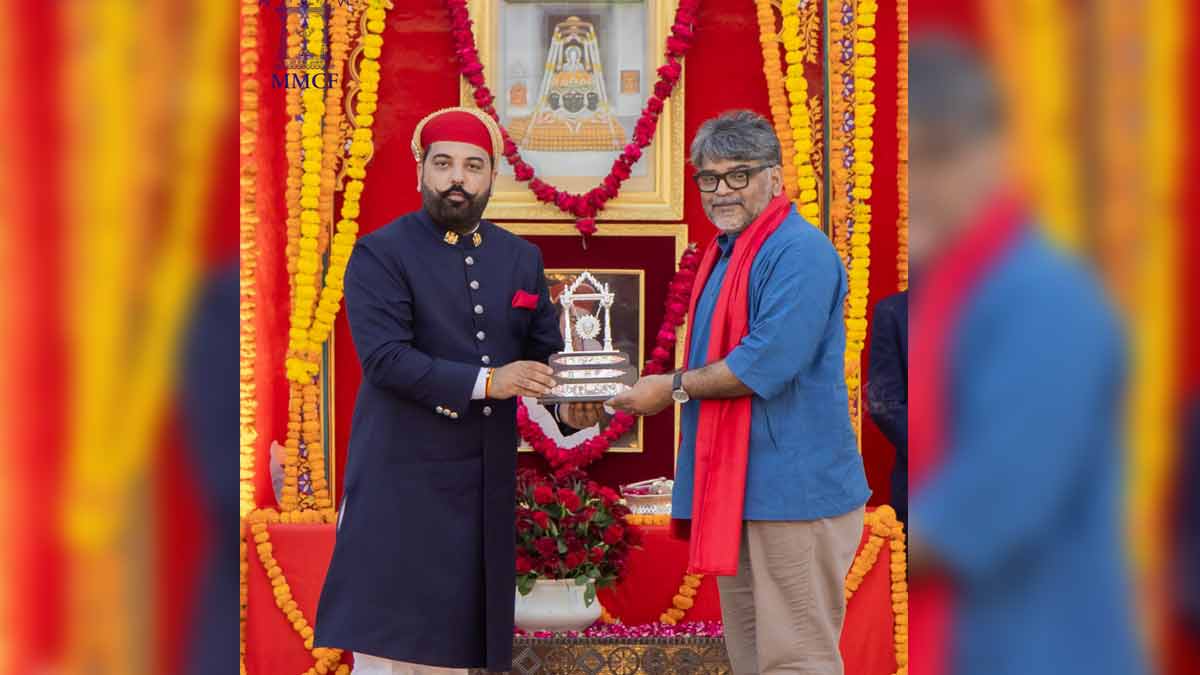
MUMBAI- Kamlesh Singh just turned a lifetime of sharp words into a shiny shield because when journalism wakes up a society, even the Maharana of Mewar wants to pin a medal on it.
The Maharana of Mewar Charitable Foundation (MMCF) conferred its prestigious Haldi Ghati Award on Kamlesh Singh, a senior editor at the India Today Group, during a ceremony in Udaipur on 15 March 2026. The national award, instituted in 1981-82, recognises “work of permanent value that initiates an awakening in society through the medium of journalism.”
Singh, who leads several editorial initiatives including Aaj Tak Radio, the Teen Taal community and The Lallantop, was presented the honour by Lakshyaraj Singh Mewar, Managing Trustee of MMCF. The citation highlighted his three decades of contributions to Indian media, innovations in digital journalism, mentoring young reporters, and his popular podcast persona “Tau” on Teen Taal, which fosters thoughtful public discourse.
The Haldi Ghati Award, named after the historic Battle of Haldighati symbolising valour and resilience, is one of four national awards given annually by MMCF. Past recipients include Tavleen Singh, Piyush Pandey and Raj Chengappa.
Other honourees this year included Padma Vibhushan Pt Hari Prasad Chaurasia, Vedamurti Devvrat Rekhe, Treeman of India Marimuthu Yoganathan, Vir Chakra Capt Rizwan Malik, and US-based researcher Molly Emma Aitken, who received the Colonel James Tod Award for contributions to understanding Mewar’s spirit and values.
In an era where headlines often shout louder than substance, the MMCF quietly reminded everyone that real journalism isn’t about noise, it’s about the quiet, persistent work that stirs society awake, one thoughtful story at a time.







