Gaming
How Tata Communications is growing India’s e-sports market


NEW DELHI: Heightened internet penetration and increasing base of smartphone users has helped generate a positive hype fore-sports and gaming in India. Amounting to 15 per cent of the global total, Indian gamers are leading the change in how gaming and tournaments are perceived in the country. The process has been further accelerated by the Covid2019 pandemic, which has drawn a significant chunk of Indian players and viewers online.
Technology is playing a key role in this process and Tata Communications has been at the forefront of enabling these technical interventions. Elaborating on how the company is leading the next generation of e-sports and gaming community into the future with its robust systems, global head media and entertainment Dhaval Ponda addressed the audience on the day one of the first Games, E-sports & More Summit (GEMS), organised by Indiantelevision.com and AnimationXpress.com.
He said, “We have the experience of working within the industry in the US, South Korea, and Europe. And we have worked with not only publishers but also technology platforms to individual gamers. We are looking at the gaming sector to evaluate the monetisation opportunities to give us a significantly better industry and significantly better experience as a community.”

Tata Communications is now striving to provide technical support to the Indian e-sports and gaming community across three key areas: digital infrastructure, streaming platforms, and production and broadcasting.
“Digital Infrastructure is something that is very close to us. The global submarine cable infrastructure is owned and operated by the Tata group. Currently, one-third of the internet infrastructure, from a consumption standpoint, is supported and managed by Tata Group and this can be the vehicle for every single aspect of viewing interaction; whether it’s streaming, or playing on mobile/iPad/PC and posting the content – the nearest CDN server will be able to do it. Also, these streams are in real-time,” he elaborated on the first aspect.
He added that their servers are running on low latency that gives a niche experience to the viewers without any lag in video quality.
Earlier this year, Tata Communication had also announced the launch of a 100G media backbone in collaboration with Swedish communication equipment maker, Net Insight, to enable broadcasters, sports organizations, OTT companies, and E-sports businesses to offer streams with up to 4K UHD resolution. Ponda promised to take it up to 8K UHD quality.
The conglomerate is already involved in remote production of some of the biggest e-sports and gaming tournaments, from completely virtualising the production to getting it on cloud servers.
“These are the points for people to consider where they can deliver a unique experience. An ultra-low-latency delivery is something that is absolutely vital for e-sports and gaming and this is something that will become a core component of the viewing experience. So by ultra-low latency, we are talking about a second or two-second delay between the event actually taking place and consuming it on a platform or video stream that we put live anywhere in the world,” he said.
Additionally, Tata Communications has set its sights on creating an exceptional pre-game and in-game experience for players. “Our comprehensively managed security service also includes DDoS attack detection and mitigation along with web application firewall and unified threat management. It is very important for the publishers too because one DDoS attack in a big event will mean people going somewhere else,” he said.
Ponda signed off by saying that things are looking pretty exciting when it comes to e-sports in India. “We’re attempting to take it mainstream, which means at par with tier-1 sports, whether it be football or rugby, or cricket.”





Gaming
Konami concludes successful eFootball India campaign
Campaign featuring Rinku Singh, Varun Chakravarthy and other stars boosts engagement ahead of FIFA World Cup 2026.
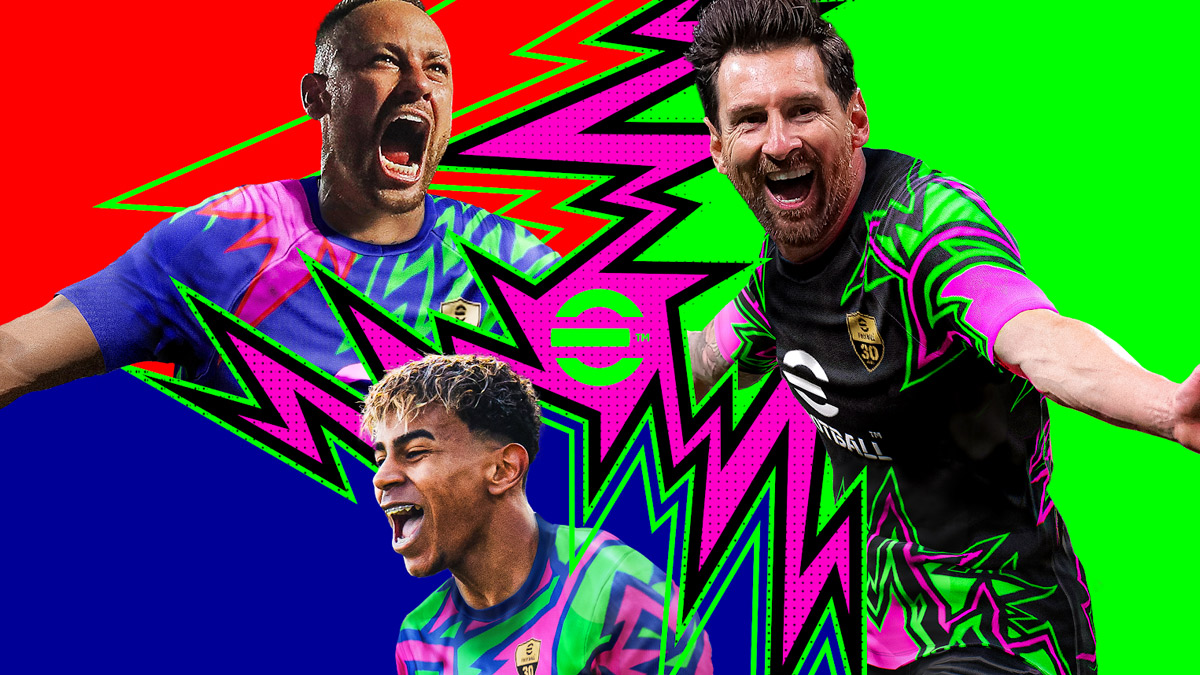
MUMBAI: When cricket meets football in the virtual world, even the biggest fans can’t help but score and Konami’s latest eFootball campaign in India has clearly hit the back of the net. Konami Digital Entertainment has successfully wrapped up its India campaign for eFootball, which brought together cricketers Rinku Singh and Varun Chakravarthy, actors Naslen Gafoor and Chandu Salim Kumar, and footballers Sahal Abdul Samad and Shubhasish Bose. The multi-star campaign generated strong excitement across gaming, football, and creator communities through social content, fan participation, and in-game engagement.
Building on the initial launch that featured a limited-time Lionel Messi card, the campaign united fan communities, lifestyle creators, football creators, and competitive eFootball influencers. It significantly expanded the game’s visibility and deepened engagement with fans across the country.
The campaign also saw thousands of entries submitted as part of its social media engagement challenge, reflecting high levels of community enthusiasm and active creator involvement.
Looking ahead, Konami plans to build on this momentum with more eFootball experiences for Indian fans as the FIFA World Cup 2026 approaches. With global attention on the tournament set to rise, India will remain a key market for deepening community engagement and bringing fans closer to the action.
In a country that lives and breathes sport, Konami has shown that mixing real-world stars with virtual thrills is a winning formula leaving fans eagerly waiting for the next goal.






