iWorld
Hotstar targets Hindi market with free content

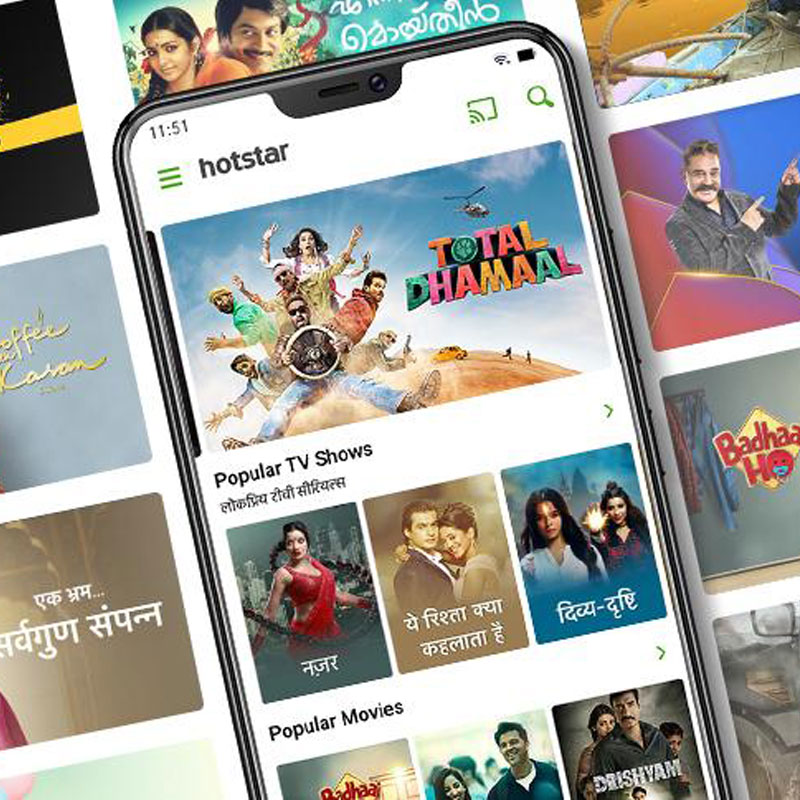
MUMBAI: Hotstar has launched a 360-degree marketing campaign, “Hotstar ka vaada, free entertainment sabse zyada”, reaching out to millions of viewers in Hindi-speaking markets who currently have little access to high-quality content for free.
With more than a 60 per cent share of entertainment consumption in 2019, Tier II and III cities have been fuelling the growth of online video consumption in India. However, a large section of the audience in these cities still does not have access to high-quality entertainment and is limited to watching reruns of outdated content. While some have lost access to paid channels following the TRAI tariff order, others are hampered by infrastructure issues such as frequent power cuts. This issue of access is further exacerbated by a single shared TV screen in large households.
Hotstar is bridging the accessibility gap for viewers through its campaign, which spreads the word about its vast library of high-quality free content. Hotstar’s free content includes several movies like Chhichhore, Mission Mangal; TV shows from Star Plus like Yeh Rishta Kya Kehlata Hain, Nazar, Kasauti Zindagi Kay and Star Bharat like Savdhaan India along with News.

Hotstar chief product officer Varun Narang said: “The next wave of growth for OTT platforms will come from smaller cities as adoption picks up. In fact, non-metros today outstrip metros in terms of video consumption. Through this campaign, our endeavour is to engage with our audiences further in Hindi-speaking markets and take digital video consumption to new frontiers.”
Hotstar EVP and business head Sidharth Shakdher said: “We see a huge opportunity in building awareness and encouraging trial across Tier II and Tier III cities around our vast and high-quality library of free entertainment, and thereby, enabling a behavioural shift towards online video consumption. Hotstar’s free content will unlock a new world of entertainment for this audience which currently has to settle for outdated reruns on a limited set of channels.”
The campaign aims to make inroads into Tier II and III markets using mass media vehicles such as TV and print, along with on-ground activations. A unique out-of-home initiative will culminate in a billboard spanning 10,000 sq. ft, the longest ever set up in India, which will feature the variety and scale of content available on Hotstar.
Other high-impact activations include out-of-home billboards and wall paintings across 80 small towns in India along with a branded mobile marketing canter van campaign. This canter will travel across 30 cities for a month, conducting roadshows across 150 congregation points, showcasing Hotstar’s breadth of content. This will be amplified further with unique interventions such as Nukkad Natak and on-the-spot engagement activities.






iWorld
JioHotstar enters micro-drama space with 100 shows under Tadka banner
Short-form push targets 300M users as content meets commerce in new format
MUMBAI: JioStar has made a bold play in India’s fast-growing micro-drama space, rolling out over 100 short-form shows under its new Tadka banner on JioHotstar, timed with the massive viewership surge of the Indian Premier League 2026.
The scale of the launch signals clear intent. Rather than testing the waters, the company has dived in headfirst, releasing a wide slate of content on day one. Each show is designed for quick consumption, with episodes running 60 to 90 seconds in a vertical format tailored for mobile-first audiences.
The move comes as India’s micro-drama market, currently valued at around $300 million, is projected to grow tenfold to over $3 billion by 2030. Globally, the format has already proven its mettle, with China’s micro-drama sector recording explosive growth in recent years.
What sets this rollout apart is its built-in monetisation strategy. The shows are free to watch and ad-supported, with brand integrations woven directly into storylines from the outset. It reflects a broader shift where content and commerce are increasingly intertwined, rather than operating in silos.
The timing is equally strategic. With more than 300 million users already tuning in for IPL action, JioHotstar is effectively turning cricket’s biggest stage into a discovery engine for its new format.
The company is not entering an empty arena. Early movers like Kuku TV, MX Player and platforms backed by Zee Entertainment Enterprises have already laid the groundwork, building audiences and validating demand for snackable storytelling.
Now, with scale, distribution and advertiser interest aligning, the big players are stepping in. For JioStar, Tadka may well serve as a proving ground for the next evolution of digital entertainment, where every minute counts and every second sells.
If the bet pays off, India’s next big content wave might just arrive in under 90 seconds.






