iWorld
Hooq Filmmakers Guild is a hot bed for creative talent, says CEO Peter Bithos

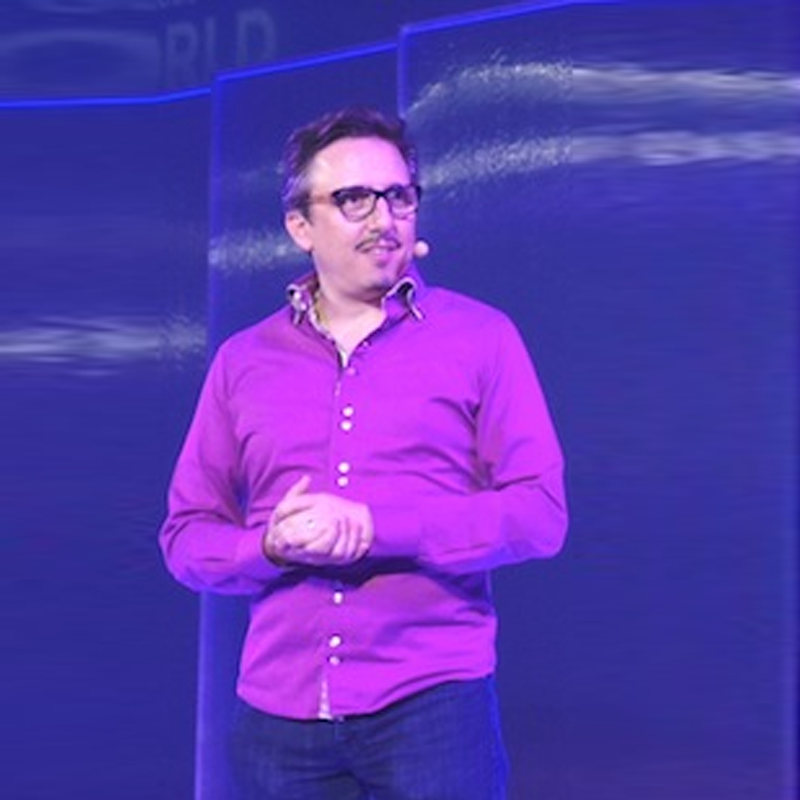
MUMBAI: Days after announcing five filmmakers from Southeast Asia, who have the chance to submit their scripts for a pilot, Hooq Filmmakers Guild has selected five more submissions. It claims to be one of the top video on demand service in the region.
The selections are Crazy in Love (Indonesia), Golden Star (Philippines), Merit Score (Thailand), ReLie (Thailand) and Trips (Singapore).
Hooq CEO Peter Bithos said, “The Hooq Filmmakers Guild has really highlighted the immense talent out in Asia and the selection process for the top six pilots announced earlier was not an easy task. The fact that we could pick out five more brilliant ideas on top of the six we already chose for pilot development means this region is a hot bed for creative talent. We are excited and committed to developing these talents and helping them turn their vision into your next favourite series.”

While these five new submissions are not ready to be developed into pilots, they hold enough merit and potential to become compelling stories that will appeal to audiences around South-East Asia. Hooq is investing in the potential of these ideas by developing them into scripts.
The confirmed 2017 selections are Bhak (India), Suay (Thailand), Haunt Me (Singapore), How To Be A Good Girl (Singapore), Aliansi (Indonesia) and Heaven and Hell (Indonesia) with any of the five, commissioned for script development, having the potential to join them.
The top ideas will get $30,000 to produce a pilot episode for the platform. Hooq subscribers and judges will vote for their best choice which will be converted into a full series.
The five submissions bookmarked for script development are as follows:
Merit Score by Lit Samajarn from Thailand follows the story of 25-year-old entertainment diva and mean queen Nadia, who meets an untimely end in a movie accident. Determined to do whatever it takes to get into Heaven, she has to improve her meagre merit score, secure enough brownie points and karma in the next 30 days.
The other Thai submission is ReLie by Nirattisai Ratphithak. This thriller revolves around a wildly popular mobile game app that becomes all too real for a group of university students when the players begin dying one by one. To stop the deaths, they need to figure out who the murderer is, but doing so leads them to face the unexpected truth that is much bigger than what they would ever imagine.
From Singaporean Xavier Ong comes Trips, about a down-on-his-luck model who joins a host club so he can earn enough money to marry his girlfriend. However, he soon finds himself being drawn deeper and deeper into a world where love and money are nebulously entwined and the only way to survive, is to lose yourself.
The Philippines is represented by Jed Cyril Punongbayan of We Love Motion Inc. under Go Motion Productions. He created Golden Star, the story of a 48-year-old mother of three who tries to secure a better future for herself and her family by entering the tricky world of show business.
Finally, Indonesia’s Mahakarya Pictures and Aditya Testarossa present Crazy In Love, an offbeat romance about plain jane Kinanti, who gets a peculiar gift from a mysterious stranger – a lip colour that will make fall in love with her through a single kiss. When Aaron, a famous celebrity, accidently kisses her, Kinanti’s destiny changes completely.
The Hooq Filmmakers Guild drew nearly 500 submissions for original content from across the region. The submissions drew from a large range of genres and styles, ranging from science fiction to historical dramas.
Also Read:



iWorld
Micro-Dramas Surge in India, Redefining Mobile Content Habits
Meta-Ormax study maps rapid rise of short-form storytelling among 18–44 audiences.
MUMBAI: Micro-dramas aren’t just short, they’re the snack that ate Indian entertainment, and now everyone’s bingeing between the sofa cushions. Meta, in partnership with Ormax Media, has released ‘Micro Dramas: The India Story’, a comprehensive study unveiled at the inaugural Meta Marketing Summit: Micro-Drama Edition. The report maps how the vertical, bite-sized format is reshaping content consumption for mobile-first audiences aged 18–44 across 14 states.
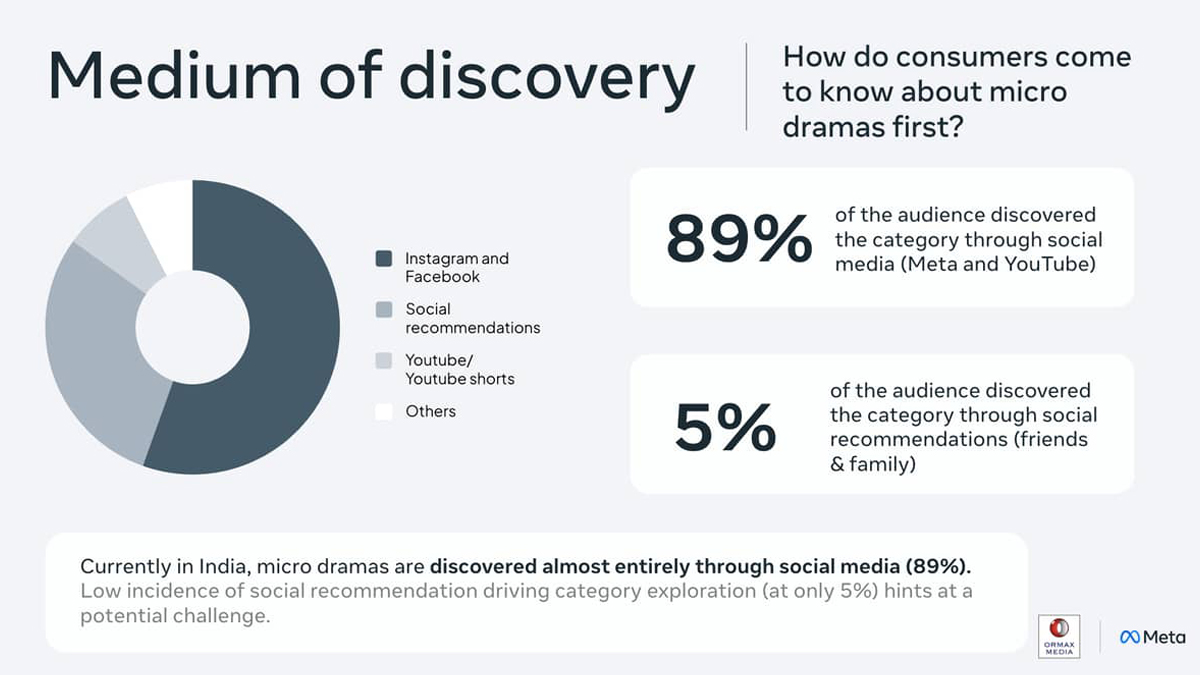
Conducted between November 2025 and January 2026 through 50 in-depth interviews and 2,000 personal surveys, the research reveals that 65 per cent of viewers discovered micro-dramas within the last year proof of explosive adoption. Nearly 89 per cent encounter the format through social feeds and recommendations, making algorithm-driven discovery the primary engine rather than active search.
Key viewing patterns show a median of 3.5 hours per week (about 30 minutes daily) spread across 7–8 short sessions. Consumption peaks between 8 pm and midnight, with additional spikes during commutes and work breaks classic “in-between moments” that the format fills perfectly. Around 57 per cent of viewing happens in ambient mode (while doing something else), and 90 per cent is solo, enabling more intimate, personal storytelling.
Romance, family drama and comedy lead genre preferences. Audiences show growing openness to AI-generated content, 47 per cent find it unique and creative, while only 6 per cent say they would avoid it entirely. Regional languages are surging after Hindi and English, Tamil, Telugu and Kannada dominate consumption.
Meta, director, media & entertainment (India) Shweta Bajpai said, “Micro-drama isn’t a passing trend, it’s rewriting the rules of Indian entertainment. In under a year, an entirely new category of platforms has emerged, built audience habits from scratch, and created a business vertical that is scaling fast.”
Ormax Media founder-CEO Shailesh Kapoor added, “Micro-dramas are beginning to show the early signs of becoming a distinct content category in India’s digital entertainment landscape. When a format aligns closely with how audiences naturally engage with their devices, it has the potential to scale very quickly.”
The study proposes ecosystem-wide responsibility, universal signposting of commercial intent, shared accountability among advertisers, platforms, creators, schools and parents, built-in safeguards, and formal media literacy in schools.
In a feed that never sleeps and a day that never stops, micro-dramas have slipped into the cracks of every spare minute turning 30-second stories into the new national pastime, one vertical swipe at a time.







