News Broadcasting
Hongkong-based Casbaa voices concerns relating to CAS to Swaraj

NEW DELHI: The Hong Kong based Cable & Satellite Broadcasting Association of Asia (Casbaa) – a representative organisation of close to 120 pay TV and related companies in the Asia Pacific, many of whom have Indian operations – has submitted a note to the information & broadcasting minister Sushma Swaraj which lists the problems that implementation of conditional access system (CAS) and the Cable TV Networks Regulation Amendments Bill 2002 could throw up.
The association, which counts the Star Group, Time Warner and Discovery as its members, has highlighted the fact that while analog technology remains relatively low cost, it is also vulnerable to piracy and could create more problems in the future. “Under the proposed system, there will be significant opportunity for cable system operators to continue to under-report subscriber numbers”, says the association.
Mandating CAS , which require a significant amount of capital investment, could have an adverse effect on the ability of platform operators, cable operators and foreign broadcasters to introduce new services, says the association. Rate regulation could also limit a cable operator’s ability to meet the capital requirements necessary to provide additional services to consumers, says Casbaa chief executive Simon Twiston Davies.

On the pricing issue, Casbaa says, “The Indian government has assumed that broadcasters are behind the hike in subscription revenue. Currently, about six million cable subscribers are declared to broadcasters, although the total figure is said to be 38 million. With more disclosure, the rates charged by broadcasters of the consumers will come down. In any event, the total subscription fee paid by the cable operators to the broadcasters is approximately Rs 750 Crores (Rs 7,500 million) out of the total cable revenues of Rs 8000 Crores (Rs 80,000 million).”
Government control on both the price and composition of the basic tier is ultra vires Article 19(1)(a) of the Constitution of India which guarantees that all citizens shall have the “right to freedom of speech and expression.” This freedom includes the right of every citizen to receive any form of speech or expression which is not barred under Article 19(2). Under Article 19(2) the state may impose reasonable restrictions to protect the sovereignty and integrity of India, security of the state, friendly relations with foreign states, public order, decency, or morality, contempt of court, or incitement to an offence.
The content code in the Cable Television Network Rules, 1996 in clause 6 covers what the Government considers as un-reasonable for the purpose of Article 19(2). Under clause 4 A.2 & 3 of the proposed bill, the Government has assumed unfettered powers to control both composition and price as well as specify the number of channels which may be broadcast. Failure of the cable operators to abide by directions is a cognizable offence under Clause 16 of the Bill for which they may go to jail.
If the Government has a must carry requirement for nine channels and allows only 10 channels to be on the basic tier, it sends all the other free-to air channels into limbo as they are not pay channels and if they are not on the basic tier, they cannot be broadcast at all. This can be used at will to block certain channels.
There is no such power vested with the Government for newspapers, magazines or radio channels, points out Casbaa. However, if the Bill is passed in its present form, the government may try to assume control citing the Bill as a precedent, says Davies in the letter.





News Broadcasting
CNN-News18 to host Fury in the Gulf conclave on West Asia crisis
Three-hour summit to unpack geopolitical fallout and impact on India
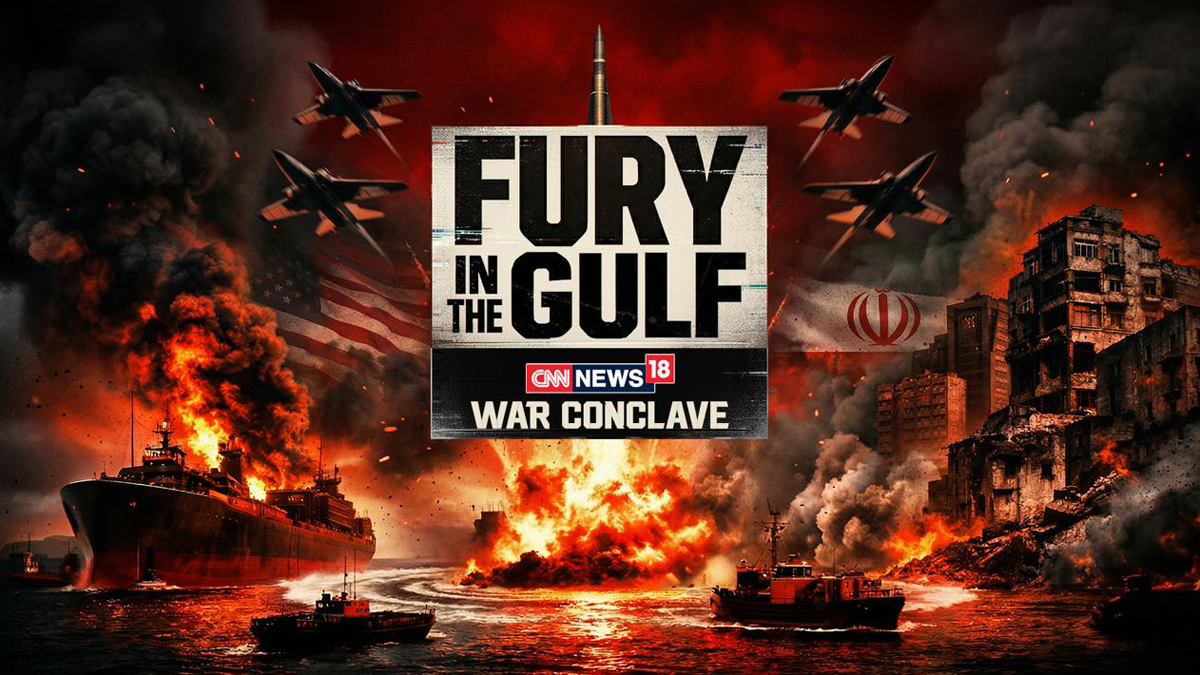
MUMBAI: CNN-News18 is set to host a special three-hour broadcast, Fury in the Gulf – War Conclave, on April 7, aiming to decode the escalating West Asia crisis and its far-reaching implications for India.
Scheduled from 4:00 PM to 7:00 PM, the conclave comes at a time when tensions between Iran and the United States are reshaping global geopolitics and triggering economic uncertainty. With India’s deep energy ties, trade links and large diaspora in the Gulf, the developments carry significant domestic relevance.
Built around the theme ‘Conflict, Consequences, and The Future,’ the programme will feature six curated sessions combining one-on-one interviews and panel discussions. The focus is to cut through the clutter and offer viewers a clearer understanding of the fast-evolving situation.
Key sessions include ‘Diplomacy in Times of War’ featuring Shashi Tharoor, and ‘World After the Iran Conflict’ with voices such as Ram Madhav, Reuven Azar, representatives from the European Union and the Iranian Deputy Envoy. Another session titled ‘Another Dunkirk?’ will bring together K. J. S. Dhillon and Jitin Prasada among others.
CNN-News18 editorial affairs director Rahul Shivshankar said, “In times of war, clarity becomes the most powerful tool. Fury in the Gulf – War Conclave brings together credible voices to address the questions and confusion that arise amid an overwhelming influx of information.”
He added that the initiative is aimed at delivering “facts, perspective, and insight” at a time when misinformation can easily cloud public understanding.
Echoing the sentiment, CNN-News18 CEO– English and business news Smriti Mehra said the conflict marks a defining global moment, with consequences that extend well beyond the region. She noted that the conclave seeks to present the crisis with “depth, nuance and responsibility” so audiences can better grasp its real-world impact.
As geopolitical tensions continue to dominate headlines, the conclave positions itself as an attempt to bring order to the noise, offering viewers a structured, insight-led look at a complex and rapidly shifting global situation.






