Cable TV
Hinduja group pays HITS licence fee


MUMBAI: Grant Investrade, which is a 100 per cent subsidiary of Hinduja Ventures, today paid the Rs 10 crore licence fee to the Ministry of Information and Broadcasting (MIB). The group is now awaiting the MIB’s letter of intent to apply for the WPC clearance.
With this, the $100 million HITS Hinduja project will start rolling out. “We made the payment today. We are eagerly waiting for the letter of intent by the MIB to proceed with the next step,” informs IMCL MD & group CEO Tony D’silva exclusively to indiantelevision.com.

Following this, the company will also make the Rs 40 crore bank guarantee deposit. “We will now move towards signing agreements with the satellite provider and finalising site location,” adds D’silva.
The next 10 days are going to be very busy for D’silva, who is at the helm of the HITS project. The company will start with the promotional activities, discussions with the last mile owners, creation of organisational structure, appointment of distributors and discussions with vendors in the next one week or so.
“The HITS project will be up and running in the next six months,” he informs.
While the HITS licence was obtained on 6 March, what took the company so long to pay the licence fee? Answers D’silva, “When we got the permission, immediately the elections dates were announced, so we lost time on that. Also we weren’t clear whether the government was committed to phase III and IV. Now since we have enough clarity, we decided to go ahead with the first step of paying the licence fee.”
Through HITS, the company is looking at capturing 15-20 per cent of the 120 million households in phase III and phase IV markets. While the technology team is already in place, the others will be appointed soon.
D’silva hopes to be able to create better packages for the HITS platform. “Broadcasters should consider re-pricing their channels. The packaging and bundling of channels needs to be different for phase III and IV. With phase I and II contributing to 75 per cent or more of their existing revenues that is from 30 million homes, phase III and IV which has close to 100 million homes, the broadcasters should reduce their rates to one-third of the existing rates,” he opines.
Apart from HITS, the group’s IndusInd Media and Communications Limited (IMCL) will also see a major boost in terms of the number of channels the MSO currently provides. “We will be increasing the number of channel offering from the current 350 to 500. This will help us become more competitive on ground,” he says.
IMCL in the next one or one and a half months will also launch a prepaid model for its subscribers. “We are talking to other MSOs in Mumbai and the Maharashtra Cable Operators Federation (MCOF) for this. I am hoping that all the other MSOs across the country will also join us for the prepaid model,” says D’silva.
The HITS model will have a complete different vertical which will cater to all the content and video on demand (VOD) services requirements. “The services will be made available to all the LMOs along with IMCL,” concludes D’silva.


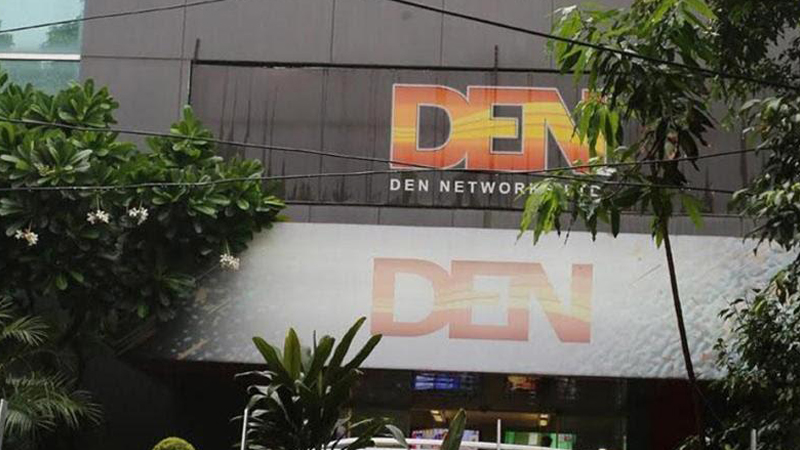
MUMBAI: When margins wobble, liquidity talks and in Q3 FY25-26, cash did most of the talking. Den Networks Limited closed the December quarter with consolidated revenue of Rs.251 crore, marginally higher than the previous quarter but down 4 per cent year-on-year, even as profitability stayed resilient on the back of strong cash reserves and disciplined cost control.
Subscription income softened to Rs.98 crore, slipping 3 per cent sequentially and 14 per cent from last year, while placement and marketing income offered some cheer, rising 15 per cent quarter-on-quarter to Rs.148 crore. Total costs climbed faster than revenue, up 7 per cent QoQ to Rs.238 crore, driven largely by higher content costs and operating expenses. As a result, EBITDA dropped sharply to Rs.13 crore from Rs.19 crore in Q2 and Rs.28 crore a year ago, pulling margins down to 5 per cent.
Yet, the bottom line refused to blink. Profit after tax stood at Rs.40 crore, up 15 per cent sequentially and only marginally lower than last year’s Rs.42 crore. A healthy Rs.57 crore in other income helped cushion operating pressure, keeping profit before tax at Rs.48 crore, broadly stable quarter-on-quarter despite the tougher cost environment.
The real headline-grabber, however, sits on the balance sheet. The company remains debt-free, with cash and cash equivalents swelling to Rs.3,279 crore as of December 31, 2025. Net worth rose to Rs.3,748 crore, while online collections accounted for 97 per cent of total receipts, underscoring strong cash discipline across operations, including subsidiaries.
In short, while Q3 showed signs of operating strain, the financial backbone remains solid. With zero gross debt, steady profits and a formidable cash war chest, the company enters the next quarter with flexibility firmly on its side proving that in uncertain markets, balance sheet strength can be the best growth strategy.








