International
Hawk Koch is president of the Academy

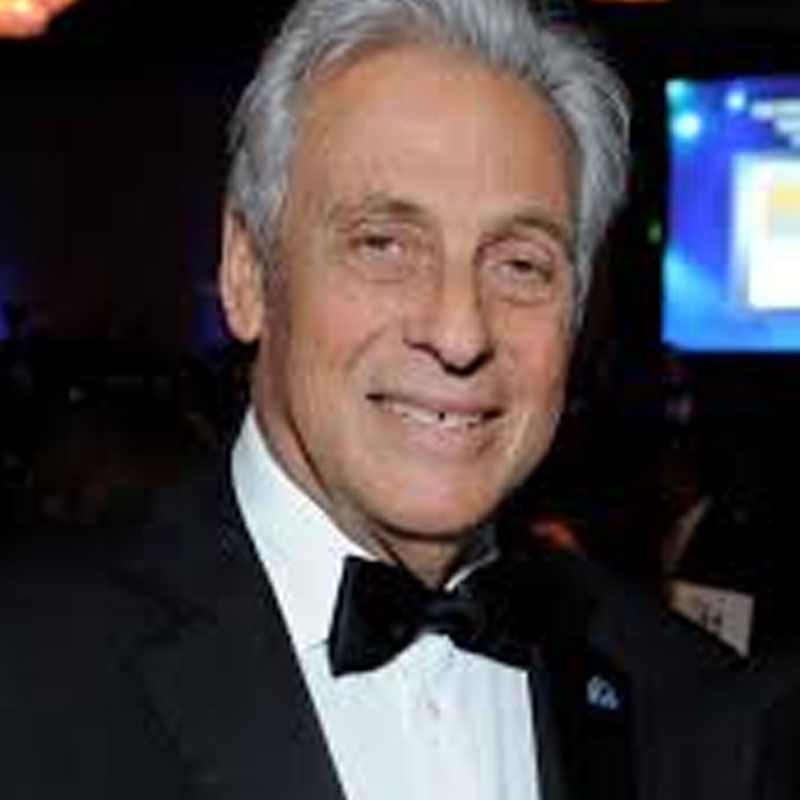
MUMBAI: The Academy of Motion Picture Arts and Sciences‘ board of governors have elected film producer Hawk Koch as its new president yesterday. He succeeds Tom Sherak, who has held the honorary position since 2009.
After assuming the Academy post, Koch follows in the footsteps of his father, the late producer Howard W. Koch, who served as Academy president from 1977 to 1979.
Koch has been a member of the Academy‘s producer‘s branch since 2004. He has served a three-year term as treasurer, served another one-year term as vice president, and was first vice president of the Academy during the past year.
The veteran film producer‘s credits range from 1978‘s Heaven Can Wait to 1992‘s Wayne‘s World and its 1993 sequel to 2002‘s Collateral Damage. He recently served as executive producer of Source Code and is exec producer on the upcoming Very Good Girls. Hawk also currently serves, along with Mark Gordon, as one of the two presidents of the Producers Guild of America.
The board also elected public relations branch governor Cheryl Boone Isaacs as the board‘s first vice president. While producer Kathleen Kennedy was elected as one vp post, writers branch governor Phil Robinson was elected as the second. Public relations branch governer Rob Friedman, co-chairman and CEO of Summit Entertainment, was elected treasurer. Finally, executives branch governor Robert Rehme, who was a past Academy president, was elected secretary.
The Academy president is elected from among the board of governors. While the Academy president can serve as many as four consecutive one-year terms, Koch‘s tenure will be limited to one year, since members of the board of governors may serve a maximum of three consecutive three-year terms, and he is currently beginning his last year as a member of the board.
The board also elected public relations branch governor Cheryl Boone Isaacs as the board‘s first vice president. While producer Kathleen Kennedy was elected as one vp post, writers branch governor Phil Robinson was elected as the second. Public relations branch governer Rob Friedman, co-chairman and CEO of Summit Entertainment, was elected treasurer. Finally, executives branch governor Robert Rehme, who was a past Academy president, was elected secretary.



International
Russia-India cinematic spectacle Persimmon of My Love set for grand Moscow debut
Hindi cinema style musical revives Indo-Soviet cinema ties for today

MUMBAI: A new chapter in cross-border storytelling is set to unfold as Persimmon of My Love gears up for its premiere in Moscow on 1 April 2026, marking the first large-scale cinematic collaboration between Russia and India in decades.
Positioned as a modern nod to the cultural exchange that once brought Indian classics to Soviet audiences, the film blends Hindi cinema flair with Russian storytelling, aiming to rekindle a long-standing cinematic friendship.
Directed by Marius Weisberg, the musical comedy follows two brothers navigating a lively world of music, family and romance. The lead roles are played by Demis Karibidis and Mikhail Galustyan, with Karibidis also contributing as a screenwriter.

Shot entirely in India, the production leans heavily into Hindi cinema style spectacle. Filming took place across Mumbai studios and the cities of Udaipur and Jodhpur, whose architecture was used to create the fictional setting of Khurmada. A crew of over 350 worked on the project, with large-scale sequences featuring up to 1,000 extras.
The film also brings Indian creative talent into the mix. Dance sequences are choreographed by Jay Kumar, while music by Zurab Matua features songs in both Hindi and Russian, adding to its cross-cultural appeal.
Backed by TNT channel, MyWayStudio and the Russian Cinema Fund, the project reflects a broader push to strengthen cultural ties between the two countries.
With its mix of colour, comedy and cross-border collaboration, Persimmon of My Love is not just a film release but a reminder that cinema, much like music, travels well across borders.






