News Headline
Havas 2023 Prosumer Report: Indian prosumers go frugal for the greater good

Mumbai: Over the past century, the world shifted to an economic system in which growth is tied to (over)consumption and a wasteful lifestyle, resulting in environmental destruction. Citizens have evolved into consumers, and governments rely on people’s continuous spending to keep the system running. But what happens when the costs of that consumption-driven system become unsustainable and undesirable—and not just ecologically but also psychologically, eroding life satisfaction?
The answers to these questions and more are in the Havas 2023 Prosumer Report which polled over 12,929 people across 30 markets including Brazil, China, France, India, the United Kingdom, and the United States. Prosumers are today’s leading influencers and market drivers. They have been a focus of Havas studies for two decades. Beyond their own economic impact, Prosumers are important because they influence the brand choices and consumption behaviours of others. What Prosumers are doing today, mainstream consumers will likely be doing 6 to 18 months from now.
The findings of this recent Report are firmly aligned with Havas’ ethos of putting people, our planet and profit on an equal footing by leveraging business as a force for good.

Here’s how the story goes: In 2023, people are fed up. Faced with escalating inflation, economic inequity, an energy crisis exacerbated by the war in Ukraine, shaken faith in the banking system, and fears of a global recession—all atop the introspection and questioning sparked by the “great pause” of the pandemic—more of us are considering a different approach, starting with changes in how we consume. We want to live with less to have more of a meaningful existence. More free time. More financial security and psychological freedom. More faith that our planet will survive.
A more frugal approach to consumption is in the interest of society and the planet. But how feasible is that? And just how far are people prepared to go? Through our report we’ve identified that frugality is about buying better, reducing waste, cutting back, and becoming more self-sufficient. We’ve discovered what people are happy to do, what they would never do, and even where they believe governments should step in.
Many people, across the world, are turning toward a lifestyle of more conscious consumption. There is a movement toward consuming less, focusing on minimalism, and embracing the sharing economy. Through our research, we found that 79% of Prosumers – and even 67% of mainstream consumers – believe that they could be happy in a more frugal world. It is even framed as an aspiration.
Trends will always drive behaviour. People strive to have the new and cool thing – but what if that thing isn’t something you’re buying? What if it is a new attitude you’re adopting? 82 per cent of Prosumers say that they admire people who have made the transition to a more frugal lifestyle. With influencers and change-makers taking up the fight against climate change, we could see a shift into an eco-cool era.
While brands can play a much larger role in this new world-order, only eight per cent of Prosumers believe that they are doing the most that they can to combat climate change. Around 84 per cent believe that large companies are better able to make the changes necessary to combat. So, what can brands do to drive this movement?
- Educate the public: Just under 7 in 10 Prosumers consider education key to the fight against climate change. Knowing the impact we have, both positive and negative, is crucial for making informed decisions.
- Make simplicity desirable: A push for this way of living can be bolstered by brand narratives championing simplicity and essentiality; plus elevating those who have elected to live more frugally. 74 per cent of Prosumers and mainstream consumers alike agree that what makes them most happy is being satisfied with simple things.
- Create connections to nature: 63 per cent of Prosumers desire a more frugal life because it means living a life closer to nature. The rise of trends like cottagecore amongst the younger generations are signaling a push toward a more “natural life.”
- Connect people: Consuming more mindfully also means rejecting the rat race of the past half century. For most Prosumers, the ability to work less and spend more time with family is part of the appeal of frugal living.
Our findings show that less is more, evidently. So how can businesses support this shift in people living a more mindful and frugal life, while making the entire experience satisfying and joyful? Going by the Prosumer report, our key findings from India have thrown light on consumer behaviours that precisely reflect the changing paradigm of us as a society:
– In India, 84 per cent prosumers believe that bigger institutions like brands & businesses, local communities, and government bodies are responsible for causing climate change.
– The motivation to adopt a frugal lifestyle is driven by a desire for a healthier way of living (89 per cent) and ecological concerns (70 per cent) more than economic reasons (47 per cent).
– 93 per cent Indians prosumers agree that they will act towards the environment when they can measure the impact of their actions.
– 70 per cent Indian Prosumers feel that we must impose rules, even hard ones, and not wait for everyone’s good will.
– To live in a more frugal world, we must ban advertising for Fossil Fuel companies (51 per cent), Big promotional events (45 per cent), Fast Fashion (36 per cent), Meat (35 per cent), Plane & Plane companies (28 per cent) and Cars (22 per cent).
– Prosumers are willing to adopt a frugal lifestyle by saving energy (82 per cent) and reducing their consumption (61 per cent) but are not willing to compromise on lifestyle experiences such as consuming meat or traveling on long-haul flights.
– In India, consumers perceive that solution to climate issues will emerge through new technology (69 per cent) rather than changing their behaviour (31 per cent).
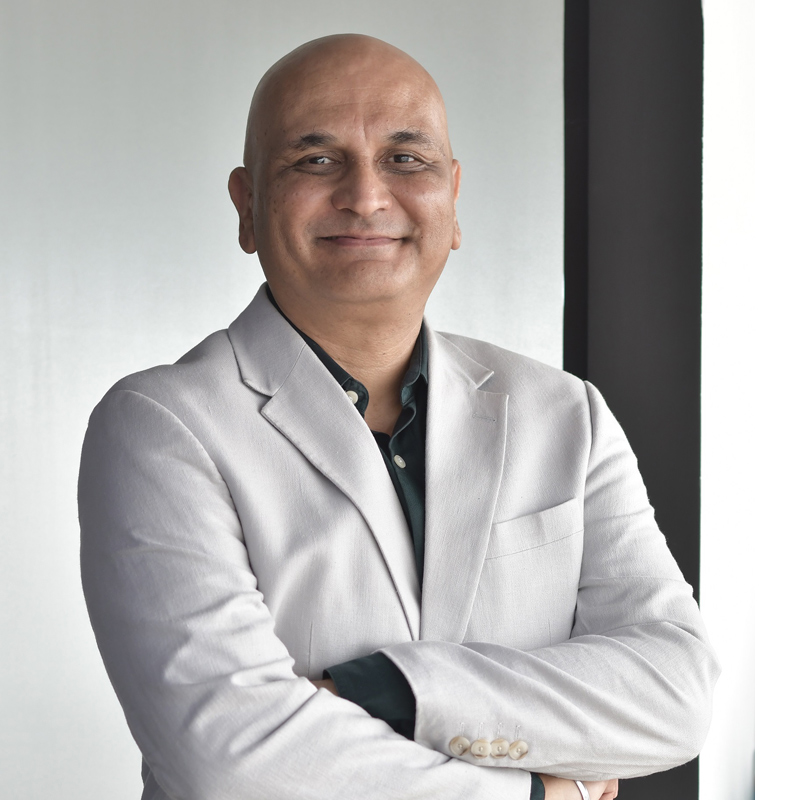
Speaking about the findings, Havas Creative India Chief Strategy Officer Anirban Mozumdar said, “As the world embraces Joyful frugality, the Prosumer Report notes that Indians are ahead of the forefront of the curve. From cultural belief to an urgent need to preserve the planet in crisis, Indian prosumers want to witness the influence of their contributions and make frugal choices not for the sake of value, but for the greater good. What’s even more interesting is their willingness to accept government directives, even they are hard ones. Prosumers also view brands and companies as the most responsible and capable of making the greatest impact.”
Whether practicing frugality or pursuing a luxurious lifestyle, consumers respond to the same motivations:
They want to feel good (internal motivator), be admired by others / look good (external motivator), and derive maximum value and satisfaction from their consumption choices.
For over a century, marketers have been selling a dream that is no longer sustainable—and increasingly less desirable. Rather than enjoy what their money can buy, many consumers feel stressed, overburdened, unhealthy, and dissatisfied.
Businesses and brands have the power—and arguably the obligation—to contribute to a better way forward.

NEW DELHI: Hamdard Laboratories gathered a cross-section of India’s achievers in New Delhi on Friday, handing out the Hakeem Abdul Hameed Excellence Awards to figures who have left their mark across healthcare, education, sport, public service and the arts.
The ceremony, attended by minister of state for defence Sanjay Seth and senior officials from the ministry of Ayush, celebrated individuals whose work blends professional success with a sense of public purpose. It was as much a roll call of achievement as it was a reminder that influence is not measured only in profits or podiums, but in people reached and lives improved.
Among the headline awardees was Alakh Pandey, founder and chief executive of PhysicsWallah, recognised for turning affordable digital learning into a mass movement. On the sporting front, Arjuna Awardee and kabaddi player Sakshi Puniya was honoured for her contribution to the game and for pushing women’s participation onto bigger stages.
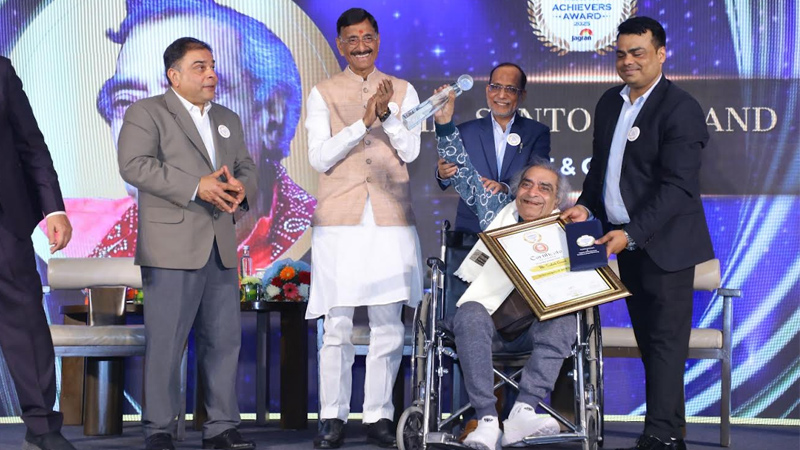
The cultural spotlight fell on veteran lyricist and poet Santosh Anand, whose songs have echoed across generations of Hindi cinema. At 97, Anand accepted the honour with characteristic humility, reflecting on a life shaped by perseverance and hope.
Healthcare honours spanned both modern and traditional systems. Manoj N. Nesari was recognised for strengthening Ayurveda’s place in national and global health frameworks. Padma shri Mohammed Abdul Waheed was honoured for his research-backed work in Unani medicine, while padma shri Mohsin Wali received recognition for his long-standing contribution to patient-centred care.
Education and social development also featured prominently. Padma shri Zahir Ishaq Kazi was honoured for decades of work in education, while former Meghalaya superintendent of Police T. C. Chacko was recognised for public service. Goonj founder Anshu Gupta received an award for his dignity-centred rural development initiatives, and the Hunar Shakti Foundation was honoured for empowering women and young girls through skill development.
The Lifetime Achievement Award went to former IAS officer Shailaja Chandra for her long career in public healthcare and governance, particularly in the traditional systems under Ayush.
Speaking at the event, Hamdard chairman Abdul Majeed said the awards were a tribute to those who combine excellence with empathy. “These awardees reflect Hakeem Sahib’s belief that healthcare, education and public service must ultimately serve humanity,” he said.
Minister Seth struck a forward-looking note, saying India’s young population gives the country a unique opportunity to become a global destination for learning, health and wellness by 2047.
The ceremony also featured the trailer launch of Unani Ki Kahaani, an upcoming documentary starring actor Jim Sarbh, set to premiere on Discovery on 11 February.
Instituted in memory of Unani scholar and educationist Hakeem Abdul Hameed, the awards have grown into a national platform that celebrates those building a more inclusive and resilient India. For one evening at least, the spotlight was not just on success, but on service with substance.