Cable TV
Hathway Cable gets board nod to hike FII limit to 74 per cent


MUMBAI: It was in 2012, when the government had relaxed foreign direct investment (FDI) limit in direct to home (DTH), cable TV industry and teleports from 49 per cent to 74 per cent. In keeping with this, Hathway Cable & Datacom which early this week became the first multi system operator (MSO) to have crossed the $1 billion mark in terms of enterprise valuation, is now probably looking at attracting overseas capital into the company.
The MSO has in an announcement to the BSE informed that its Board of Directors have approved and passed the resolution to increase the foreign investment limit from the current 49 per cent to 74 per cent, this subject to approval from the Foreign Investment Promotion Board of India, Ministry of Finance and/or the Reserve Bank of India.
“Subject to receipt of approval of the Foreign Investment Promotion Board of India, Ministry of Finance (FIPB) and / or the Reserve Bank of India (RBI) and all other applicable authorities, increasing the foreign investment limit only by Foreign Institutional Investors, Foreign Portfolio Investors, etc. under the Portfolio Investment Scheme in accordance with Schedules 2 and 2A of the Foreign Exchange Management Act (Transfer or Issue of Security by a Person Resident Outside India) Regulations, 2000 in the Company from 49 per cent to 74 per cent of the issued arid fully paid-up share capital of the Company,” reads the announcement.

The Hathway Board has also passed the resolution of a postal ballot notice along with the explanatory statement and calendar of events for seeking approval of the shareholders of the Company by postal ballot for its foreign investment proposal.
According to Hathway Cable & Datacom CEO and MD Jagdish Kumar Pillai, the cable TV sector is becoming lucrative for foreign investors. Pillai had earlier told Indiantelevision.com, “With broadband and cable TV getting more transparent, the market is viewing this as a great industry to invest in the next five years, and that’s reflected in the balance sheet. It is a promise of a good potential.”
With the industry getting more organised courtesy its digitsation drive, Pillai expects more foreign investors to pump in funds into the cable TV sector.







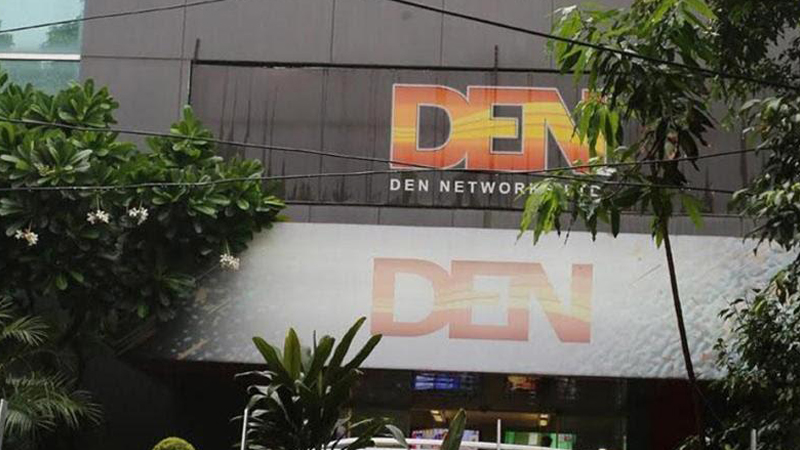
MUMBAI: When margins wobble, liquidity talks and in Q3 FY25-26, cash did most of the talking. Den Networks Limited closed the December quarter with consolidated revenue of Rs.251 crore, marginally higher than the previous quarter but down 4 per cent year-on-year, even as profitability stayed resilient on the back of strong cash reserves and disciplined cost control.
Subscription income softened to Rs.98 crore, slipping 3 per cent sequentially and 14 per cent from last year, while placement and marketing income offered some cheer, rising 15 per cent quarter-on-quarter to Rs.148 crore. Total costs climbed faster than revenue, up 7 per cent QoQ to Rs.238 crore, driven largely by higher content costs and operating expenses. As a result, EBITDA dropped sharply to Rs.13 crore from Rs.19 crore in Q2 and Rs.28 crore a year ago, pulling margins down to 5 per cent.
Yet, the bottom line refused to blink. Profit after tax stood at Rs.40 crore, up 15 per cent sequentially and only marginally lower than last year’s Rs.42 crore. A healthy Rs.57 crore in other income helped cushion operating pressure, keeping profit before tax at Rs.48 crore, broadly stable quarter-on-quarter despite the tougher cost environment.
The real headline-grabber, however, sits on the balance sheet. The company remains debt-free, with cash and cash equivalents swelling to Rs.3,279 crore as of December 31, 2025. Net worth rose to Rs.3,748 crore, while online collections accounted for 97 per cent of total receipts, underscoring strong cash discipline across operations, including subsidiaries.
In short, while Q3 showed signs of operating strain, the financial backbone remains solid. With zero gross debt, steady profits and a formidable cash war chest, the company enters the next quarter with flexibility firmly on its side proving that in uncertain markets, balance sheet strength can be the best growth strategy.