Applications
Harvard Business Review analytic services study reveals organisations are failing to nurture creativity


Mumbai: Canva, the all-in-one visual communication platform, has unveiled insights from a study of more than 500 business professionals on the challenges of fostering creativity within the workplace.
Harvard Business Review analytic services conducted a global study in association with Canva and revealed that 96 per cent of survey respondents agree creative ideas are essential to an organization’s long-term success and performance. In addition, 94 per cent agree that organisations that invest in creative tools and technology will be more successful in the future.
However, while many acknowledge the importance of creativity and seek a creative edge, few are successfully converting innovative ideas into business impact.

Three categories of organizations emerged from the survey responses: leaders, followers, and laggards. These groupings were based on the organizations’ success at identifying creative solutions to business problems according to the respondents, regardless of whether the idea was implemented. Leaders (22 per cent) are those organizations that are “very successful” at identifying and implementing creative solutions to business problems, while followers (56 per cent) are “somewhat successful” and laggards (22 per cent) are “not very successful.”
Top findings include:
● Workplaces are failing to nurture the creativity of their employees. Nine out of ten (91 per cent) respondents agree that creative thinking is a key attribute for employees to possess yet more than half of laggards (58 per cent) say their organizational culture doesn’t reward creative pursuits. Only 19 per cent of leaders say the same.
Leaders (41 per cent) are more likely than followers (17 per cent) and laggards (8 per cent) to encourage greater creativity by rewarding employees for taking creative risks and thinking outside the box.
● Creativity must come from the top. Ninety-four percent agree that having a creative leader increases the creativity of their team. However, despite this widespread acknowledgment, nearly three-quarters of laggards (72 per cent) say the leadership at their organization is not engaged enough in creative thinking to support creativity among employees. Among leaders, only 23 per cent of respondents felt the same.
● Creativity needs the right tools to flourish. Ninety-four percent of respondents agree that organizations that invest in creative technology will be more successful in the future. Eighty-seven percent expect their organization’s overall financial investment in creativity-building tools and technologies to increase or stay the same in the next year.
Currently, the most used technologies to unlock creativity among leaders are collaboration platforms (65 per cent), visual communication (64 per cent), and data visualization tools (56 per cent). Collaboration can enhance the creative process by tapping into new ideas, perspectives, and approaches. Leaders are significantly more likely than laggards to facilitate cross-functional collaboration (53 per cent vs. 14 per cent) and encourage different ways of thinking (52 per cent vs.15 per cent).
● Generative AI is helping organizations get ahead. Forty-two percent of leaders think gen AI can enhance creativity at their organization to a great extent. For example, according to leaders, gen AI may fuel creativity by: automating repetitive tasks, freeing employees up to focus on more creative endeavors (62 per cent), accelerating idea generation (60 per cent), and creating content with minimal human intervention (49 per cent). While forty-seven percent of leaders are using gen AI tools to foster creativity for the purpose of strategic growth, only 30 per cent of followers and 14 per cent of laggards are doing so.
“In a business world focused on the bottom line, it’s easy to lose sight of the value of creativity. The findings highlight that creativity isn’t just a complement to business growth, it’s foundational to driving long-term success,” said Canva co-founder and chief product officer Cameron Adams. “Ultimately, innovation and creativity is what will differentiate the leaders from the laggards; it’s what drives growth in a challenging landscape.”
For a more extensive look at the survey findings, you can read the report here





Applications
With 57 per cent single new users, Ashley Madison rebrands as discreet dating platform
Platform says majority of new members now identify as single
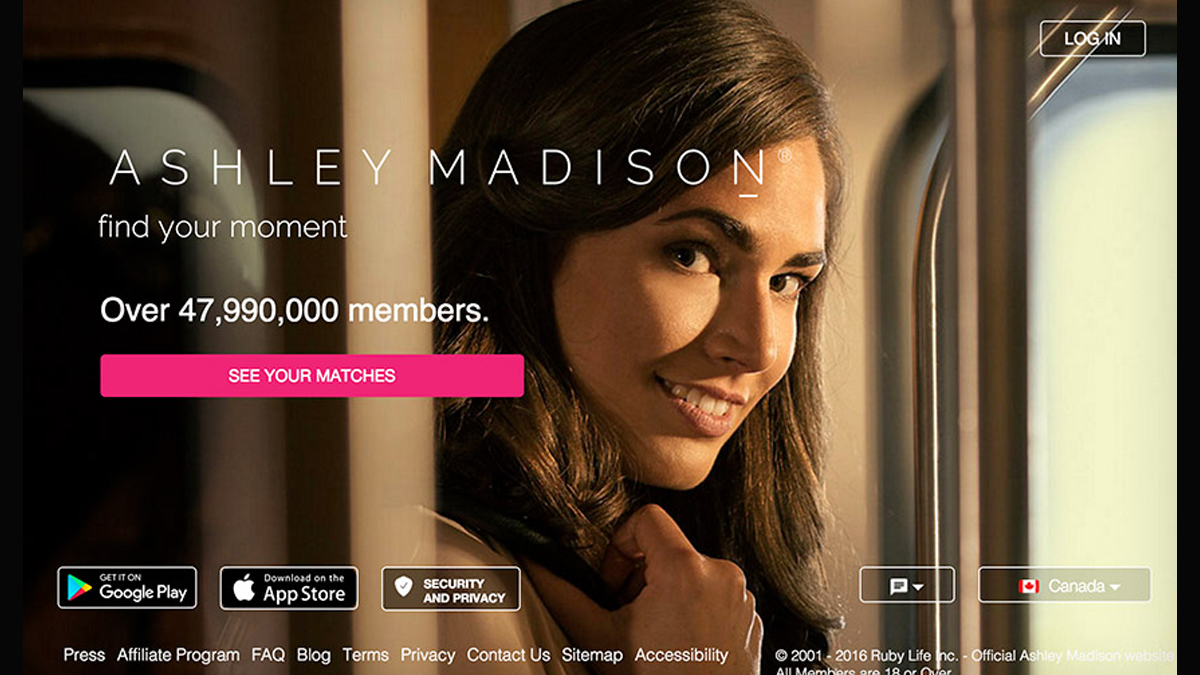
INDIA: Ashley Madison is shedding the “married-dating” label that defined it for two decades, repositioning itself as a platform for discreet dating in what it calls the post-social media age.
The rebrand, unveiled in India on 27 February, 2026, marks a structural shift in business model and identity. Once synonymous with married dating, the company now describes itself as the “premier destination for discreet dating” under a new tagline: Where Desire Meets Discretion.
The pivot is data-driven. Internal figures show that 57 per cent of global sign-ups between 1 January and 31 December, 2025 identified as single: a notable departure from the platform’s married core. The company argues that its community has already evolved beyond its original positioning.
“In an age where our lives have been constantly put on public display, privacy has become the new luxury,” said Ashley Madison chief strategy officer Paul Keable. He framed the platform’s offering as “ethical discretion” for singles, separated, divorced and non-monogamous users seeking private connections.
The shift also taps into wider digital fatigue. A global survey conducted by YouGov for Ashley Madison, covering 13,071 adults across Australia, Brazil, Canada, Germany, India, Italy, Mexico, Spain, Switzerland, the UK and the US, found mounting discomfort with hyper-public online lives.
Among dating app users, 30 per cent cited constant swiping and messaging as a source of fatigue, while 24 per cent pointed to pressure to curate public-facing profiles and early personal disclosure. Some 27 per cent said fears of screenshots or information being shared contributed to exhaustion; an equal share cited unwanted attention.
The retreat from oversharing appears broader. According to the survey, 46 per cent of adults actively try to keep most aspects of their life private online. Only 8 per cent feel comfortable sharing most aspects publicly, while 35 per cent say they are becoming more selective about what they disclose.
Ashley Madison is betting that this cultural recalibration towards controlled visibility can be monetised. By doubling down on privacy infrastructure and reframing itself around discretion rather than infidelity, the company is attempting to convert reputational baggage into a premium proposition.







