iWorld
GUEST COLUMN: OTT serves the nation while the internet counsels it

Mumbai: The Covid-19 pandemic has upturned all walks of life. People’s lives have switched to a virtual setup and personal choices have moved from interacting with people to purchasing products, availing services, and even spending leisure time to a click or a swipe! The significance of this transition, however, has established itself as a big opportunity for the Internet. While the exponential growth of the Internet is undeniable, three sectors, in particular, continue to witness mammoth amounts of data traffic – collaborative communication tools, gaming, and OTT.
A weekend without binge-watching or watch-parties today is more like a restaurant that’s taken your favorite food off the menu! Hence OTT is far from experiencing a post-Covid slackening. In fact, with such a large user base and the confidence, the content creators found in releasing content on OTT ever-growing platforms, OTT & VOD traffic rose by 139 per cent from January to August.
March 2021 culminated with the Telecom Regulatory Authority of India (Trai) marking 825.30 million internet users in the country. Amongst these, active ad-support and paid streaming users accounted for 325 million. A phenomenal breakthrough was observed in rural India, and numbers as high as 65 per cent of India’s total OTT consumption were reported by the Broadband India Forum. At an all-time high, the OTT industry is only set to boom, and as reports by RBSA Advisors suggest, the OTT market is set to grow to $ four billion by 2025 and $12.5 billion by 2030. From 20 minutes to 50 minutes and one-hour average time spent on OTT platforms, from two OTT platforms to 40+ platforms, the OTT revolution in India has come a long way.

One facet of this revolution that took the center stage included OTT platforms launching themselves into the hyper-competitive environment by catering to local tastes and preferences that enabled them to reach a wider audience in less than no time. As part of their content variety offerings and in an endeavor to bridge the gap beyond the urban setups, OTT platforms across the diverse geography of India, launched regional content in India. This led to one impressive surge in regional content viewership, and industry analysts suggest that 40 per cent of the total viewership in India now comprises regional content consumers. Additionally, this regional content also witnessed a surge overseas particularly in countries like the USA, UK, Dubai, Malaysia, Singapore, etc.
Observing this stark rise and the massive demand from the Indian market, international players like Netflix, Disney, and Amazon got into an arms race by launching regional and India-centric content in addition to international content. This availability of content in both original and dubbed languages further boosted the momentum of OTT making it one of the hottest segments across the Indian subcontinent.
However, while the demand is only set to grow, matching the growth of the sector at the same pace requires a stable, reliable, secured digital infrastructure making it more critical than it was ever expected to be thereby giving interconnection center stage.
Internet exchanges have established their importance in the OTT world primarily on three grounds. Firstly, internet exchange points reside within data centers that offer world-class facilities and the ability to shoulder critical and customised digital infrastructures. Secondly, interconnectivity creates an ecosystem with widespread points of presence all converging at a single place while also providing peering, DirectCloud, and other similar services. This enables the reduction of latency, the ability to bypass as high as 90 per cent of the internet traffic, the scaling down of costs associated with bandwidth and transmission. Additionally, in an environment placing an urgency on security, internet exchange points provide network services that enhance data security.
If you considered key runners in an OTT-hiccup race, latency would bring home a medal. While the live video experiences can be killed by high latency, even constant buffering in recorded content can lead consumers far from service. In fact, studies suggest that a two-second delay while loading a website can result in a 100 per cent bounce rate. This emphasises the importance of keeping content as close to the user as possible. To quantify it, live streaming in HD/4K should ideally be less than 1,200 km away from the user. While it is easier for broadcast networks to circumvent congestion and avoid latency, the challenge lies in finding long-term, reliable, and cost-effective solutions. An Internet Exchange Point allows networks of all segments to exchange traffic while keeping local traffic local. This enables OTT providers to reach the Internet’s ‘long tail’—ISPs who distribute content to regional users. Keeping traffic local reduces the distance data must travel which in turn reduces latency thereby improving content performance and user experience. Interconnection services can give OTT players the secure and resilient digital infrastructure they require while also giving them the ability to upgrade a 10 Gigabit Ethernet (GE) port to a 100GE port.
Digital entertainment is an ever-evolving medium and that the need for seamless and secure internet access will continue to soar high. It also brings in higher possibilities of network collisions and contentions. This can lead to a downstream or a slowdown of a platform’s functioning. That again finds answers in an Internet Exchange built to deal with peak internet traffic with also the ability to manage outages making it an indispensable solution even in the face of a major crises situation.
India is the second-largest country in terms of internet users and is the fastest-growing OTT market globally and is predicted to become the sixth-largest by 2024. Reports by RBSA indicate that the industry has the potential to grow into a $15 bn industry over the next decade. This can also be accredited to OTT players partnering with telecom companies like Airtel, Jio, and VI, the entry of global players like Netflix, Amazon, Disney+ Hotstar through customised content and major investments, and the growth of home-grown booming OTT platforms. This aggressive pace of growth has further fueled the demand of the data-hungry nation which has trends across the industry as proof.
This emphasises the need for a secure, scalable, and compliant infrastructure to support this demand now more than ever. It is only in the presence of an innovative and unfailingly reliable internet infrastructure that the OTT industry in the country will be able to meet the needs of the nation it has held firm to until now.
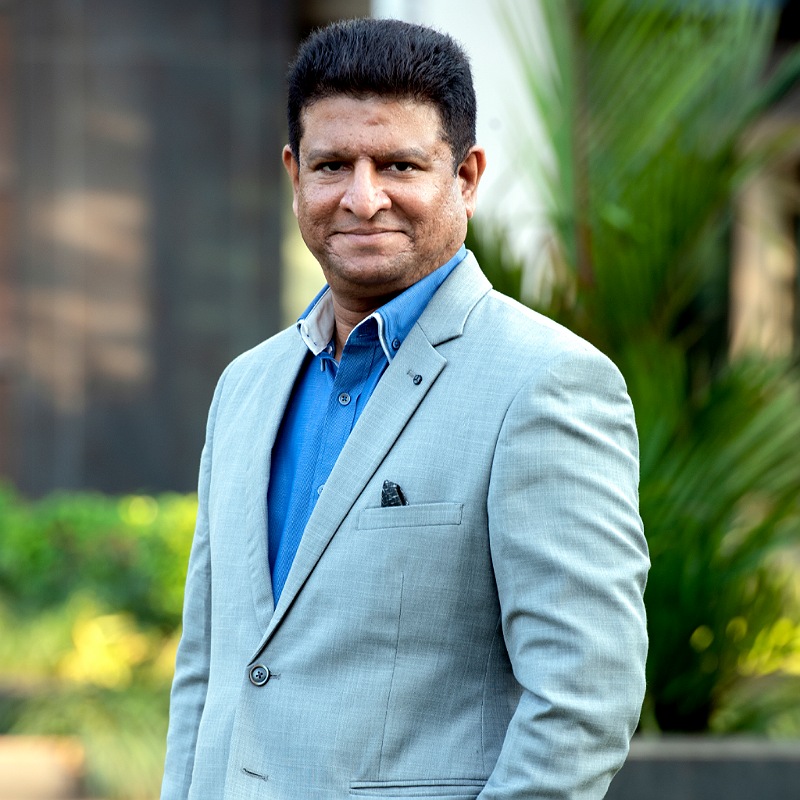
(Sudhir Kunder is the country director of DE-CIX India. The views expressed in the column are personal and Indiantelevision.com may not subscribe to them.)







iWorld
MS Dhoni invests in Kuku, joins Kuku TV as brand ambassador
Cricket icon backs AI storytelling platform, fronts Kuku TV campaign

MUMBAI: MS Dhoni has invested in Kuku and joined its short-form drama app Kuku TV as brand ambassador, signalling a high-profile bet on India’s fast-growing AI-led content space.
Kuku, a mobile-first storytelling platform, operates across formats with apps such as Kuku TV for micro-dramas, Kuku FM for audio content and Guru for learning-led entertainment. Founded in 2018, the company has scaled rapidly, crossing 350 million installs and building a catalogue of over 20,000 titles across multiple Indian languages.
Dhoni said his decision to invest and partner with the platform was driven by its distinct approach to storytelling and its strong growth trajectory. MS Dhoni said, “I chose to invest in Kuku, and also come on board as the ambassador for Kuku TV, because the platform really stood out to me. It has built a differentiated entertainment experience for audiences across India, spanning multiple languages and formats. The growth has been impressive, and I connect strongly with the founders, who come from small towns like mine and have built something of this scale. I believe in their vision of building an AI-driven storytelling platform from Bharat, for Bharat, and for the world.”
Founded by Lal Chand Bisu, Vinod Kumar Meena and Vikas Goyal, the platform positions itself at the intersection of technology and storytelling, using AI to create and distribute bite-sized content tailored to mobile audiences.
Sharing his perspective, Kuku co-founder and CEO Lal Chand Bisu said, “MS Dhoni is known for backing bold decisions that others might hesitate to take. At Kuku, we are also taking bold bets. That spirit of unconventional thinking resonates deeply with us.”
Adding to this, Kuku co-founder and COO Vinod Kumar Meena said, “Our beloved Thala is one of the rare personalities with truly nationwide appeal. As we build Kuku for all of India, that connection makes him a natural fit for us.”
Further, Kuku co-founder and CTO Vikas Goyal said, “MSD has a unique understanding of people. As we build for both creators and consumers, that perspective will be incredibly valuable, especially as we continue strengthening our AI-driven storytelling stack.”
Backing the momentum, Panthera Peak Capital managing director Nikhil Bhandarkar said, “Kuku’s vision, execution, and clarity of thought are exceptional, qualities that closely mirror MS Dhoni’s approach. We are excited to partner with the team as they build Kuku into a global entertainment platform.”
To mark the association, Kuku TV has rolled out the campaign Dhoni Watches Kuku TV, anchored by a brand film that plays on Dhoni’s instinctive decision-making. Built around short, engaging stories delivered in minutes, the campaign highlights the platform’s promise of quick, compelling entertainment.
With Dhoni stepping in as both investor and face of the brand, Kuku appears to be doubling down on its ambition to take AI-driven storytelling from India to a global audience, one short story at a time.