Gaming
GUEST COLUMN: Online gaming is India’s fastest growing digital entertainment


Mumbai: Entertainment has become democratised and accessible as a necessity for all walks of life in India. In today’s ‘Digital India,’ the average Indian has found solace in some form of online gaming at some point in time during the day. There are various types of gamers, ranging from hyper-casual to strategic games to real-money gaming. The surge in the online gaming ecosystem in India has validated that Indians have definitely selected online gaming as a medium of entertainment. The common motivation to entertain across OTT and gaming remains constant across all media, old and new: it is a temporary escape from reality.
The pandemic saw an unprecedented increase in gaming activity, especially on old favourites like ludo, carrom or any other classic board game on their mobile to enjoy playing with friends and family. The soon-to-be multi-billion dollar online gaming industry has a lot to offer in terms of the diversity of products, services, technological developments, job opportunities, and more.
Although it still faces perspective biases in India from key sections of society on issues ranging from addiction to taboo, the behavioural shift of the consumer is here to stay. There are valid concerns surrounding the stigma of gaming being harmful or dangerous owing to investments of time or money, depending on the segment of the users, and the ecosystem will need to work with key government stakeholders to address that.

Needless to say, anything in excess has adverse effects, be it binge eating, shopping or gaming. This brings in the need for higher levels of self-control from a user, which can happen if more power is shifted to the user’s hands. Spain has recently mooted the idea of making it mandatory for all real-money gaming businesses to ensure that players select options on time and money limits at the beginning of every week so that they stick to their limits. Since it is hard to unilaterally shift power back to the players owing to a conflict of business interests, there is a need for regulations and policies to force operators to do so.
These issues don’t necessarily stem only from real money gaming, as there have been numerous reported unfortunate incidents of young children and families being impacted by other forms of online gaming, such as first person shooter games. India will need to come up with some kind of framework to address various segments of the gaming ecosystem to ensure that these businesses remain a mode of entertainment and not an unaccounted escape from reality. Having said that, there are some self-regulatory bodies that are proactively trying to keep operators in check by adhering to certain standards of integrity, transparency, and responsible play for users. While these are the right steps in the right direction, there needs to be more to follow.
With significant financial integration in online gaming, cyber fraud, foreign capital flow, the nature of advertisements, etc., have been major pain points to solve. Industry players have been on their toes and have put these issues much ahead of anyone on their radar. Like every growing industry, there is a need for incubation and support rather than rejection. In terms of annual mobile game app downloads, India leads the global charts behind China. The sector is a significant contributor to the economy and is set to create more than 12,000 new job opportunities by 2023. While the industry is mature and has put self-regulatory measures in place, it is important to build and develop a robust framework in collaboration with the government, not only to sustain, boost, and track growth but also to check irregularities and unfair practices that are detrimental to the Indian gamer.
The author of this article is Head Digital Works vice president – business strategy Siddharth Sharma.






Gaming
India’s broadcasters say no to Fifa World Cup 2026
Fifa has slashed its asking price by 65 per cent but India’s broadcasters are still not buying
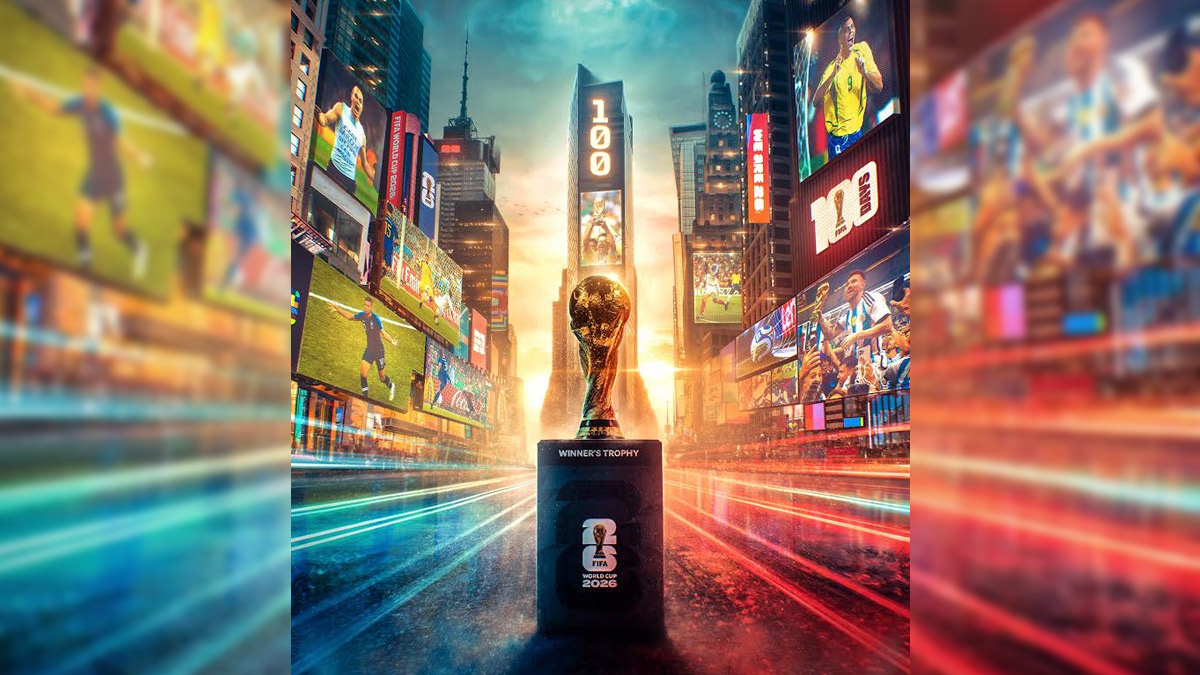
MUMBAI: The world’s biggest sporting event cannot find a single taker in the world’s most sports-mad nation. Fifa’s television rights for the 2026 World Cup remain unsold in India, and the clock is ticking loudly.
To shift the property, world football’s governing body has already swallowed hard and cut its asking price from $100m to $35m, bundling in the 2030 edition as a sweetener. It has not worked. Indian broadcasters have looked at the offer, done the sums and quietly walked away.
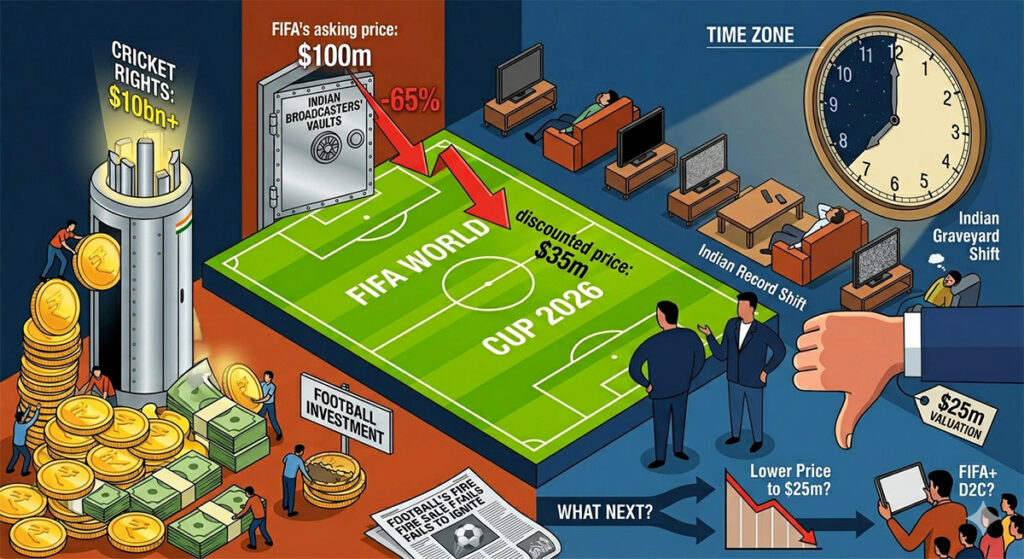
The reasons are brutally simple. The 2026 tournament, co-hosted by the United States, Canada and Mexico, kicks off in a time zone that turns India’s primetime into a graveyard shift. Most matches will air between midnight and 7am IST, a scheduling catastrophe for advertisers chasing mass reach. The 2022 Qatar edition was a gift by comparison, with matches dropping neatly into Indian evenings. North America offers no such luxury.
The market itself has also changed beyond recognition. The merger of Star India and Viacom18 into JioStar has gutted the competitive tension that once sent sports rights prices soaring. Where rival bidders once slugged it out, there is now a single dominant buyer, and it is in no hurry. JioStar has valued the rights at roughly $25m, a full $10m below Fifa’s already-discounted floor price. That gap has so far proved unbridgeable.
Broadcasters are also nursing a ferocious cricket hangover. Between 2022 and 2023, Indian media houses committed well over $10bn to cricket rights alone, covering IPL, ICC events and BCCI domestic fixtures combined. After a binge of that scale, appetite for a football package that delivers a fraction of the ratings, in the dead of night, is close to zero.
The economics of football broadcasting make the maths even harder. Cricket, with its natural breaks every few overs, is an advertiser’s paradise. Football offers a 15-minute halftime and precious little else. Recovering a nine-figure rights fee from a single half-hour ad window is a stretch at the best of times. These are not the best of times: the Indian government’s tightening grip on real-money gaming and gambling advertising has vaporised a category that once underwrote the economics of big sporting events.
Nor is the World Cup an anomaly. Indian Super League valuations have cratered. English Premier League rights have softened across successive cycles. The cooling of football as a broadcast commodity in India is structural, not cyclical.
With the tournament opening on 11th June, Fifa is running out of road. It may yet blink and meet JioStar at $25m. Or it may go direct, streaming the entire tournament on its own platform, Fifa+, or cutting a digital deal with YouTube, and hoping that a generation of Indian football fans finds its way there without a broadcaster to guide them.
Either way, the beautiful game’s Indian chapter is looking decidedly ugly.







