iWorld
GUEST COLUMN: LED Volumes – Definitely the future of filmmaking

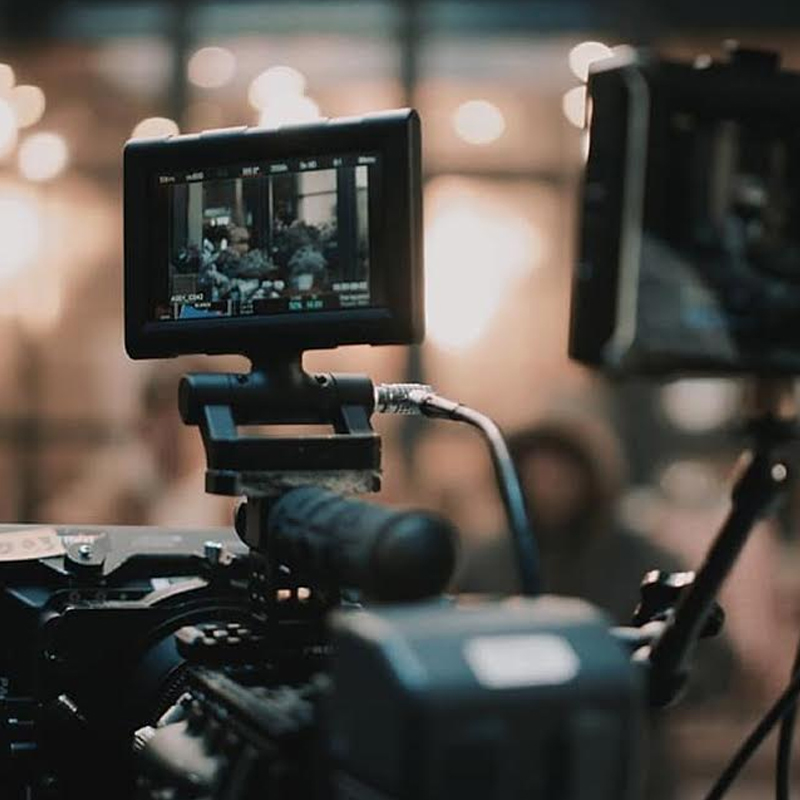
Mumbai: The 1987 film Out of Africa was filmed almost entirely in Kenya, near the Ngong Hills outside Nairobi. Director Sydney Pollack had made multiple visits to Africa and spent an entire year touring Kenya with his crew, scouting for locations before the shoot began in January 1985.
For the hunting scenes, trained lions were said to have been brought in from California. The shoot, editing and post-production took a year, rather fast for those times, considering the unpredictable weather conditions, light, the behaviour of the animals etc.
Well, if Out of Africa were made today, Pollack wouldn’t have to step out of the cool comforts of a studio in Los Angeles ever, and the exact same movie would have come out, with the lions and Africa and the tribal actors, all in high definition, but with no sweat. All he would need is virtual production technology. This means he wouldn’t be filming the actors against a green screen, but with actual Africa and its skies in the background.

The Volume or the massive green screen soundstage where VFX scenes were filmed initially, underwent a technological leapfrogging in the past few years to include 360 degrees LED video walls as well as game engine technology, which together enable the director to watch the actual scenes unfold before them in real-time. And that is how virtual production differs from previous technology.
The filmmaker no longer has to imagine the background during the filming and can shoot live-action scenes using traditional cinematography techniques and equipment. While background visuals remained static earlier, the scenes alter according to the movements of the camera, with the visualisation technology offered by game engines, usually Epic Games’ Unreal Engine. Originally developed as a set of 3D game development tools, Unreal Engine is now used extensively for films and enables the graphics to be projected live on the LED screens, updated every millisecond.
Though virtual production had been a staple in gaming for quite a few years, it was James Cameron’s Avatar which first experimented with it in films. The game-changer, however, was the 2019 version of The Lion King, which set a new benchmark in virtual production.
Half of the popular Disney series The Mandalorian too were shot in a Volume named Stagecraft, but what accelerated the technology like never before was the unexpected shutdown of the film industry due to Covid.
Even movies that do not require shoot in challenging locations are going in for virtual production now, the prime example being the new mystery series 1899 by Jantje Friese and Baran bo Odar, expected to arrive on Netflix by 2022. The series is going to be shot entirely on a Volume named Dark Bay in Babelsberg near Berlin, Europe’s first permanently installed LED studio for virtual productions. The web series features a group of European immigrants trying to make it to America by ship, and locations were supposed to be all over Europe. But then, the makers knew this would not be possible any time in the near future in the raging pandemic, and so decided to bring Europe to the studio, in their own words. The giant Volume which has a shooting space of 4500 sq feet, is 75 feet wide and 23 feet tall and has expanded their vision, according to the makers.
But how exactly does the actual filming work?
Well, the makers could film real-life locations during pre-production and use them during the shoot, or choose from the multiple options available in the permanent LED studios. Imagine a backlot (film city, for Indians) with a huge virtual library with multiple options for everything including visuals of real locations and even characters. Want Antarctica for your movie? Pick one from the library. A polar bear? A different lighting or camera angle? Yes, to all, and you keep changing your options to find the best fit as you shoot, not afterwards during the editing stages. Crew members from creative and technical departments work together at the same time, instead of in consecutive phases, and all these stages might be up for a toss. Above all, a shot could very well end up as the final scene, not as raw unedited footage. The real and the virtual blend seamlessly as the LED wall enables more realistic lighting, any hour is the golden hour!
Virtual production thus offers endless possibilities; as real people can be filmed against virtual locations or vice versa. The team behind The Lion King, for example, is said to have chosen the position of the sun in each shot from 350 ‘pre-made skies’. In other words, even the sky isn’t the limit.
The technology is indeed the future and is increasingly being used not just in films, but in presenting weather reports, in museums, engineering, architecture and more. There are no risks of sudden showers or even a random passer-by ruining your shot as everything happens in a controlled environment, and the makers get to shoot an outdoor scene in all the comforts of an indoor location.
Which is how virtual production is expected to revolutionise, and probably save the film industry during the current unprecedented times. Locations which were considered too difficult to shoot in and too risky during the pandemic will now be available, and the shoot can be completed in shorter timeframes. It might even eventually lead to a kind of democratisation in the film industry, with production houses with all kinds of budgets getting access to previously undreamt of visuals, locations like wild jungles or the deep seas, or VFX at a fraction of the original cost. The incorporation of AI in the near future is predicted to cut costs even more.
It also throws up a lot of questions like any new technology does. Even Dark Bay, the largest LED Volume today, is just 23 feet tall and so no shot can be wider than that. The background is photorealistic but again, there’s a specific limit to how much the camera can zoom in. The prices for LED volumes are currently unaffordable to the majority of filmmakers though they get to cut down costs in post-production. And very few technicians in the industry are experts in the technology as of today.
Also, with so many options, will a film look too perfect to be real? Won’t the visuals appear repetitive after a while? Well, all these are up for debate but virtual stages are definitely a step ahead of green screen studios as the actors get a feel of what their scenes are going to look like right during the performance.
But then, tours with famous movie locations as the highlights might soon become a thing of the past. Because, well, those locations just don’t exist in real life, sorry.
(Jainardhan Sathyan is a filmmaker and visual effects producer based in Los Angeles)







Gaming
Nodwin Gaming partners with Runestone for esports data and integrity solutions
South Asian esports leader joins forces with Czech tech firm to enhance tournament operations.
MUMBAI: Nodwin Gaming has just levelled up its game by bringing in a specialist to keep the scoreboard honest and the fans fully engaged. The leading South Asian esports and gaming company has announced a strategic partnership with Runestone, a Prague-headquartered esports technology firm specialising in real-time data and engagement solutions for tournament organisers and publishers.
The collaboration aims to strengthen competitive integrity, improve operational oversight, and deliver more interactive viewing experiences across Nodwin’s properties. It will initially focus on the Nodwin Clutch Series for Counter-Strike 2, a Tier 2 tournament that provides emerging teams with consistent competitive opportunities and helps build the talent pipeline.
The latest edition of the series recently concluded with Big defeating ECSTATIC 2–1 in the grand final of the $50,000 online event.
Nodwin Gaming chief business officer at MENA and global head of data monetization Teemu Koski said, “Integrity and transparency are fundamental to sustainable esports ecosystems, especially in Tier 2 competition where the next generation of talent emerges. Runestone’s expertise complements our experience in building scalable esports IPs.”
Runestone head of partnerships Michael Schwartz added, “Nodwin Gaming has built one of the most dynamic esports ecosystems across emerging markets. We’re thrilled to collaborate on supporting tournaments with greater transparency, deeper fan interaction, and scalable tools.”
Both companies are exploring opportunities to extend the partnership across additional titles, including mobile-first competitive ecosystems, and to develop new products for publishers, tournament operators, and event promoters.
In the rapidly growing world of esports, where fair play and fan excitement are equally crucial, Nodwin Gaming and Runestone are teaming up to ensure every match is not only competitive but also transparent and engaging. This alliance could well become a game-changer for Tier 2 tournaments across South Asia and beyond.







