News Headline
GUEST ARTICLE: Importance of big data analytics: how is it transforming the advertising ecosystem


Mumbai: We live in an era where everything is linked to our mobile devices, and honestly, people rely on them for almost everything. This has been a catalyst for brands due to the way marketers make the most of their mobile campaigns. Moreover, I believe that the saying of Peter Sondergaard, “Information is the oil of the 21st century, and analytics is the combustion engine,” stands true in the current digital advertising landscape, as big data analytics is giving marketing practitioners an extra edge.
Big data describes the complex, unstructured, and large data sets that now easily get refined and structured in real-time via modern technology. It is massively impacting digital advertising in terms of better ROAS, personalisation, brand visibility, and a lot more because of its speed and storage capabilities, which are even revolutionising adtech. Data analytics has not only allowed marketers to reshape their advertising strategy, but it has also provided them with a better understanding of their customers, allowing them to effectively bridge the gap between audience and brands. Because adtech vendors, marketers, advertisers, campaign managers, and others have been able to efficiently monitor campaign performance, the global big data market size revenue is currently $70 billion and is expected to reach $103 billion by 2027.
Embracing big data analytics does wonders for business backends and campaign operations because the adverts seen today incorporate algorithms that help marketers make informed decisions. So let’s talk more about it in brief.

Key technology of big data & how does it work?
A bunch of technologies like cloud computing, machine learning, and predictive analytics encompass big data analytics. They all work in close coordination with each other and let marketers add more value to the information.
Cloud computing provides scalability with the IT efficiencies needed for data monitoring, whereas machine learning is a subset of AI that automates and produces fast deliverables with accuracy in results.
Afterwards, predictive analytics uses statistical algorithms via machine learning to identify the likelihood of futuristic results based on the historical data. These technologies are appropriate for all businesses, large and small, because they identify profitable opportunities while reducing risks. Therefore, the global market share of cloud computing & AI-machine learning will be $168.6 billion & $126 billion, respectively, by 2025, whereas predictive analytics will hold a market share of $41.52 billion by 2028. This is because all such technologies remove various physical obstacles from the data mining process, analyse user behaviour, and manage supply chains, all of which enhance business goals at all levels.
How do big data analytics help marketers successfully fulfil a campaign’s KPIs
User acquisition & retention: Onboarding a consumer to an app is still easy, but encouraging him to take the respective in-app actions is a real task for marketers. Herein, Big Data helps them get into the consumers’ shoes, hold their interests, and provide them with offerings that are personalised to their requirements. It enables marketers to analyse user behaviour and past actions, based on which they can showcase the content that a user would like to view. This increases user retention and engagement while also developing user loyalty to a brand.
Effective media buying: Marketers with the help of big data, can better develop their offerings and can opt for a better pricing model from a variety of sources to maximise revenue. This mechanism brings inventory into a real-time auction, enabling advertisers to tap into the right audience with automated processes and accurate traffic.
Forbids fraud: With data becoming more real-time, fraud is a real-time concern that cannot be overlooked, as it can eat up marketing budgets without the advertisers’ knowledge. To cure this cause, big data comes into the picture and provides marketers with insights and sources that drain the ad spend. Enlightening themselves on the same, they can make wiser investments in the channel/sources that drive meaningful results while maintaining the campaign’s safety and sanity at all stages of its execution.
I believe that technological innovations have changed the way brands sustain in the evolving digital ecosystem because considering the paradigm shift from traditional to digital advertising; nowadays, not only the marketers but consumers’; habits have also adapted to digitalisation. So, I can say that big data analytics has started changing the future of advertising since it removes the bottlenecks in the marketing funnel, focuses on personalisation and improves conversion; powered and backed by artificial intelligence.
The author of this article is Xapads Media country head – MENA Gagan Uppal.

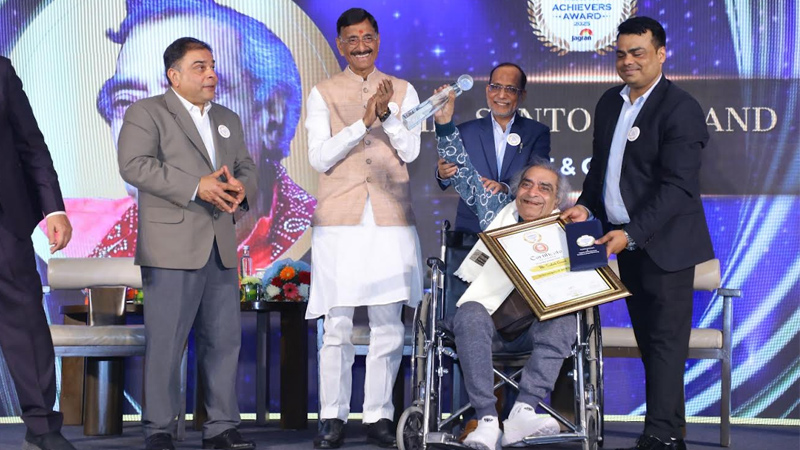
NEW DELHI: Hamdard Laboratories gathered a cross-section of India’s achievers in New Delhi on Friday, handing out the Hakeem Abdul Hameed Excellence Awards to figures who have left their mark across healthcare, education, sport, public service and the arts.
The ceremony, attended by minister of state for defence Sanjay Seth and senior officials from the ministry of Ayush, celebrated individuals whose work blends professional success with a sense of public purpose. It was as much a roll call of achievement as it was a reminder that influence is not measured only in profits or podiums, but in people reached and lives improved.
Among the headline awardees was Alakh Pandey, founder and chief executive of PhysicsWallah, recognised for turning affordable digital learning into a mass movement. On the sporting front, Arjuna Awardee and kabaddi player Sakshi Puniya was honoured for her contribution to the game and for pushing women’s participation onto bigger stages.
The cultural spotlight fell on veteran lyricist and poet Santosh Anand, whose songs have echoed across generations of Hindi cinema. At 97, Anand accepted the honour with characteristic humility, reflecting on a life shaped by perseverance and hope.
Healthcare honours spanned both modern and traditional systems. Manoj N. Nesari was recognised for strengthening Ayurveda’s place in national and global health frameworks. Padma shri Mohammed Abdul Waheed was honoured for his research-backed work in Unani medicine, while padma shri Mohsin Wali received recognition for his long-standing contribution to patient-centred care.
Education and social development also featured prominently. Padma shri Zahir Ishaq Kazi was honoured for decades of work in education, while former Meghalaya superintendent of Police T. C. Chacko was recognised for public service. Goonj founder Anshu Gupta received an award for his dignity-centred rural development initiatives, and the Hunar Shakti Foundation was honoured for empowering women and young girls through skill development.
The Lifetime Achievement Award went to former IAS officer Shailaja Chandra for her long career in public healthcare and governance, particularly in the traditional systems under Ayush.
Speaking at the event, Hamdard chairman Abdul Majeed said the awards were a tribute to those who combine excellence with empathy. “These awardees reflect Hakeem Sahib’s belief that healthcare, education and public service must ultimately serve humanity,” he said.
Minister Seth struck a forward-looking note, saying India’s young population gives the country a unique opportunity to become a global destination for learning, health and wellness by 2047.
The ceremony also featured the trailer launch of Unani Ki Kahaani, an upcoming documentary starring actor Jim Sarbh, set to premiere on Discovery on 11 February.
Instituted in memory of Unani scholar and educationist Hakeem Abdul Hameed, the awards have grown into a national platform that celebrates those building a more inclusive and resilient India. For one evening at least, the spotlight was not just on success, but on service with substance.