Cable TV
GTPL Hathway earmarks Rs 400 crore capex for FY22


KOLKATA: Pan India multi-system operator (MSO) GTPL Hathway is increasing its capex projection for FY22 to Rs 400 crore, compared to Rs 335 crore it invested in FY21, a top executive revealed in an investors call.
Out of the overall capex projected for this financial year, Rs 225 crore to Rs 230 crore will be invested in the broadband segment, while the rest is going to be deployed for the cable TV side, especially for expansion in new markets. All capex will be funded through internal accruals only. The company is not looking forward to any fund raising activity at this point of time, GTPL Hathway cable TV head and chief strategy officer Piyush Pankaj noted.
Earlier, the MSO revealed its plans to grow its cable TV subscriber base by more than 50 per cent in the next three years. While the growth in FY21 was flat, the company has cited the decline in commercial connections as reason for the sluggish addition.

“The hotels, corporates, housekeeping, offices, small offices and all, which have not come back totally because of the pandemic. We are looking forward that in the normal scenario this business will grow. The residential customers are growing. We have connected around half a million more residential houses in the pandemic. We are looking forward that we will continue to grow,” Pankaj commented.
GTPL Hathway is excited about six new states it entered for potential organic growth. Moreover, there is a lot of opportunity for consolidation, Pankaj added. It is already on the verge of executing some deals. While pandemic came in the way to executing deals in FY21, it is looking at closing the consolidation deals as the situation improves going forward.
Overall, the cable TV market has been growing from anything between four to seven per cent CAGR, mentioned GTPL Hathway chairman and non-executive director Rajan Gupta. It varies from state to state, where states like Odisha have grown higher.
It is also optimistic about maintaining its broadband additions as well, which is around 60,000 quarterly. “If you see 31 March 2020, we were showing the ISP internet service at around Rs 5 crore, which has increased to Rs 43 crore in 2021, quarter-to-quarter it is down, but year-to-year it is ten times more,” GTPL Hathway promoter and MD Anirudhsinh Jadeja highlighted.
Rather than increasing broadband ARPU, the current focus is to create the broadband market where it enjoys a high market share in cable like Gujarat. As upgradation happens from LAN to FTTH, there will be some ARPU increase, said Gupta. The shift in ARPU with change in connection happened last year, and he expects the momentum to continue.
GTPL Hathway planned to launch hybrid boxes in Q4FY21, but production has been delayed due to the pandemic. The boxes are ready and they are getting shipped, Pankaj stated.
While Jio is adding broadband subscribers aggressively, Jadeja claims it is not a competitor yet. “It is good now that Jio is also our partner and we might say that we are getting the cost synergy benefits related to the content, infrastructure, or whatever Jio’s expertise is for the overall industry,” remarked Jadeja.
“Jio’s market is spread in Ahmedabad, Baroda, Surat, and some other cities in Gujarat. GTPL covers almost the majority of Gujarat with a presence in 100 towns. The major competitor is BSNL and there are no other players,” he added.







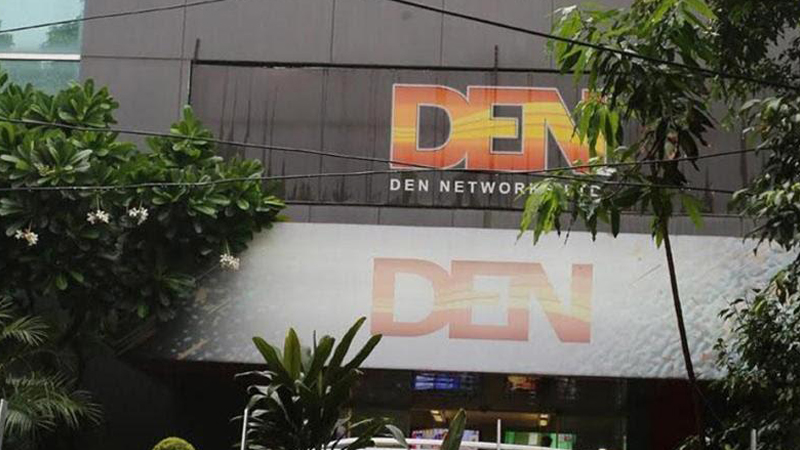
MUMBAI: When margins wobble, liquidity talks and in Q3 FY25-26, cash did most of the talking. Den Networks Limited closed the December quarter with consolidated revenue of Rs.251 crore, marginally higher than the previous quarter but down 4 per cent year-on-year, even as profitability stayed resilient on the back of strong cash reserves and disciplined cost control.
Subscription income softened to Rs.98 crore, slipping 3 per cent sequentially and 14 per cent from last year, while placement and marketing income offered some cheer, rising 15 per cent quarter-on-quarter to Rs.148 crore. Total costs climbed faster than revenue, up 7 per cent QoQ to Rs.238 crore, driven largely by higher content costs and operating expenses. As a result, EBITDA dropped sharply to Rs.13 crore from Rs.19 crore in Q2 and Rs.28 crore a year ago, pulling margins down to 5 per cent.
Yet, the bottom line refused to blink. Profit after tax stood at Rs.40 crore, up 15 per cent sequentially and only marginally lower than last year’s Rs.42 crore. A healthy Rs.57 crore in other income helped cushion operating pressure, keeping profit before tax at Rs.48 crore, broadly stable quarter-on-quarter despite the tougher cost environment.
The real headline-grabber, however, sits on the balance sheet. The company remains debt-free, with cash and cash equivalents swelling to Rs.3,279 crore as of December 31, 2025. Net worth rose to Rs.3,748 crore, while online collections accounted for 97 per cent of total receipts, underscoring strong cash discipline across operations, including subsidiaries.
In short, while Q3 showed signs of operating strain, the financial backbone remains solid. With zero gross debt, steady profits and a formidable cash war chest, the company enters the next quarter with flexibility firmly on its side proving that in uncertain markets, balance sheet strength can be the best growth strategy.






