Cable TV
GTPL cable TV business pushes revenue, profits up in Q1 2020


BENGALURU: GTPL Hathway Ltd (GTPL) reported 31.9 percent growth in revenue for the quarter ended 30 June 2019 (Q1-2020, quarter or period under review) and almost three times the operating profit for its cable TV business (CATV business) as compared to the corresponding year ago quarter Q1 2019. The company’s consolidated revenue from operations for the quarter under review grew 50 percent year on year (y-o-y) while consolidated total income expanded 30.3 percent in Q1 2020 as compared to Q1 2019. Consolidated profit after tax more than doubled (grew 164.3 percent) to Rs 33.23 crore in Q1 2020 as compared to Rs 12.57 crore in Q1 2019.
GTPL reported consolidated revenue from operations at Rs 445.47 crore in Q1 2020 as compared to Rs 296.91 crore in Q1 2019. Consolidated total income for the period was Rs 454.30 crore as compared to Rs 296.91 crore in the corresponding year ago quarter. CATV business revenue was Rs 344.16 crore in Q1 2020 as compared to Rs 260.93 crore in Q1 2-19. CATV business reported operating result of Rs 30.49 crore for the period under review as compared to Rs 10.17 crore for Q1 2019.
The company’s internet services business (Ex-EPC Project numbers) revenue grew 9.2 percent to Rs 39.29 crore in Q1 2020 from Rs 35.98 crore in Q1 2019. The segment incurred a small loss of Rs 0.14 crore in Q2 2020 as compared to an operating profit of Rs 2.40 crore in the corresponding year ago quarter. The company had been awarded Package B of the prestigious Bharat Net Phase-II project from the Gujarat Fibre Grid Network Ltd under Digital India Initiative (EPC Project) last year. GTPL reported revenue of Rs 62.02 crore an operating profit of Rs 2.89 crore from the EPC Project.

GTPL reported revenue (Ex EPC Project) of Rs 391.1 crore, which was 29 percent more y-o-y. The company says in an earnings release that its CATV subscription revenue increased 47 percent y-o-y to Rs 247.2 crore. EBITDA Ex EPC Project increased 32 percent y-o-y to Rs 110.3 crore. Ex EPC Project PAT doubled to Rs 26.6 crore.
On the operational front, GTPL says that it has seeded 200,000 STBs and added 300,000 digital paying subscribers in Q1 2020. The company says that it had 97 lakh (9.7 million, 0.97 crore) digital paying subscribers as on 30 June 2019. Phase-wise seeding as on June 30, 2019 for Phase 1, Phase 2, Phase 3 and Phase 4 were at 8.6 lakh (0.86 million, 0.086 crore); 22.6 lakh (2.26 million, 0.226 crore); 30 lakh (3.00 million, 0.3 crore) and 35.8 lakh (3.58 million, 0.358 crore) respectively.
Further, GTPL says that two thirds or 10,000 of the 15,000 new broadband internet subscribers were FTTX subscribers. Consumption per customer at 120 GB/month as on June 2019 was up from 38 GB/month in March 2017, or data consumption increased 3x over two years’ period.
Company speak
Commenting on performance, GTPL managing director Anirudhasinhji Jadeja said, “Q1FY20 was the first full quarter with New Tariff Order (NTO), which has led to significant growth in subscription revenue. Subscription revenue grew by 47percent on a y-o-y basis. Overall, our first quarter performance was in line with our expectation and we see our next three quarters equally exciting. With NTO being stabilised, our focus on taking FTTH to more and more homes, re-launching industry’s first dual service product ‘GTPL GIGAHD’ to convert current customers along with adding new customers and concurrently launching hybrid set top box will help us to converge linear TV viewing with OTT usage. We will further increase the pace of growth momentum towards CATV and broadband business in FY 2019 – 20.”
Let us look at the other numbers reported by GTPL
Consolidated total expenditure increased 42.7 percent during the quarter under review to Rs 403.99 crore from Rs 283.11 crore in Q1 2019. Pay channel cost in Q1 2020 increased 42.5 percent to Rs 180.17 crore from Rs 126.44 crore in the previous year. Other operational costs increased 2.7 percent to Rs 21.39 crore from Rs 20.83 crore.
Employee benefits expense in Q1 2020 was almost flat (decreased 0.1 percent) to Rs 35.29 crore from Rs 35.32 crore in the correspond period of the previous fiscal. Finance costs reduced 20.7 percent during the querter under review to Rs 12.45 crore from Rs 15.70 crore. Other expenses in the period increased 29.8 percent to Rs 48.37 percent to Rs 37.26 crore in the corresponding quarter of the previous year.







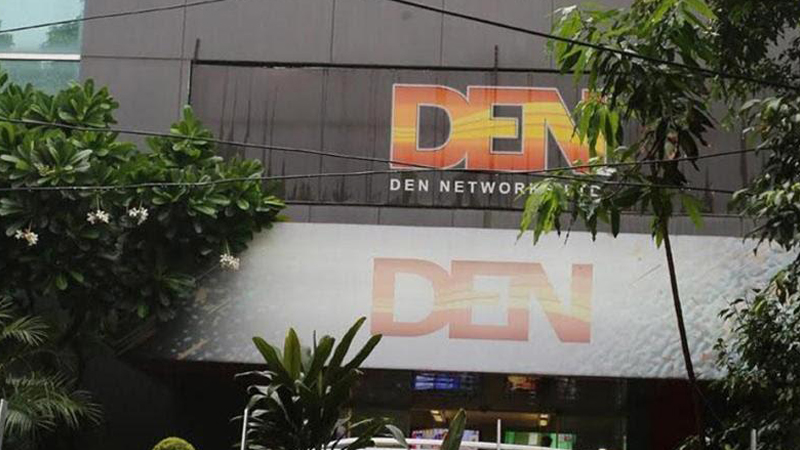
MUMBAI: When margins wobble, liquidity talks and in Q3 FY25-26, cash did most of the talking. Den Networks Limited closed the December quarter with consolidated revenue of Rs.251 crore, marginally higher than the previous quarter but down 4 per cent year-on-year, even as profitability stayed resilient on the back of strong cash reserves and disciplined cost control.
Subscription income softened to Rs.98 crore, slipping 3 per cent sequentially and 14 per cent from last year, while placement and marketing income offered some cheer, rising 15 per cent quarter-on-quarter to Rs.148 crore. Total costs climbed faster than revenue, up 7 per cent QoQ to Rs.238 crore, driven largely by higher content costs and operating expenses. As a result, EBITDA dropped sharply to Rs.13 crore from Rs.19 crore in Q2 and Rs.28 crore a year ago, pulling margins down to 5 per cent.
Yet, the bottom line refused to blink. Profit after tax stood at Rs.40 crore, up 15 per cent sequentially and only marginally lower than last year’s Rs.42 crore. A healthy Rs.57 crore in other income helped cushion operating pressure, keeping profit before tax at Rs.48 crore, broadly stable quarter-on-quarter despite the tougher cost environment.
The real headline-grabber, however, sits on the balance sheet. The company remains debt-free, with cash and cash equivalents swelling to Rs.3,279 crore as of December 31, 2025. Net worth rose to Rs.3,748 crore, while online collections accounted for 97 per cent of total receipts, underscoring strong cash discipline across operations, including subsidiaries.
In short, while Q3 showed signs of operating strain, the financial backbone remains solid. With zero gross debt, steady profits and a formidable cash war chest, the company enters the next quarter with flexibility firmly on its side proving that in uncertain markets, balance sheet strength can be the best growth strategy.






