News Broadcasting
GST 2.0 reloads India’s growth story at Network18’s power-packed summit


MUMBAI: Talk about tax reform with extra firepower Network18’s Reforms Reloaded 2025 lived up to its billing as India’s biggest policy stage, convening the nation’s top minds just as GST 2.0 kicked in on 22 September 2025. Policymakers, CEOs, economists, defence strategists, and global investors gathered in Delhi to decode how the new regime could reshape India’s economic trajectory and set the tone for its Vision 2030 leap.
The day was packed with insights, optimism, and the occasional hard truth. From GST reforms to defence indigenisation, divestment to digitisation, leaders sketched out how India could convert reform rhetoric into real, lasting impact.
Chief economic advisor V Anantha Nageswaran called GST 2.0 “a very significant landmark reform”, predicting it will provide a “very significant boost to domestic demand”. Coupled with recent tax concessions, he said, the multiplier effect would “quite definitely boost GDP numbers”, with FY26 growth expected towards the upper end of the 6.3–6.8 per cent range.

Tourism minister Gajendra Singh Shekhawat emphasised that the reforms would touch lives across strata, “from a farmer to a millionaire in Mumbai,” with 95 per cent of goods seeing a reduction in taxes. This, he argued, would put more money into consumers’ pockets, spur MSMEs, and even boost domestic tourism.
Consumer affairs minister Pralhad Joshi went a step further, hailing GST 2.0 as “the biggest reform since 1975”. He announced a dedicated consumer helpline to tackle complaints about GST benefits not being passed on and praised the new online input credit refund system: “Compliances have been simplified, refunds have been made online… what can be a bigger relief for businesses?”
DIPAM secretary Arunish Chawla highlighted how reforms in capital markets were democratising investment. Despite FIIs pulling out Rs 1 lakh crore between January and August, domestic institutional investors (DIIs) poured in Rs 5 lakh crore, with two-thirds of DIIs now individual investors. “As markets stabilise, we will bring in more OFS, minority stake sales and IPOs, and exceed this year’s Rs 47,000 crore divestment target,” Chawla said, cautioning against obsession with headline figures.
Defence secretary Rajesh Kumar Singh spotlighted the government’s push for self-reliance, announcing 25–30 billion dollars in annual capex for the next decade, with 75 per cent of that to be spent within India. The move, he argued, would not only strengthen defence capabilities but also catalyse indigenous manufacturing and innovation.
Beyond GST, panellists debated India’s reform roadmap: asset monetisation, renewable energy, frontier tech, and reshaping globalisation in India’s favour. The mood was decidedly optimistic that GST 2.0, alongside these reforms, could power a competitive, consumption-led economy.
Network18 (Broadcast) CEO Avinash Kaul framed the day’s significance: “At a time when global economic shifts and technological disruption are transforming industries, Reforms Reloaded sparks future-focused conversations on governance, GST, and India’s evolving role in the global economy.”
By the end of the summit, one thing was clear: GST 2.0 isn’t just another acronym in India’s policy alphabet soup. It’s the pivot around which India’s growth story for the next decade will turn, a story that leaders at Reforms Reloaded believe could make Bharat both resilient at home and credible on the world stage.
Because when it comes to India’s economic future, the message from the summit was loud and clear: it’s time to reform, reload, and rise.







News Broadcasting
CNN-News18 to host Fury in the Gulf conclave on West Asia crisis
Three-hour summit to unpack geopolitical fallout and impact on India
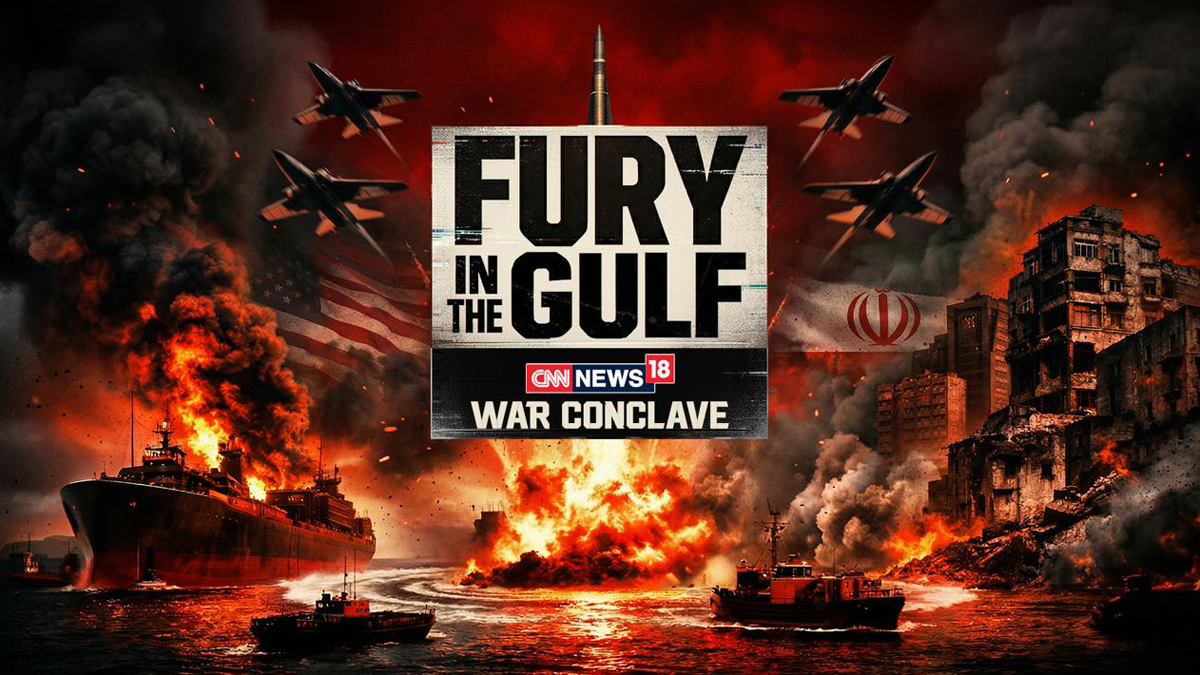
MUMBAI: CNN-News18 is set to host a special three-hour broadcast, Fury in the Gulf – War Conclave, on April 7, aiming to decode the escalating West Asia crisis and its far-reaching implications for India.
Scheduled from 4:00 PM to 7:00 PM, the conclave comes at a time when tensions between Iran and the United States are reshaping global geopolitics and triggering economic uncertainty. With India’s deep energy ties, trade links and large diaspora in the Gulf, the developments carry significant domestic relevance.
Built around the theme ‘Conflict, Consequences, and The Future,’ the programme will feature six curated sessions combining one-on-one interviews and panel discussions. The focus is to cut through the clutter and offer viewers a clearer understanding of the fast-evolving situation.
Key sessions include ‘Diplomacy in Times of War’ featuring Shashi Tharoor, and ‘World After the Iran Conflict’ with voices such as Ram Madhav, Reuven Azar, representatives from the European Union and the Iranian Deputy Envoy. Another session titled ‘Another Dunkirk?’ will bring together K. J. S. Dhillon and Jitin Prasada among others.
CNN-News18 editorial affairs director Rahul Shivshankar said, “In times of war, clarity becomes the most powerful tool. Fury in the Gulf – War Conclave brings together credible voices to address the questions and confusion that arise amid an overwhelming influx of information.”
He added that the initiative is aimed at delivering “facts, perspective, and insight” at a time when misinformation can easily cloud public understanding.
Echoing the sentiment, CNN-News18 CEO– English and business news Smriti Mehra said the conflict marks a defining global moment, with consequences that extend well beyond the region. She noted that the conclave seeks to present the crisis with “depth, nuance and responsibility” so audiences can better grasp its real-world impact.
As geopolitical tensions continue to dominate headlines, the conclave positions itself as an attempt to bring order to the noise, offering viewers a structured, insight-led look at a complex and rapidly shifting global situation.






