News Broadcasting
GSLV-F-01 carrying Edusat launched

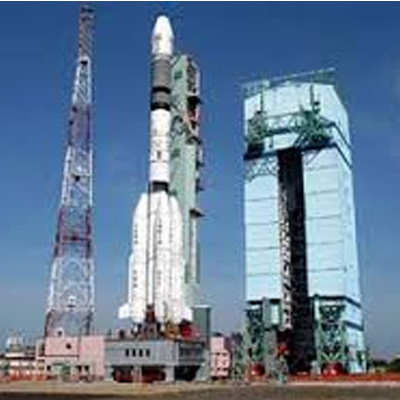
NEW DELHI: The geosynchronous satellite launch vehicle (GSLV-F-01), carrying Edusat, India’s exclusive satellite for educational services, was launched from the space centre at Srharikota here today at 4.01 pm.
The GSLV-F-01, carrying the 1950-kg satellite, soared majestically into the sky, from the Satish Dhawan Space Centre here, Press Trust of India reported today.
As the 49-metre-tall three-stage GSLV, weighing 414 tonnes, rose into the sky from this spindle-shaped island, off Bay of Bengal, there was jubilation all round with many scientists of the Indian Space Research Organisation, hugging each other and clapping their hands.

The GSLV will place the satellite into a Geosynchronous Transfer Orbit (GTO) within a few minutes after the lift-off, and from GTO, the satellite would reach the 36,000 km high Geostationary Orbit (GSO), by firing, in stages, its on-board Liquid Apogee Motor (LAM).
In GSO, the satellite will be co-located with Kalpana-1 and INSAT-3C satellites.
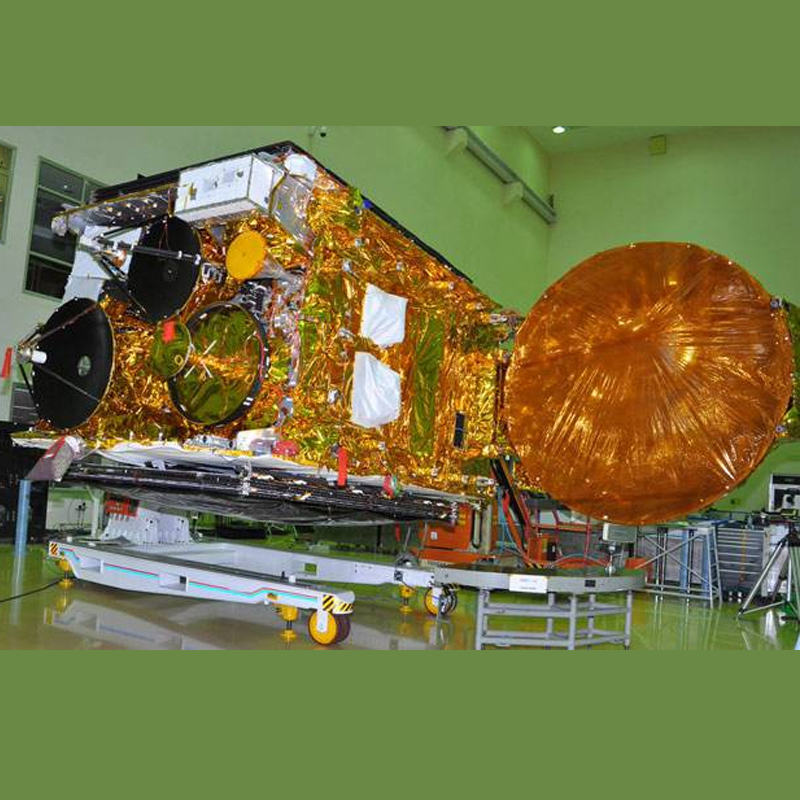
Built for a mission life of seven years, the Edusat is mainly intended to meet the demand for an interactive satellite-based distance education system for the country.
The exclusive satellite project will be utilised to demonstrate the concept of “multicasting” interactive multimedia for the educational sector. It will have multiple beams, with one Ku-band transponder covering the entire footprint of the country, while five Ku-band transponders will provide spot beams directed in four different regions (north, south, west and east, including north-east).
In addition, Edusat will carry six C-band transponders for other communication and broadcasting services covering the entire country.
The dedicated satellite will become operational in three months after it is deployed in the geo-orbit and we hope the first phase of the programme will be implemented before the end of the current fiscal (2004-05).

News Broadcasting
News TV viewership jumps 33 per cent as West Asia war draws audiences
BARC Week 8 data shows news share rising to 8 per cent despite T20 World Cup
NEW DELHI: Even as individual television news channel ratings remain under a temporary pause, the genre itself is seeing a clear surge in audience attention.
According to the latest data from Broadcast Audience Research Council India, television news recorded a 33 per cent jump in genre share in Week 8 of 2026, covering February 28 to March 6.
The news genre accounted for 8 per cent of total television viewership during the week, up from 6 per cent the previous week. The spike in attention coincided with escalating geopolitical tensions involving the United States, Israel and Iran, which have kept global headlines firmly fixed on West Asia.
The rise is notable because it came at a time when cricket was dominating television screens. The high-stakes stages of the ICC Men’s T20 World Cup, including the Super 8 fixtures and semi-finals, were being broadcast during the same period.
Despite the cricket frenzy, viewers appeared to be toggling between sport and global affairs, boosting the overall share of news programming.
The surge in genre share comes even as the government has enforced a one-month pause on publishing ratings for individual news channels. The move followed regulatory scrutiny of the television ratings ecosystem.
While channel-level rankings remain temporarily out of sight, the genre-level data suggests that when global tensions escalate, audiences continue to turn to television news for real-time updates.