News Broadcasting
Govt proposing to set up separate disputes tribunal for broadcast content

NEW DELHI: The government is proposing to set up a separate disputes tribunal for broadcast content on the lines of Telecom Disputes Settlement And Appellate Tribunal (TDSAT) as part of a comprehensive content regulation framework.
The proposed organisation, likely to be called Content Disputes Settlement Appellate Tribunal, would have the powers as vested under the Code of Civil Procedures, 1908, but not totally bound by it.
The content disputes tribunal would take up issues brought to it by aggrieved parties, including those who feel unfair treatment has been meted out by the proposed Content Regulatory Authority of India.

The structure of these two organizations are based on the functioning of Telecom Regulatory Authority of India (Trai) and TDSAT, which oversee telecom services, including broadcast and cable services at the moment.
The idea of creating a separate content disputes tribunal is based on feedback that the government has had from industry stakeholders and industry bodies like the Federation of Indian Chambers of Commerce and Industry.
As in the case of TDSAT, any appeal against content disputes tribunal’s orders can be made only in the Supreme Court. The government is also proposing to put a penalty on flouting the appellate tribunal’s order’s, which can go up to Rs 50 million.
Programming scheduling TV channel’s responsibility
Meanwhile, as per a draft of content code being considered in the I&B ministry, the onus of proper scheduling of programming would rest with a licensee.
“(The) licensee should take care that the time when minors are expected to be viewing the programmes, i.e. between 4 pm to 7 pm, the Broadcasting Code should be strictly followed,” a draft of the code states, stressing clearly on greater degree of self-regulation on the part of TV channels.
However, as pr another suggestion to the ministry, the restrictions on the provision of material unsuitable on television programmes for children should be relaxed on a gradual and progressive basis after 7 pm.
The assumption is that after 7 pm parents may reasonably be expected to share responsibility for what their children are permitted to watch on television.
The proposed content regulator is also unlikely to preview or pre-censor any TV programme, including films on television. It should be a licensee’s responsibility to ensure that the viewers are aware of the classification of the films broadcast on the television.







News Broadcasting
News18 India launches Command Centre war explainer with Arya
New show shifts from debates to decoding global conflicts and impacts
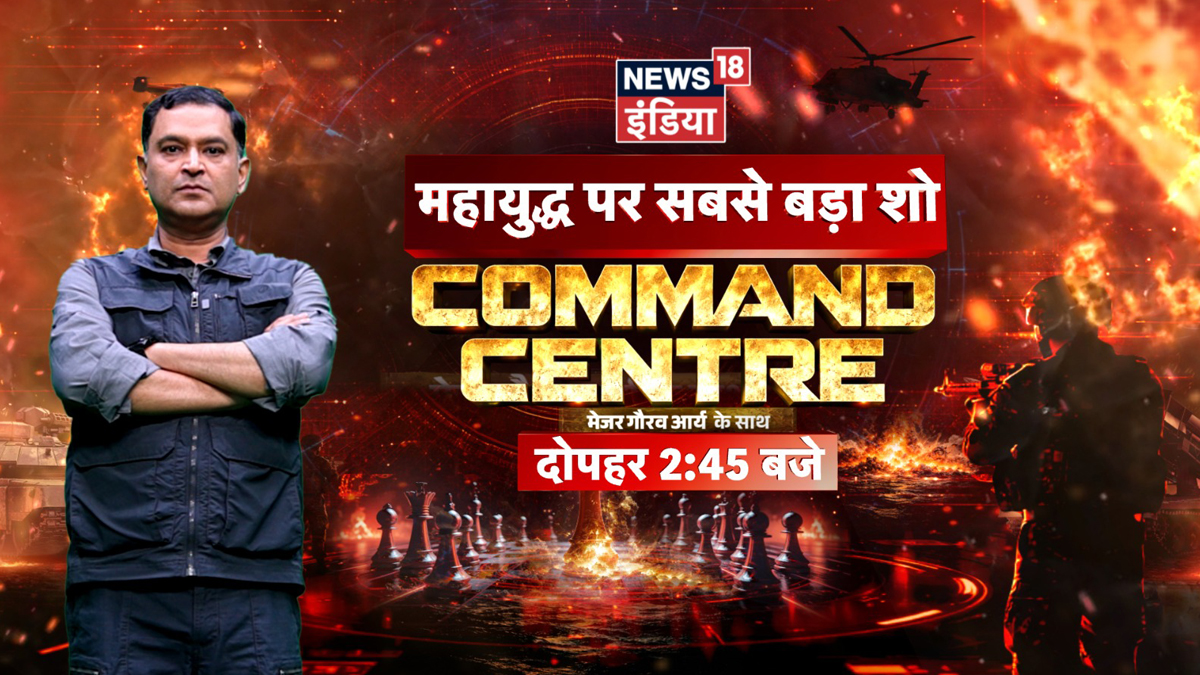
MUMBAI: News18 India has rolled out a new war-focused programme, Command Centre, featuring Gaurav Arya, as it looks to offer viewers a sharper, more grounded take on global conflicts amid rising tensions in West Asia.
Positioned as an “insider war room”, the show moves away from conventional panel debates and instead focuses on explaining military developments, decoding strategy and connecting global events to their everyday impact, from fuel prices to economic shifts.
The format leans heavily on visuals and data. The studio has been designed like a command hub, complete with large LED war maps, real-time graphics and an alert system to track developments as they unfold.
At the centre of it all is Arya, who brings his military background to simplify complex war strategies for viewers. His signature line, “Seedhi baat samjhiye”, anchors the show’s promise of clarity over noise.
News18 India managing editor Jyoti Kamal said, “Command Centre, featuring Major Gaurav Arya is designed to deliver accurate insights and a clear perspective on how evolving conflicts impact everyday life, from household budgets to national security. With expert voices analysing every development in real time, the show goes beyond headlines to decode what’s happening now, what it means, and what could come next.”
Echoing the intent, Gaurav Arya added, “In times of war, confusion is the biggest threat. With News18 India’s Command Centre, we are bringing viewers inside the war room, decoding strategies, tracking every escalation, and explaining, in the simplest terms, what it means for India and for every household. Seedhi baat samjhiye, this is where you understand not just what is happening, but what happens next.”
The weekday show will air in the afternoon slot and will also feature Gaurav Shukla, adding to its editorial depth.
With its mix of analysis, visuals and a clear focus on impact, the show reflects a broader shift in news consumption. Viewers are no longer just watching events unfold, they are looking to understand what those events mean for them.







