News Broadcasting
Govt. offers incentives under ‘Make in India’ programme to electronics manufacturers


NEW DELHI: More than 50 multi-national companies as well as Indian business houses had come forward with proposals to set up manufacturing units for electronic goods including set top boxes after the government announced relaxations to promote the ‘Make in India’ policy.
Taking part in the section on Electronic Manufacturing at the Times Television’s Digital Summit here, Communications and Information Technology joint secretary Ajay Kumar said that the whole process will mean recreating the IT industry and changing the eco-system as Indians had got used to importing cheap equipment from overseas.

However, he said that the IT industry was on the verge of ‘explosive growth’ because it had huge brain power, demographic profile, and a government determined to promote the ‘Make in India’ and ‘Digital India’ programmes.
Kumar claimed that the government was giving several incentives including a 25 per cent incentive in the manufacturing sector for electronic goods. Training programmes had been created for in-house human resources and there was focus on innovation and research and development.
However, Manufacturers’ Association for Information Technology (MAIT) vice president Nitin Kunkdienker said, “The government’s policies are still not helpful to the growth of the sector. A mere announcement of a national policy is not enough if states do not encourage to collaborate on various issues.”
He said even the central ministries did not talk to each other, referring specifically to the IT Ministry, the Information and Broadcasting Ministry, the Home Ministry, the Finance Ministry and the External Affairs Ministry.
In many states, the Chief Ministers had no control over the affairs relating to the industry. There was also need for process improvement such as customs etc. and the government should be able to optimize its advantages. It should also bring in the educational institutions on the programmes to create a system that sets standards.
Amar Babu R K of Lenovo referred to a general mistrust between the government and the industry.







News Broadcasting
CNN-News18 to host Fury in the Gulf conclave on West Asia crisis
Three-hour summit to unpack geopolitical fallout and impact on India
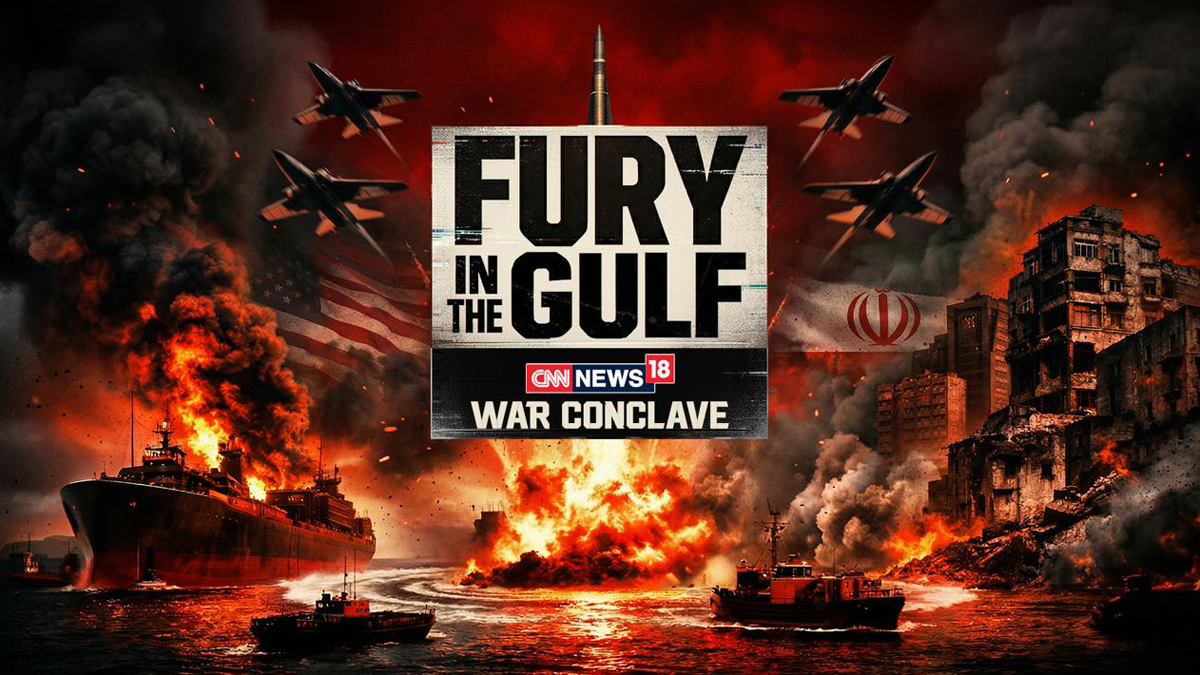
MUMBAI: CNN-News18 is set to host a special three-hour broadcast, Fury in the Gulf – War Conclave, on April 7, aiming to decode the escalating West Asia crisis and its far-reaching implications for India.
Scheduled from 4:00 PM to 7:00 PM, the conclave comes at a time when tensions between Iran and the United States are reshaping global geopolitics and triggering economic uncertainty. With India’s deep energy ties, trade links and large diaspora in the Gulf, the developments carry significant domestic relevance.
Built around the theme ‘Conflict, Consequences, and The Future,’ the programme will feature six curated sessions combining one-on-one interviews and panel discussions. The focus is to cut through the clutter and offer viewers a clearer understanding of the fast-evolving situation.
Key sessions include ‘Diplomacy in Times of War’ featuring Shashi Tharoor, and ‘World After the Iran Conflict’ with voices such as Ram Madhav, Reuven Azar, representatives from the European Union and the Iranian Deputy Envoy. Another session titled ‘Another Dunkirk?’ will bring together K. J. S. Dhillon and Jitin Prasada among others.
CNN-News18 editorial affairs director Rahul Shivshankar said, “In times of war, clarity becomes the most powerful tool. Fury in the Gulf – War Conclave brings together credible voices to address the questions and confusion that arise amid an overwhelming influx of information.”
He added that the initiative is aimed at delivering “facts, perspective, and insight” at a time when misinformation can easily cloud public understanding.
Echoing the sentiment, CNN-News18 CEO– English and business news Smriti Mehra said the conflict marks a defining global moment, with consequences that extend well beyond the region. She noted that the conclave seeks to present the crisis with “depth, nuance and responsibility” so audiences can better grasp its real-world impact.
As geopolitical tensions continue to dominate headlines, the conclave positions itself as an attempt to bring order to the noise, offering viewers a structured, insight-led look at a complex and rapidly shifting global situation.






