I&B Ministry
Govt. moves to stop screening on internet websites as notice is issued to two lawyers

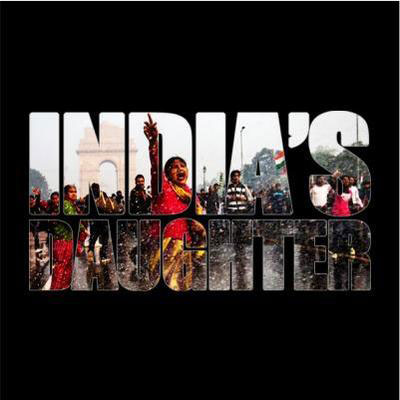
NEW DELHI: Even as the documentary “India’s Daughter” by Oscar-winning British filmmaker Leslee Udwin on the Nirbhaya gang-rape case has been telecast by BBC4 on a channel not available in India despite the ban by the Delhi High Court, two lawyers who defended the rapists have been issued notices for their allegedly anti-women remarks.
The notices were issued by the Bar Council of India to M L Sharma and A P Singh under a provision of the advocates act and their licences to practice may be cancelled if BCI is not satisfied with their response.

Sharma has already refuted the charge that he made any such remarks in the documentary.
Within hours, the film became available on YouTube despite a message that showed “URL Blocked”. It also became available on some other websites.
Home Minister Rajnath Singh said two days earlier that the government was exploring ways to block the film on YouTube. He also said action would be taken for the telecast of the film last night and added that he was pained by the development
The documentary was to have been aired in the UK, Denmark, Sweden, Switzerland, Norway, Canada, and India (NDTV 24X7) on International Women’s Day 8 March.
But a statement from the BBC two days earlier said given the “intense level of interest” it would telecast the film later. Butthe channel later said in a communication to the Home Ministry that it had no plans to telecast the documentary in India, “in compliance with the Indian Government’s directive”.
Singh had also said that it would attempt to block the telecast in other countries and the External Affairs and Information and Broadcasting Ministries had been asked to ensure the film was not broadcast on any platform anywhere in the world.
Singh had made a statement in Parliament amid massive uproar over how permission was granted to the filmmaker to interview Mukesh Singh, one of the six men who brutally raped and tortured a 23-year-old paramedical student on a moving bus on 16 December 2012. She had died 13 days later in a Singapore hospital.
In the interview, Mukesh Singh said the rape and killing was deliberate to teach women a lesson, and displayed no remorse as he blamed the woman.
The BBC said in its statement, “This harrowing documentary, made with the full support and co-operation of the victim’s parents, provides a revealing insight into a horrific crime that sent shock waves around the world and led to protests across India demanding changes in attitudes towards women.”
“The film handles the issue responsibly and we are confident the programme fully complies with our editorial guidelines,” it said.
Delhi Police chief BS Bassi said: “We took a regular order from a competent court and informed BBC and other channels against broadcasting and uploading of the video of the interview on internet and so that nobody violates the law.” The Delhi Police have filed a case and have started investigation, Mr Bassi said. He said permission to take interview is always the discretion of the concerned authority, so we are not looking for criminality in that.
The Delhi Police has written to the Telecom and Communications Ministry and sought blocking of the film on YouTube. The Police may also question the crew who shot the film. While its co-producer Dibang is in India, Udwin is understood to have left late last night for the United Kingdom. (Ms Udwin was producer of the award-winning feature film ‘East is East’ which had starred Om Puri among others around twenty years earlier,)
Lalita Kumaramangalam felt that showing the film was ‘morally wrong’ as the broadcaster did not think about the anguish that women who have faced such things will go through.
However, film lyricist and Rajya Sabha member Javed Akhtar said the film should be shown to reveal to the world what rapists are like. He said he could have understood the ban if Mukesh’s lawyer had asked for it. He said the goal of such documentaries is to bring out disgust against rapists’ point of view. “It makes people aware such a mindset is not uncommon.”
Bharatiya Janata Party member of Parliament from Mumbai Poonam Mahajan has said in an article that the film only shows the mindset of men.
Meanwhile, people took to the streets in Varanasi earlier this week and burnt an effigy of the BBC in protest against the documentary.
Minister of State for Parliamentary Affairs Mukhtar Abbas Naqvi said the channel that broadcast the Nirbhaya documentary will not be forgiven.
The victim’s father, who had cooperated with the filmmaker, has now said that BBC should not have been shown in view of the ban.
Meanwhile, Udwin has said society created the rapists by teaching them “what to think”. She said she was not inspired by the rape to make the film, but the wave of protests this generated all over the country within hours of the report. In an interview with India Insight (a blog on Reuter website), she said the argument that airing the convict’s interview would amount to giving him a platform to promote his views was “stupid” and “uneducated.”
In a separate interview to CNN, Udwin described the people she spoke with – the attorneys, the lawyers, and the culprits – as “ordinary, apparently normal and certainly unremarkable men.”
CNN says that Udwin’s documentary illustrates how even people with power in India harbour shockingly similar attitudes. One of the lawyers who represented the attackers says he would burn his own daughter alive if she behaved dishonourably. Another defence lawyer gestures with his hands to describe women as “flowers” who must be protected by men and “diamonds” who face inevitable assault if they end up in the wrong places.







I&B Ministry
IT Rules tweaks are clarificatory, not expansion of powers: MeitY
Govt signals flexibility as platforms push for clarity on user content rules
NEW DELHI: The Centre has sought to dial down concerns over its proposed amendments to the IT Rules, with Ministry of Electronics and Information Technology secretary S Krishnan asserting that the changes are intended as clarifications rather than an expansion of regulatory powers.
Pushing back against criticism from platforms and civil society, S Krishnan said the amendments “do not in any way actually give us wider powers” and are meant to remove ambiguity in how existing provisions are applied. He added that the trigger came largely from within the ecosystem, with intermediaries themselves seeking clearer guidance on compliance, takedowns and record preservation.
At the heart of the debate is the growing friction between platforms and policymakers over responsibility for user-generated content. Intermediaries have argued that they should not be treated on par with publishers, particularly when content is created and uploaded by users. Krishnan acknowledged this concern, noting that “a sharper distinction” between user content and publisher content is needed and is currently under examination.
The issue becomes more complex in enforcement scenarios. While registered publishers can be directly asked to modify or remove content, intermediaries often lack control over the original creator. “In such cases, the intermediary cannot direct those changes,” Krishnan explained, underlining the need for procedural nuance.
Another key proposal under discussion is to bring user-generated news and current affairs content within a more unified regulatory ambit, potentially under the Ministry of Information and Broadcasting. The move follows suggestions that a single authority should handle such content, regardless of whether it originates from a publisher or an individual user.
Even as the government frames the amendments as a tidy-up exercise, fault lines remain. Industry players have flagged concerns over compliance burdens, especially for smaller businesses, and questioned whether advisories could effectively become binding without explicit legislative backing. Krishnan said the government is mindful of these risks and is exploring ways to ease obligations, including possible relaxations under certain provisions.
The ministry is also considering consolidating multiple advisories and guidelines into a more structured framework, a step widely seen as addressing long-standing confusion over what platforms are expected to follow.
On takedowns, the government has reiterated that due process will remain unchanged. Krishnan stressed that actions will continue to be governed by established procedures, with reasons recorded and review mechanisms in place. He also pointed to the surge in deepfakes and synthetic media as a factor behind rising content disputes, calling it a “scale challenge” for regulators.
Interestingly, Krishnan also framed social media platforms as commercial entities rather than pure vehicles of free expression, hinting at a broader shift in regulatory thinking as platform economics come into sharper focus.
With stakeholders seeking more time and, in some cases, a rollback of the proposals, the government has kept the consultation process open-ended. Krishnan said further revisions remain on the table, signalling a willingness to adapt the draft based on feedback.
For now, the message from MeitY is clear: the rules may not be tightening in intent, but the effort to define them more clearly is well underway.






