News Broadcasting
Govt. move to check on movie channel content may extend to entertainment genres


NEW DELHI: The Indian government now wants to crack down on movies shown on various TV channels and through it may attempt to control all genres of content that are aired by channels, specially satellite channels which uplink from outside the country.
The information and broadcasting ministry is understood to have hit upon the idea that movies shown on various channels do not conform to the programming codes and the channel managers have also not been following the code of getting a censorship certificate before airing them as is mandated.
The ministry, according to government sources, however, is contemplating consulting the law ministry on this and whether clauses in the existing cable TV Networks Regulation Act 1995 can be invoked for the crackdown.

“If today it is movies, in the near future, the government can also insist on having everything, from serials to news programmes, being vetted by it first before being aired on channels which are seen in India,” a media analyst pointed out, hinting that far from liberalising policies, the government is attempting to have a tighter control on the electronic media.
What is the genesis of this move being contemplated in the corridors of Shastri Bhawan which houses the I&B ministry in New Delhi? I&B ministry officials, without spelling out any details, indicated that complaints have been received from various quarters on movies, including some questions posed in parliament to I&B minister Sushma Swaraj.
Can the government tighten its grip over content being aired on TV channels? On the face of it, yes.
The programming code, as detailed out in the CATV Act, amongst other things, states, “No programme should be carried in the cable service which offends against good taste or decency, contains anything obscene, defamatory, deliberate, false and suggestive innuendoes and half truths.”
What’s more Clause 6(n) of the Rules on programming also state that no programming on cable services shall be carried which “contravenes the provisions of the Cinematographic Act, 1952.” Sub-clause (o) says no programming shall be carried on the cable services, which “is not suitable for unrestricted public exhibition.”
“Unrestricted” public exhibition has been further explained as carrying the same meaning as assigned to it in clause 37 of the Cinematograph Act, 1952.
Now, say government sources, the I&B ministry has interpreted this to mean that pre-censor certificates should be not only a must for movies, but also for all types of programming. If this is not done, then it contravenes the provisions of the Cinematograph Act, 1952 and the government can crack down on cable operators for airing “errant” channels.
However, sources also indicated that this thought process is in an early stage and the law ministry’s views on the interpretation of the reading of the clauses by the I&B ministry is very crucial. This is because even if the interpretation is correct and can hold up in a court of law, if challenged, then the implementation of it will also have to be thought about.

News Broadcasting
Kamlesh Singh receives Haldi Ghati Award from MMCF
India Today Group editor honoured for three decades of journalism at Udaipur ceremony.
MUMBAI- Kamlesh Singh just turned a lifetime of sharp words into a shiny shield because when journalism wakes up a society, even the Maharana of Mewar wants to pin a medal on it.
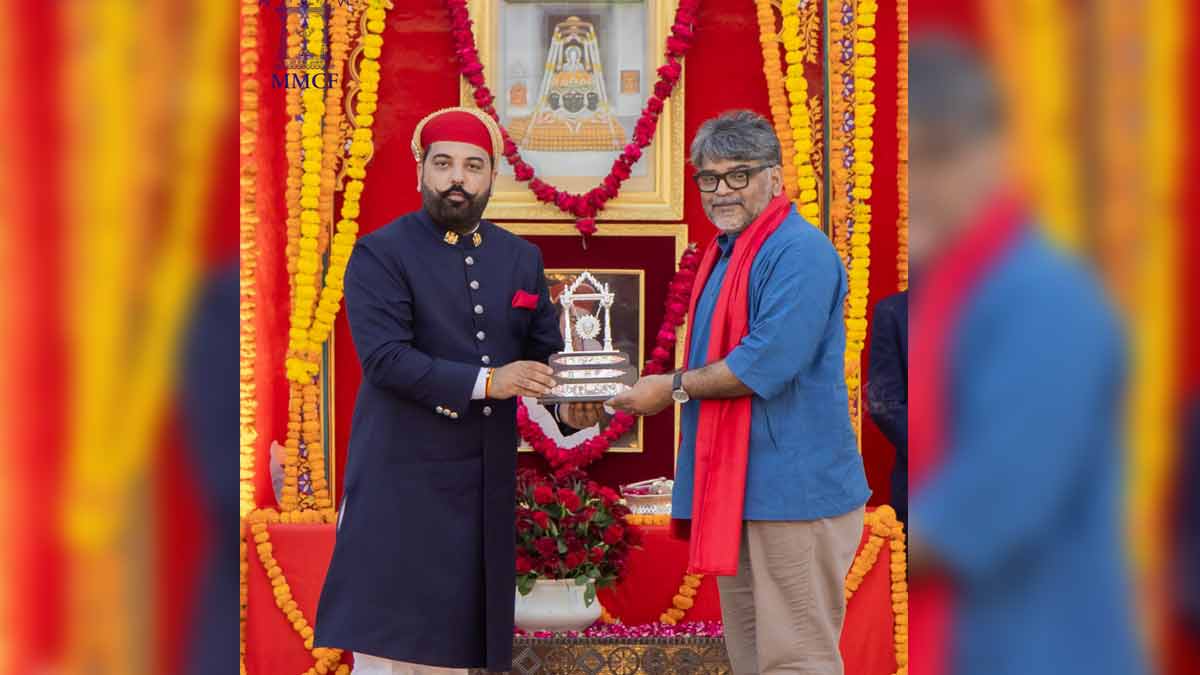
The Maharana of Mewar Charitable Foundation (MMCF) conferred its prestigious Haldi Ghati Award on Kamlesh Singh, a senior editor at the India Today Group, during a ceremony in Udaipur on 15 March 2026. The national award, instituted in 1981-82, recognises “work of permanent value that initiates an awakening in society through the medium of journalism.”
Singh, who leads several editorial initiatives including Aaj Tak Radio, the Teen Taal community and The Lallantop, was presented the honour by Lakshyaraj Singh Mewar, Managing Trustee of MMCF. The citation highlighted his three decades of contributions to Indian media, innovations in digital journalism, mentoring young reporters, and his popular podcast persona “Tau” on Teen Taal, which fosters thoughtful public discourse.
The Haldi Ghati Award, named after the historic Battle of Haldighati symbolising valour and resilience, is one of four national awards given annually by MMCF. Past recipients include Tavleen Singh, Piyush Pandey and Raj Chengappa.
Other honourees this year included Padma Vibhushan Pt Hari Prasad Chaurasia, Vedamurti Devvrat Rekhe, Treeman of India Marimuthu Yoganathan, Vir Chakra Capt Rizwan Malik, and US-based researcher Molly Emma Aitken, who received the Colonel James Tod Award for contributions to understanding Mewar’s spirit and values.
In an era where headlines often shout louder than substance, the MMCF quietly reminded everyone that real journalism isn’t about noise, it’s about the quiet, persistent work that stirs society awake, one thoughtful story at a time.