I&B Ministry
Govt. denies interference in working of CBFC


NEW DELHI: The Government has categorically denied any interference in the decision-making of the Central Board of Film Certification or any coercion on the chairperson or any other member by the Information and Broadcasting Ministry.
Minister of state for I&B Rajyavardhan Singh Rathore said that the Ministry had ‘at no point’ communicated with the chairperson or members regarding certification of any film.

While announcing that Pahlaj Nihalani was made chairman and 10 new Board members had been appointed to fill the places of nine members who resigned, Rathore told Parliament that the legal regime with regard to CBFC is well laid out and it is the Board alone which decides within its jurisdiction.
Aggrieved producers have the right to move the Film Certification Appellate Tribunal headed by a retired Judge of a High Court which decides matters in appeal in accordance with the Cinematograph Act.
There are adequate provisions in the Act and the Rules to protect the autonomy of the Board.
He said Leela Samson’s tenure as chairperson had ended in March but she had continued to hold charge because as per the Certification Rules an outgoing Chairperson has to hold charge until the new incumbent takes over. While there is no such rule for the members, fourteen members whose tenure had ended on 24 May had been asked to continue until further orders.
The resignation of Samson and nine other members who resigned alleging interference was accepted with effect from 19 January this year.






I&B Ministry
MIB halts news TRPs for four weeks over sensational US-Iran conflict coverage
Government flags panic-mongering in television war coverage
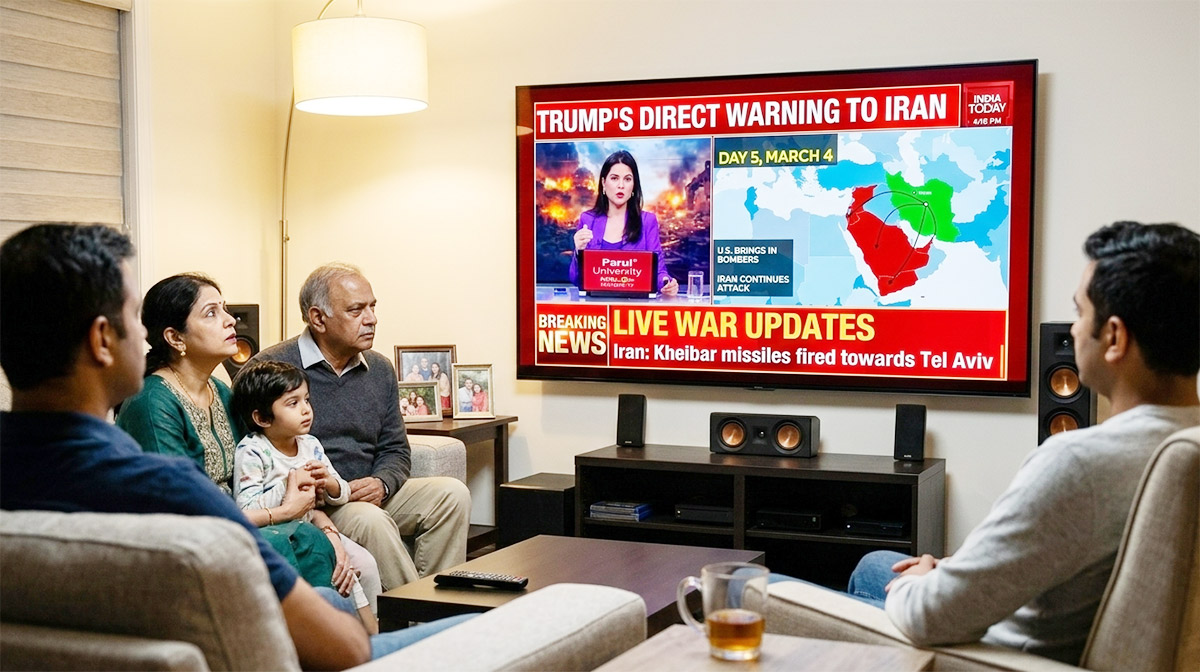
NEW DELHI: India’s Ministry of Information and Broadcasting directed the Broadcast Audience Research Council India (BARC) to suspend television ratings for news channels for four weeks amid concerns over sensational coverage of the ongoing conflict involving the United States and Iran.
According to media reports, the move intends to curb excessive dramatisation in television reporting that could trigger unnecessary public anxiety.
Officials have observed that several news broadcasters are amplifying developments in the conflict in ways that may fuel panic among viewers. By temporarily halting the publication of viewership data, the ministry hopes to ease the competitive pressure on channels to chase ratings through sensational content.
The suspension will remain in effect for one month for now. During this period, television news channels will continue to broadcast as usual, but their audience measurement figures will neither be counted nor released.
Authorities will monitor both the evolving geopolitical situation and the tone of television coverage during the pause. The four-week suspension could be extended if the government believes the risk of panic-mongering or sensational reporting persists.