I&B Ministry
Govt. considering ways to check hoax calls and their sensationalization on electronic media: Rathore

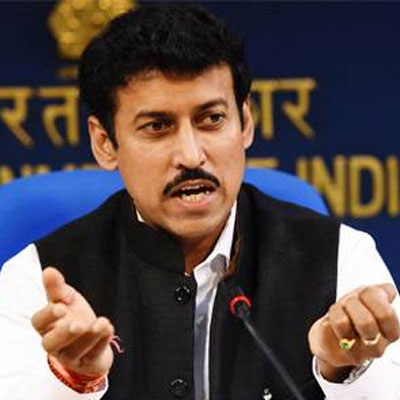
New Delhi, 20 March: The Government is examining ways to ensure that hoax calls about planting of bombs etc and sensationalizing of such news by the electronic media can be checked.
Minister of State for Information and Broadcasting Rajyavardhan Rathore said in reply to a question in the Rajya Sabha recently that the matter was ‘under consideration’.
The question also related to the I and B Ministry planning concrete steps in consultation with the Home Ministry in this regard.

In response to a similar question relating to anti-India messages on television channels asked in the Lok Sabha, the Minister said action is taken whenever any report is received by the Ministry about any anti-India messages.
He stressed that programmes and advertisements telecast on private satellite TV channels are governed by the Programme and Advertising Codes prescribed under the Cable Television Network (Regulation) Act 1995 and the rules framed thereunder.
The Act does not provide for pre-censorship of the programmes and advertisements aired on these channels. However, all these channels are required to adhere to the Programme and Advertisement codes which provide for a whole range of parameters to be adhered to for programmes on TV channels.
Rule 6(1) of the Proqramme Code is clear that no programme should be transmitted/retransmitted on any cable service if it contains attack on religions or communities or visuals or words contemptuous of religious groups or which promote communal attitudes.





I&B Ministry
Doordarshan, ICCR sign MoU to boost global reach of Indian culture
Pact taps TV, radio and digital platforms to take cultural content worldwide
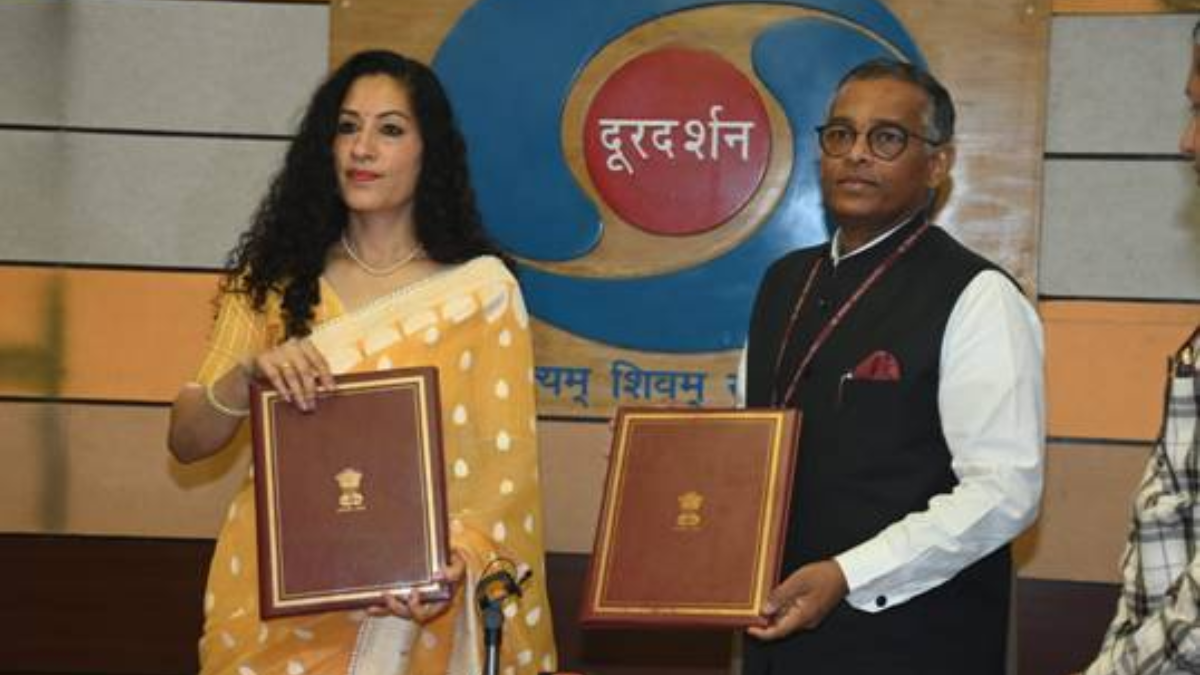
NEW DELHI: In a move aimed at taking India’s cultural story further across borders, Doordarshan under Prasar Bharati has signed a memorandum of understanding with the Indian Council for Cultural Relations to expand the global reach of Indian cultural content.
The agreement, signed on April 7 at Doordarshan Bhawan, brings together the content strength of ICCR and the wide broadcast network of Doordarshan, spanning television, radio and digital platforms.
Under the partnership, ICCR will provide a steady stream of cultural programming, including performances and events organised by Indian missions abroad such as embassies, consulates and cultural centres. Doordarshan will handle production, coverage and distribution, ensuring that these programmes find audiences not just in India but across the world.
The collaboration also opens the door for recorded cultural content from overseas missions to be aired across multiple platforms, including OTT and social media, making Indian art, music and heritage more accessible to global viewers.
A notable feature of the MoU is joint ownership of content rights in perpetuity, including digital rights. This allows both organisations to archive and reuse material over time, building a long-term cultural repository while maximising reach. Doordarshan will also support pre-event promotion and cross-platform visibility to drive engagement.
Speaking at the signing, Doordarshan director general K. Satish Nambudiripad and Indian Council for Cultural Relations director general K. Nandini Singla highlighted the potential of the partnership to strengthen India’s cultural diplomacy through modern media channels.
The agreement, initially valid for three years, also allows Doordarshan to explore monetisation opportunities from the content generated, adding a commercial layer to cultural broadcasting.
As India looks to blend tradition with technology, this partnership signals a clear intent to make its cultural voice not just heard, but seen and streamed across the globe.







