I&B Ministry
Govt adapting new communication strategies, says I & B minister

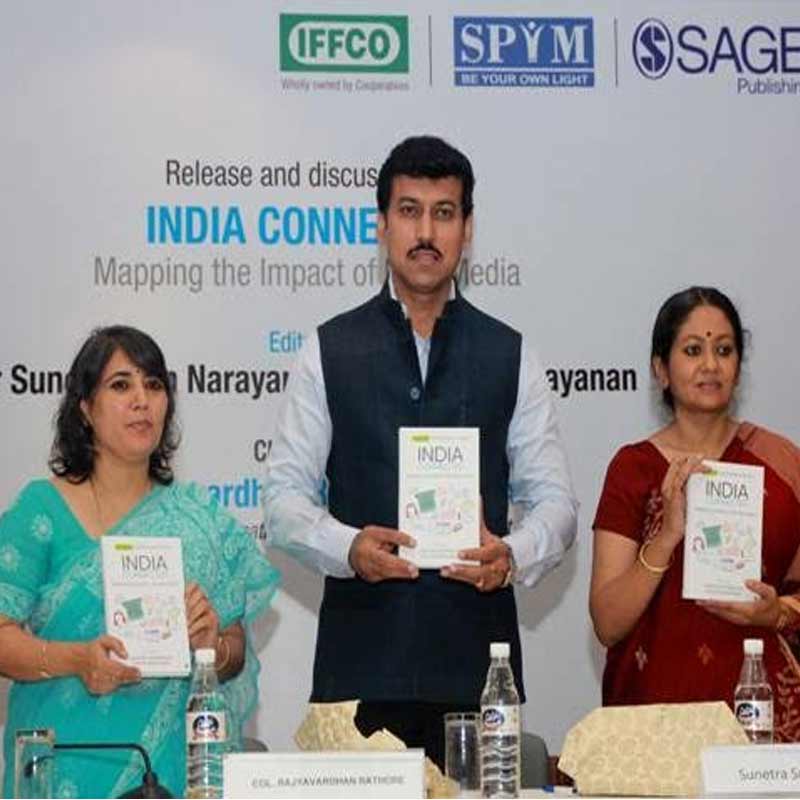
NEW DELHI: Minister of state for information and broadcasting Rajyavardhan Rathore today said that the Government has been redefining and adapting the content and information dissemination strategy in accordance with the changing paradigm in communication space, especially in the social media.
Rathore said, due to technology change, information generation pattern and information consumption has changed today. The minister said this after releasing the book “India Connected: Mapping the Impact of New Media” here today. The book has been jointly authored by Dr Shalini Narayanan and Dr. Sunetra Sen Narayanan.
Elaborating, the minister said news broadcasters today were following social media trends for designing debates and discussions on their channels.

Rathore said the Government has been conducting seminars and workshops to train officers in social media with the latest tools and techniques to effectively communicate with citizens.
The book outlines the impact of social media while comparing it with the traditional media. The book flags challenges and opportunities that social media offers in the Indian setting.






I&B Ministry
MeitY extends deadline for feedback on digital media rules overhaul
Government gives stakeholders more time to respond to proposed changes in intermediary guidelines.
MUMBAI: When the rulebook gets a rewrite, even the internet needs a little extra time to read the fine print. Regulators have extended the deadline for public feedback on a proposed overhaul of India’s digital media and intermediary liability framework, giving stakeholders until April 29 to submit their views. In a notice issued on April 10, the Ministry of Electronics and Information Technology (MeitY) said it was extending the consultation period for draft amendments to the Information Technology (Intermediary Guidelines and Digital Media Ethics Code) Rules, 2021, following representations from several stakeholders.
At the heart of the proposals is a significant shift in how social media platforms and other intermediaries must respond to government communications. A new provision would make compliance with official “clarifications, advisories, directions, standard operating procedures and guidelines” a formal part of the due diligence obligations required to retain safe harbour protection under Section 79 of the Information Technology Act.
The amendments would also expand the scope of content oversight under Part III of the rules. The digital media ethics code would now apply not only to publishers but also to intermediaries hosting or transmitting user-uploaded news and current affairs content. This could bring user-generated news more directly under regulatory scrutiny.
Additionally, the Inter-Departmental Committee’s powers would be broadened, allowing it to take up matters referred directly by the ministry rather than waiting for formal complaints. This signals a more proactive approach to content monitoring.
The existing IT Rules already impose strict requirements on intermediaries, including timely removal of unlawful content, grievance redressal mechanisms, and traceability in certain cases. Recent updates have also introduced obligations around labelling synthetically generated content.
Officials have described the amendments as necessary to create an “Open, Safe, Trusted and Accountable Internet” while improving legal clarity and enforceability.
With the extended deadline now set for April 29, the government has given industry bodies, civil society, and digital platforms additional time to respond to changes that could significantly reshape how online platforms operate and are governed in India.
In the fast-scrolling world of digital regulation, a little extra time to read the small print might just prevent bigger headaches down the line.







