News Broadcasting
Governors’ report stresses need for BBC to improve quality of comedy, drama

MUMBAI: The BBC’s board of governors has published the pubcaster’s Annual Report and Accounts for 2004/05 which records a year of radical change throughout the corporation. The report covers the first full year term of BBC chairman Michael Grade
The Governors said that on BBC Television much progress had been made in responding to audience expectations of quality and distinctiveness. However there is still more that must be done. There needs to be fewer repeats in peak-time on BBC One as well as increasing the quality of comedy and drama across television. BBC Two’s reach needs to be increased without endangering its new-found distinctiveness.
There is also a need to improve the value-for-money proposition of the digital television channels. On the radio front the governors noted the success of Radios 1 and 2 and their distinctiveness from others in the commercial sector. But the Governors also recognised their responsibility for ensuring that BBC Radio continued to meet its public service remit. bbc.co.uk and BBC News were identified by the Governors as clear examples of how the BBC’s purposes articulated in Building Public Value have delivered greater responsiveness at the BBC.

These include the six objectives which were set by the Governors last year. These covered journalism and impartiality; creativity and ambition; value-for-money; driving digital; and the BBC’s global reputation . Here, the Governors noted that significant progress was being made in the journalism arena which is driving the BBC’s digital and global reputation. On the value-for-money criteria the Governors were satisfied, having commissioned independent analysis, that the savings through job cuts and the selling of divisions like BBC Broadcast were achievable and in the interests of licence fee payers, but they recognised these changes had impacted on staff morale.
Meanwhile the report also states that the new system of service licences will provide greater clarity on what management, staff, audiences and commercial competitors can expect from all the BBC’s services. It will enable the Board to judge performance transparently using consistent measures. The Governance Unit is developing the framework for the service licences. This will shortly be opened to consultation and the initial licences are scheduled for publication early next year, to ensure formal operation at the start of the new Charter in 2007.





News Broadcasting
CNN-News18 to host Fury in the Gulf conclave on West Asia crisis
Three-hour summit to unpack geopolitical fallout and impact on India
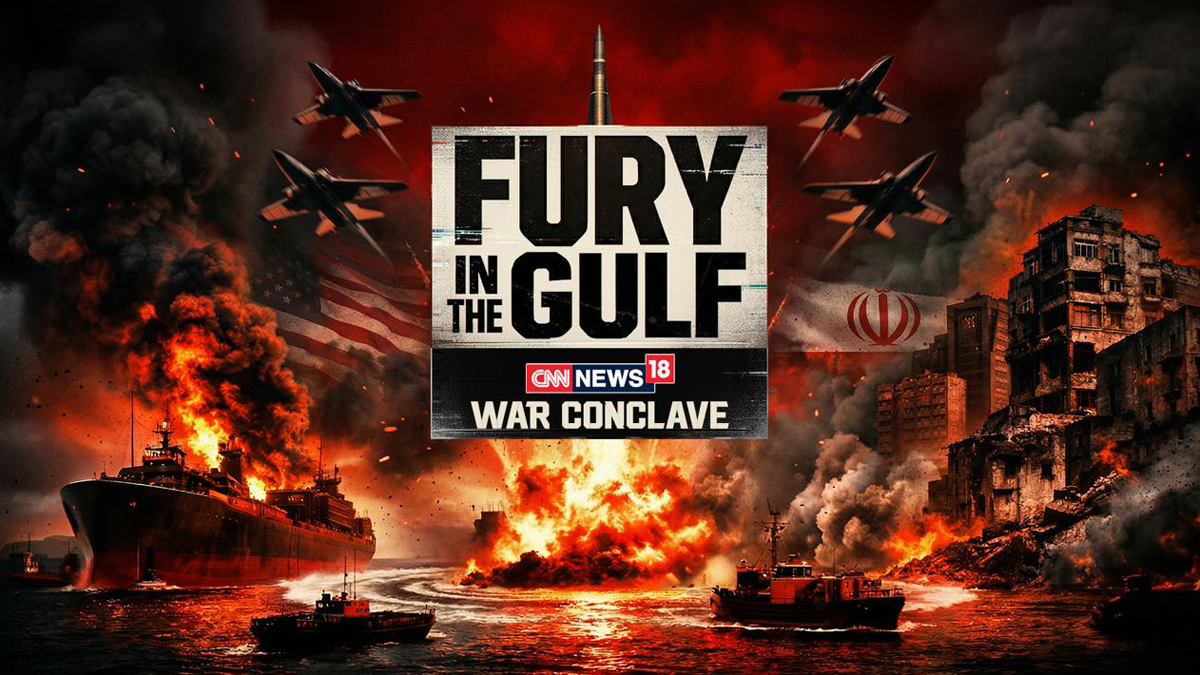
MUMBAI: CNN-News18 is set to host a special three-hour broadcast, Fury in the Gulf – War Conclave, on April 7, aiming to decode the escalating West Asia crisis and its far-reaching implications for India.
Scheduled from 4:00 PM to 7:00 PM, the conclave comes at a time when tensions between Iran and the United States are reshaping global geopolitics and triggering economic uncertainty. With India’s deep energy ties, trade links and large diaspora in the Gulf, the developments carry significant domestic relevance.
Built around the theme ‘Conflict, Consequences, and The Future,’ the programme will feature six curated sessions combining one-on-one interviews and panel discussions. The focus is to cut through the clutter and offer viewers a clearer understanding of the fast-evolving situation.
Key sessions include ‘Diplomacy in Times of War’ featuring Shashi Tharoor, and ‘World After the Iran Conflict’ with voices such as Ram Madhav, Reuven Azar, representatives from the European Union and the Iranian Deputy Envoy. Another session titled ‘Another Dunkirk?’ will bring together K. J. S. Dhillon and Jitin Prasada among others.
CNN-News18 editorial affairs director Rahul Shivshankar said, “In times of war, clarity becomes the most powerful tool. Fury in the Gulf – War Conclave brings together credible voices to address the questions and confusion that arise amid an overwhelming influx of information.”
He added that the initiative is aimed at delivering “facts, perspective, and insight” at a time when misinformation can easily cloud public understanding.
Echoing the sentiment, CNN-News18 CEO– English and business news Smriti Mehra said the conflict marks a defining global moment, with consequences that extend well beyond the region. She noted that the conclave seeks to present the crisis with “depth, nuance and responsibility” so audiences can better grasp its real-world impact.
As geopolitical tensions continue to dominate headlines, the conclave positions itself as an attempt to bring order to the noise, offering viewers a structured, insight-led look at a complex and rapidly shifting global situation.






