News Broadcasting
Government plans 1-year uplink licence for foreign news channels


NEW DELHI: As part of the revised uplinking policy, the Indian government has proposed that all foreign news channels like CNN and BBC seeking temporary uplink permission from time to time would be granted such okay on a long term basis, subject to certian riders.
A senior information and broadcasting ministry official said today that all foreign channels can get uplink permission for a year, provided they have a long-term agreement with a local teleport here, which will be needed to keep records of matter uplinked for at least three months.
Foreign channels like CNN, BBC, Japan’s NHK, Deutsche Welle had petitioned the government that every time there was a major event in India, temporary uplink permission had to be sought from the government, which was a cumbersome process.

The uplink policy, which has ben sent to the Cabinet for clearance, also seeks to put a registration fee of Rs 500,000 on all channels uplinking out of India as one time fee. The annual reneweal fee would be Rs 100,000.
The donwlink policy, which seeks to give the government more control over channels beaming into India from outside, is still being fine tuned by the ministry and is expected to go for Cabinet clearance in “about a week’s time.”
As reported by Indiantelevision.com earlier, the government official admitted that the downlink policy would seek registration of all TV channels in India so as to bring them under the ambit of Indian rules and regulations.
Meanwhile, I&B minister Jaipal Reddy today announced that pubcaster Doordarshan will start an Urdu channel at a total cost of approximately Rs 670 million. For this channel, the government would extend financial aid of Rs 200 million during this financial year.






News Broadcasting
Kamlesh Singh receives Haldi Ghati Award from MMCF
India Today Group editor honoured for three decades of journalism at Udaipur ceremony.
MUMBAI- Kamlesh Singh just turned a lifetime of sharp words into a shiny shield because when journalism wakes up a society, even the Maharana of Mewar wants to pin a medal on it.
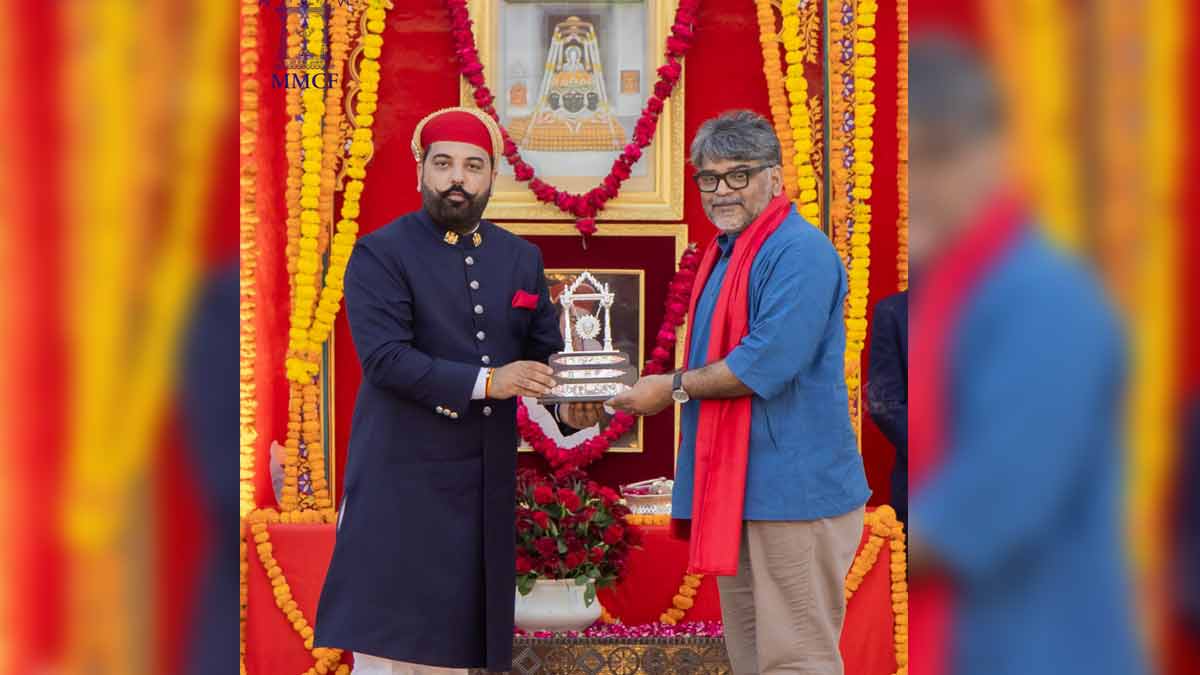
The Maharana of Mewar Charitable Foundation (MMCF) conferred its prestigious Haldi Ghati Award on Kamlesh Singh, a senior editor at the India Today Group, during a ceremony in Udaipur on 15 March 2026. The national award, instituted in 1981-82, recognises “work of permanent value that initiates an awakening in society through the medium of journalism.”
Singh, who leads several editorial initiatives including Aaj Tak Radio, the Teen Taal community and The Lallantop, was presented the honour by Lakshyaraj Singh Mewar, Managing Trustee of MMCF. The citation highlighted his three decades of contributions to Indian media, innovations in digital journalism, mentoring young reporters, and his popular podcast persona “Tau” on Teen Taal, which fosters thoughtful public discourse.
The Haldi Ghati Award, named after the historic Battle of Haldighati symbolising valour and resilience, is one of four national awards given annually by MMCF. Past recipients include Tavleen Singh, Piyush Pandey and Raj Chengappa.
Other honourees this year included Padma Vibhushan Pt Hari Prasad Chaurasia, Vedamurti Devvrat Rekhe, Treeman of India Marimuthu Yoganathan, Vir Chakra Capt Rizwan Malik, and US-based researcher Molly Emma Aitken, who received the Colonel James Tod Award for contributions to understanding Mewar’s spirit and values.
In an era where headlines often shout louder than substance, the MMCF quietly reminded everyone that real journalism isn’t about noise, it’s about the quiet, persistent work that stirs society awake, one thoughtful story at a time.