News Headline
Government moves SC against Andhra HC order on political ads

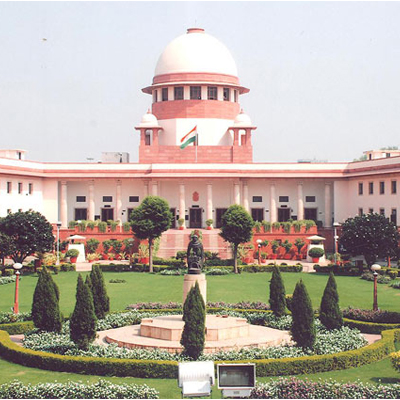
NEW DELHI: The government today appealed in the Supreme Court against an Andhra Pradesh high court order, which had quashed a ban on political advertisements on television channels, saying the view taken by the high court was “unsustainable” and the clause in the existing guidelines cannot be said to be “arbitrary or unreasonable.”
As reported by indiantelevision.com yesterday, the information and broadcasting ministry in the evening filed a Special Leave Petition (SLP) in the Supreme Court seeking a stay on the high court order passed on 23 March.
Under certain clauses in the Cable TV Network (Regulation) Act, 1995, which also form art of the programming and advertising code, political advertising is banned on TV channels. This part of the legislation, according to information available, has been contested before, especially during elections.

Gemini TV and P Kiran, amongst others, who had moved the Andhra high court seeking a relief against discrimination vis-a-vis print medium on various ground, have been named as respondents, along with the Election Commission and its various state level officials in Andhra Pradesh.
The government in its petition has also pointed out that in the UK, there is a similar provision in the Broadcasting Act and the ITC Advertising Standards that do not allow airing of ads whose objects are wholly or mainly political in nature.
Though the apex court hasn?¦t fixed a time for hearing of the SLP filed by the government, it is expected that the case may come up for hearing tomorrow. Interestingly, while seeking an interim relief, the SLP has sought an “ex parte ad interim order” from the SC.
On 23 March, the Andhra HC, based on a petition filed by Gemini Television Network, ETV and Maa TV, which challenged rule 7 (3) of the Act invoked by the I&B ministry and Election Commission to ban telecast of political advertisements, quashed the ban.
The court had also observed that the ban order amounted to discrimination between the two media (print and electronic) and was also violative of the right to freedom of trade and business.
The SLP has listed the following points, while seeking relief from SC and terming the high court order “erroneous”:
**The objective behind the prohibition on ads of political nature on cable networks is to prevent well-funded and resourceful individuals or organisations from using money power and the power of TV advertising to distort the balance of political debate and the electoral process.
**The provision (7[3] in the Cable TV Network [regulation] Act) has a rationale in that it seeks to create a level electoral field between various participants in the electoral process.
**The classification made in Rule 7(3) between the electronic and print media for the purpose of placing a restriction on political ads is valid and is based upon a rationale differentia having nexus with the object sought to be achieved.
**It is well settled that to satisfy the test of reasonableness, a restriction need not be all embracing.
**The order passed by the high court has serious ramifications for the on-going electoral process in the country and can result in distortion of the electoral process and confer unfair advantage on persons and parties endowed with resources. In the circumstances, it will be expedient in the interest of justice to stay the operation of the impugned judgment lest it prejudicially affects the on-going elections.




NEW DELHI: Hamdard Laboratories gathered a cross-section of India’s achievers in New Delhi on Friday, handing out the Hakeem Abdul Hameed Excellence Awards to figures who have left their mark across healthcare, education, sport, public service and the arts.
The ceremony, attended by minister of state for defence Sanjay Seth and senior officials from the ministry of Ayush, celebrated individuals whose work blends professional success with a sense of public purpose. It was as much a roll call of achievement as it was a reminder that influence is not measured only in profits or podiums, but in people reached and lives improved.
Among the headline awardees was Alakh Pandey, founder and chief executive of PhysicsWallah, recognised for turning affordable digital learning into a mass movement. On the sporting front, Arjuna Awardee and kabaddi player Sakshi Puniya was honoured for her contribution to the game and for pushing women’s participation onto bigger stages.
The cultural spotlight fell on veteran lyricist and poet Santosh Anand, whose songs have echoed across generations of Hindi cinema. At 97, Anand accepted the honour with characteristic humility, reflecting on a life shaped by perseverance and hope.
Healthcare honours spanned both modern and traditional systems. Manoj N. Nesari was recognised for strengthening Ayurveda’s place in national and global health frameworks. Padma shri Mohammed Abdul Waheed was honoured for his research-backed work in Unani medicine, while padma shri Mohsin Wali received recognition for his long-standing contribution to patient-centred care.
Education and social development also featured prominently. Padma shri Zahir Ishaq Kazi was honoured for decades of work in education, while former Meghalaya superintendent of Police T. C. Chacko was recognised for public service. Goonj founder Anshu Gupta received an award for his dignity-centred rural development initiatives, and the Hunar Shakti Foundation was honoured for empowering women and young girls through skill development.
The Lifetime Achievement Award went to former IAS officer Shailaja Chandra for her long career in public healthcare and governance, particularly in the traditional systems under Ayush.
Speaking at the event, Hamdard chairman Abdul Majeed said the awards were a tribute to those who combine excellence with empathy. “These awardees reflect Hakeem Sahib’s belief that healthcare, education and public service must ultimately serve humanity,” he said.
Minister Seth struck a forward-looking note, saying India’s young population gives the country a unique opportunity to become a global destination for learning, health and wellness by 2047.
The ceremony also featured the trailer launch of Unani Ki Kahaani, an upcoming documentary starring actor Jim Sarbh, set to premiere on Discovery on 11 February.
Instituted in memory of Unani scholar and educationist Hakeem Abdul Hameed, the awards have grown into a national platform that celebrates those building a more inclusive and resilient India. For one evening at least, the spotlight was not just on success, but on service with substance.






