News Broadcasting
Government looks set to ease up on DTH restrictions

The winds of DTH they are a blowin? Last week indiantelevision.com had reported that news emanating from Delhi indicated that that Star India had applied for a DTH licence through a company called Space TV.
The fact that Star India was indeed thinking of such an initiative was an indicator that the government may be backtracking on its tough stance on controls to DTH broadcast in India, was the surmise. Now, according to a report in a leading business daily, the government is considering just that. The government is reportedly weighing a proposal to remove the entry fee and bank guarantee totalling Rs 500 million as well as scaling down the 10 per cent revenue share agreement in its Ku band direct-to-home (DTH) television policy.
As per the present guidelines, companies applying for a DTH licence are required to pay an entry fee of Rs 100 million and a bank guarantee of Rs 400 million for 10-year licence period.

The report however, indicates that the government still has to ease up on what is seen as the key stumbling block to DTH take-off in India – the 20 per cent foreign direct investment equity cap in Indian DTH ventures. DTH wannabes are hoping that the FDI bar will be raised at least to 49 per cent and there is an easing up on “other anomalies” in the DTH policy announced last year like cross media restrictions.





News Broadcasting
CNN-News18 to host Fury in the Gulf conclave on West Asia crisis
Three-hour summit to unpack geopolitical fallout and impact on India
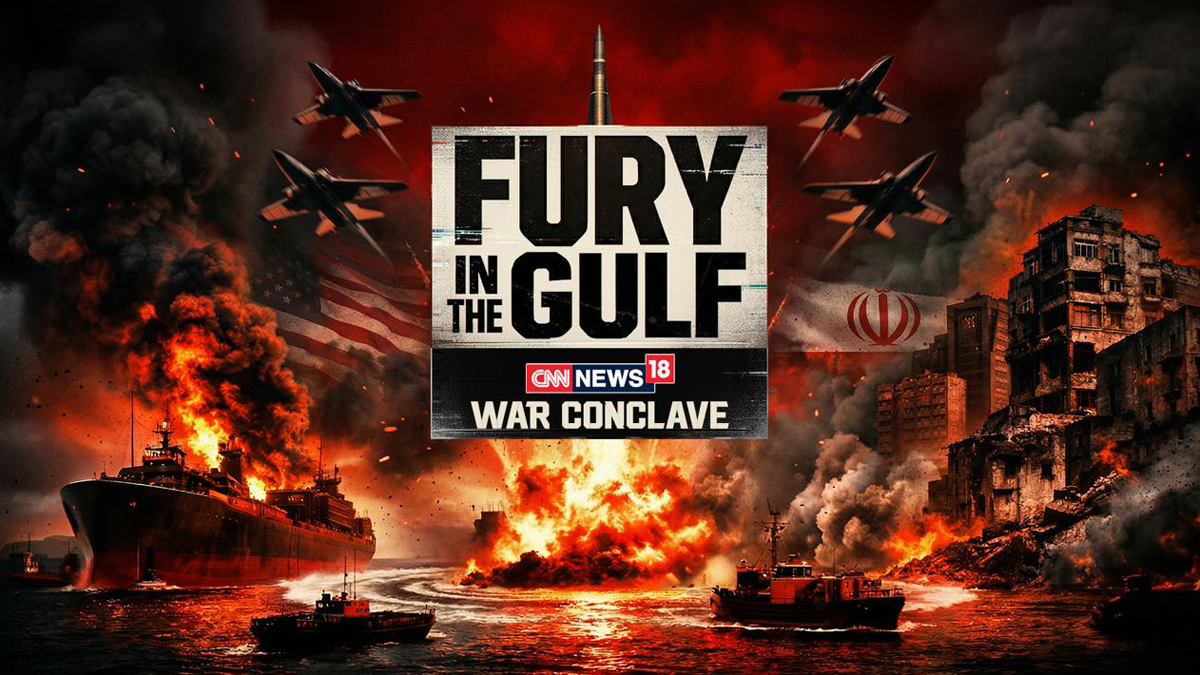
MUMBAI: CNN-News18 is set to host a special three-hour broadcast, Fury in the Gulf – War Conclave, on April 7, aiming to decode the escalating West Asia crisis and its far-reaching implications for India.
Scheduled from 4:00 PM to 7:00 PM, the conclave comes at a time when tensions between Iran and the United States are reshaping global geopolitics and triggering economic uncertainty. With India’s deep energy ties, trade links and large diaspora in the Gulf, the developments carry significant domestic relevance.
Built around the theme ‘Conflict, Consequences, and The Future,’ the programme will feature six curated sessions combining one-on-one interviews and panel discussions. The focus is to cut through the clutter and offer viewers a clearer understanding of the fast-evolving situation.
Key sessions include ‘Diplomacy in Times of War’ featuring Shashi Tharoor, and ‘World After the Iran Conflict’ with voices such as Ram Madhav, Reuven Azar, representatives from the European Union and the Iranian Deputy Envoy. Another session titled ‘Another Dunkirk?’ will bring together K. J. S. Dhillon and Jitin Prasada among others.
CNN-News18 editorial affairs director Rahul Shivshankar said, “In times of war, clarity becomes the most powerful tool. Fury in the Gulf – War Conclave brings together credible voices to address the questions and confusion that arise amid an overwhelming influx of information.”
He added that the initiative is aimed at delivering “facts, perspective, and insight” at a time when misinformation can easily cloud public understanding.
Echoing the sentiment, CNN-News18 CEO– English and business news Smriti Mehra said the conflict marks a defining global moment, with consequences that extend well beyond the region. She noted that the conclave seeks to present the crisis with “depth, nuance and responsibility” so audiences can better grasp its real-world impact.
As geopolitical tensions continue to dominate headlines, the conclave positions itself as an attempt to bring order to the noise, offering viewers a structured, insight-led look at a complex and rapidly shifting global situation.






