News Broadcasting
Government allays fears of media industry on Broadcast Bill

NEW DELHI: Fazed by strident criticism of certain provisions in a proposed Broadcast Bill, the government on Monday agreed to take industry’s concerns into consideration while drafting the legislation.
Briefing reporters after a meeting with the industry representatives on the eve of India’s Independence Day, information and broadcasting secretary SK Arora said, “We have agreed to take into account the views of the industry when we draft a final Bill on the subject.”
A Press Trust of India report said Arora also sought to assuage apprehensions of the industry on a provision dubbed “draconian” in certain sections of the media regarding the inspection, search and seizure of equipments.
“These are just apprehensions and the government has no intention to encroach on the independence of the media,” PTI quoted Arora as saying.

According to Arora, “This kind of criminal offences clause will be applicable only for three offences — unlicenced activity; telecasting anti-national content and something that may be sensitive from security perspective; and if certain directions of the Government on security and national integrity are not carried out.”
However, Indiantelevision.com learns that what was billed as a big ticket industry-government interaction did not turn out so as quite a few captains of the industry kept away from the meeting and Delhi, which is reeling under heavy security due to threats of large scale terrorist activity.
Interestingly, the meeting also got broken up into several smaller interactions with the minister and secretary briefing different people in different rooms.
Dasmunsi is also said to have expressed his ignorance on TV channels being directed by his ministry to scroll a public apology for three days for breaching advertising code.
Those who attended Monday’s meeting included Zee group’s Jawahar Goel, Discovery India head Deepak Shourie, India TV CEO Chintamani Rao, NDTV Profit head Vikram Chandra and Business Standard CEO and editor TN Ninan.
Industry bodies representatives included those from Indian Media Group, Indian Broadcasting Foundation, Indian Newspaper Society and several other media companies.



News Broadcasting
CNN-News18 to host Fury in the Gulf conclave on West Asia crisis
Three-hour summit to unpack geopolitical fallout and impact on India
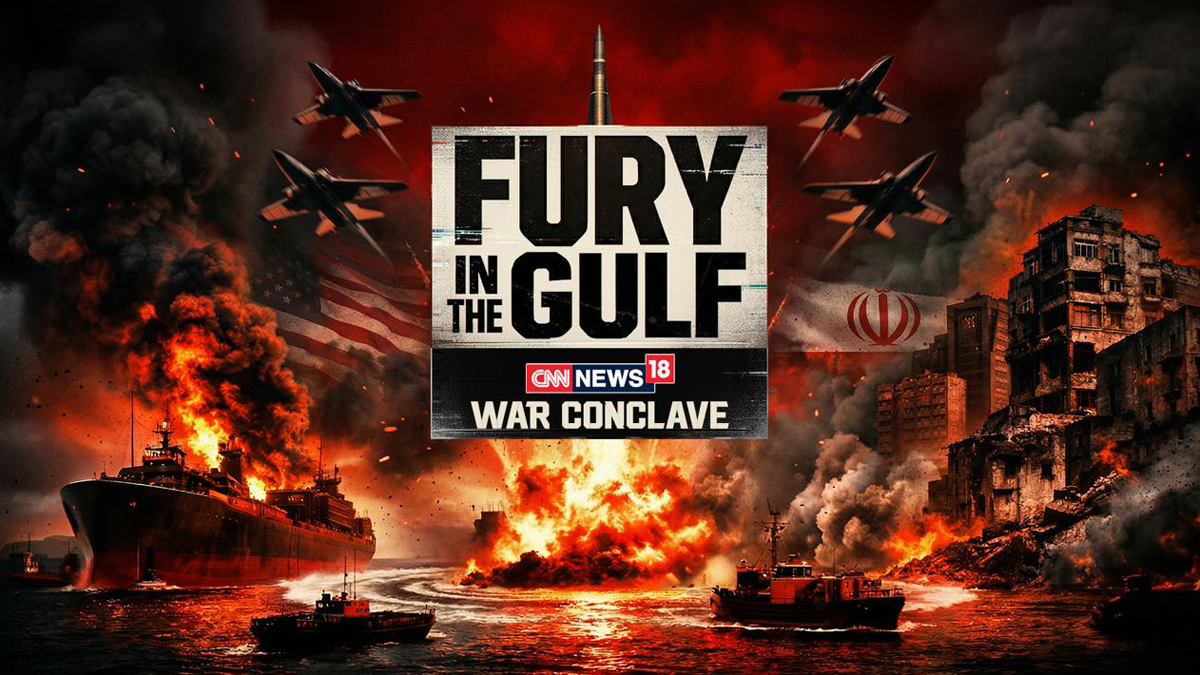
MUMBAI: CNN-News18 is set to host a special three-hour broadcast, Fury in the Gulf – War Conclave, on April 7, aiming to decode the escalating West Asia crisis and its far-reaching implications for India.
Scheduled from 4:00 PM to 7:00 PM, the conclave comes at a time when tensions between Iran and the United States are reshaping global geopolitics and triggering economic uncertainty. With India’s deep energy ties, trade links and large diaspora in the Gulf, the developments carry significant domestic relevance.
Built around the theme ‘Conflict, Consequences, and The Future,’ the programme will feature six curated sessions combining one-on-one interviews and panel discussions. The focus is to cut through the clutter and offer viewers a clearer understanding of the fast-evolving situation.
Key sessions include ‘Diplomacy in Times of War’ featuring Shashi Tharoor, and ‘World After the Iran Conflict’ with voices such as Ram Madhav, Reuven Azar, representatives from the European Union and the Iranian Deputy Envoy. Another session titled ‘Another Dunkirk?’ will bring together K. J. S. Dhillon and Jitin Prasada among others.
CNN-News18 editorial affairs director Rahul Shivshankar said, “In times of war, clarity becomes the most powerful tool. Fury in the Gulf – War Conclave brings together credible voices to address the questions and confusion that arise amid an overwhelming influx of information.”
He added that the initiative is aimed at delivering “facts, perspective, and insight” at a time when misinformation can easily cloud public understanding.
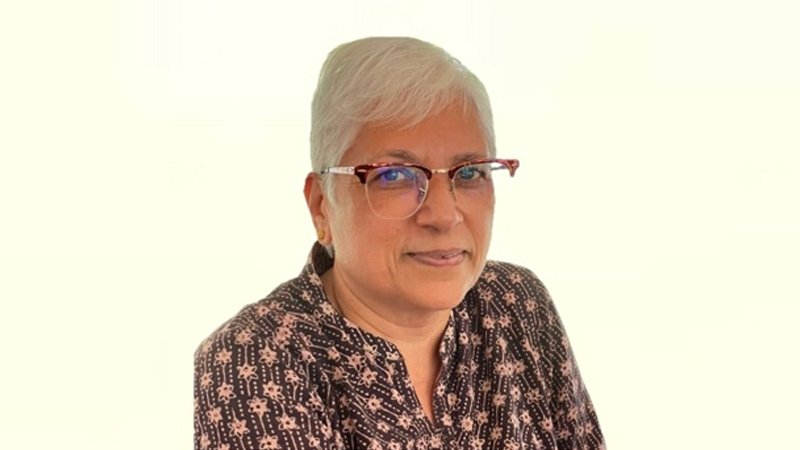
Echoing the sentiment, CNN-News18 CEO– English and business news Smriti Mehra said the conflict marks a defining global moment, with consequences that extend well beyond the region. She noted that the conclave seeks to present the crisis with “depth, nuance and responsibility” so audiences can better grasp its real-world impact.
As geopolitical tensions continue to dominate headlines, the conclave positions itself as an attempt to bring order to the noise, offering viewers a structured, insight-led look at a complex and rapidly shifting global situation.






