eNews
Google starts up Telangana as new Hyderabad hub powers AI ideas

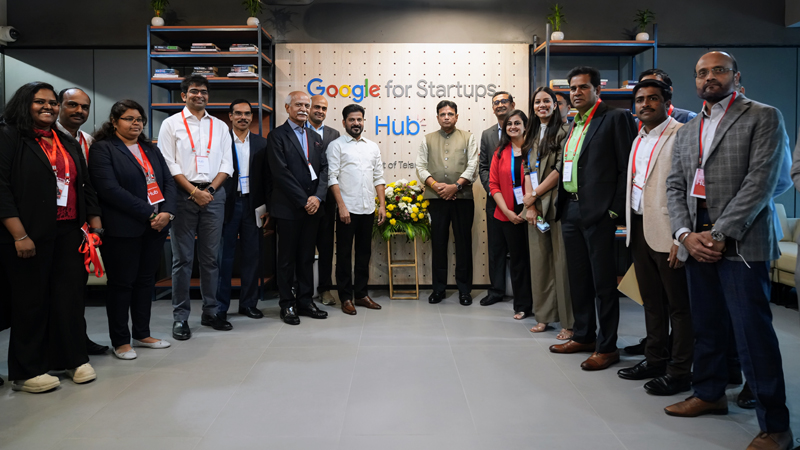
MUMBAI: Hyderabad didn’t just get a new tech address, it just got a launchpad. In a move that sends a clear signal about where India’s next wave of AI-led innovation will rise, Google and the Government of Telangana have unveiled the Google for Startups Hub at T-Hub, creating a first-of-its-kind powerhouse for founders ready to build for India and the world.
Unveiled on 10 December 2025 by chief minister A. Revanth Reddy and IT & industries minister D. Sridhar Babu, the Hub marks Google’s first formal entry into a state-backed incubation ecosystem. And it arrives with a clear mission: to supercharge AI-first startups with the tools, talent and global access they need to scale.
At its core, the Hub will offer free year-long coworking seats for selected AI-led startups, access to a curated pool of venture investors, and hands-on mentoring from Google experts across AI/ML, product, UX, and go-to-market. With T-Hub’s ecosystem as its backbone, this space is designed to take founders from raw ideas to globally deployable innovations without ever leaving Hyderabad.

But this isn’t just an urban story. Both Google and Telangana emphasised that the Hub would extend its impact across Tier-2 and Tier-3 cities, ensuring no founder with ambition is left behind. Support for women entrepreneurs, student innovators, and early-stage developers forms a key part of the programme’s design.
Chief minister Revanth Reddy framed the launch as a transformational moment for the state. “This is more than infrastructure. It is a promise that ideas conceived in Telangana will have the mentorship, technology and access to scale globally,” he said, calling the Hub a foundation stone for a globally competitive innovation ecosystem.
Minister Sridhar Babu underscored the state’s intent to help startups “experiment boldly, scale efficiently, and compete globally,” while special chief secretary Sanjay Kumar noted that the initiative would ensure founders across Telangana could access world-class resources “without leaving the State.”
Representing Google India, country manager Preeti Lobana said the Hub would serve as an “innovation flywheel”, enabling founders to tap into everything from Google Cloud and Android to Play, Ads and developer programmes, helping startups build responsibly with deep-tech and AI at their core.
Beyond infrastructure, the Hub promises a thriving community space with networking zones, event arenas, pitch forums, mentoring sessions, market access programmes, and alumni networks effectively forming a cradle-to-scale pipeline for the country’s next set of AI champions.
For Telangana, it’s another stride in cementing its identity as one of India’s most forward-looking innovation capitals.
For Google, it’s a new ground zero for AI talent. And for startups, it’s a door flung open with Hyderabad at the centre of the action.






eNews
Piyush Thakur steps down as Inshorts’ chief revenue officer
Former vice president and cro says exit marks a new chapter after close to a decade of building revenue and partnerships at Inshorts Group.
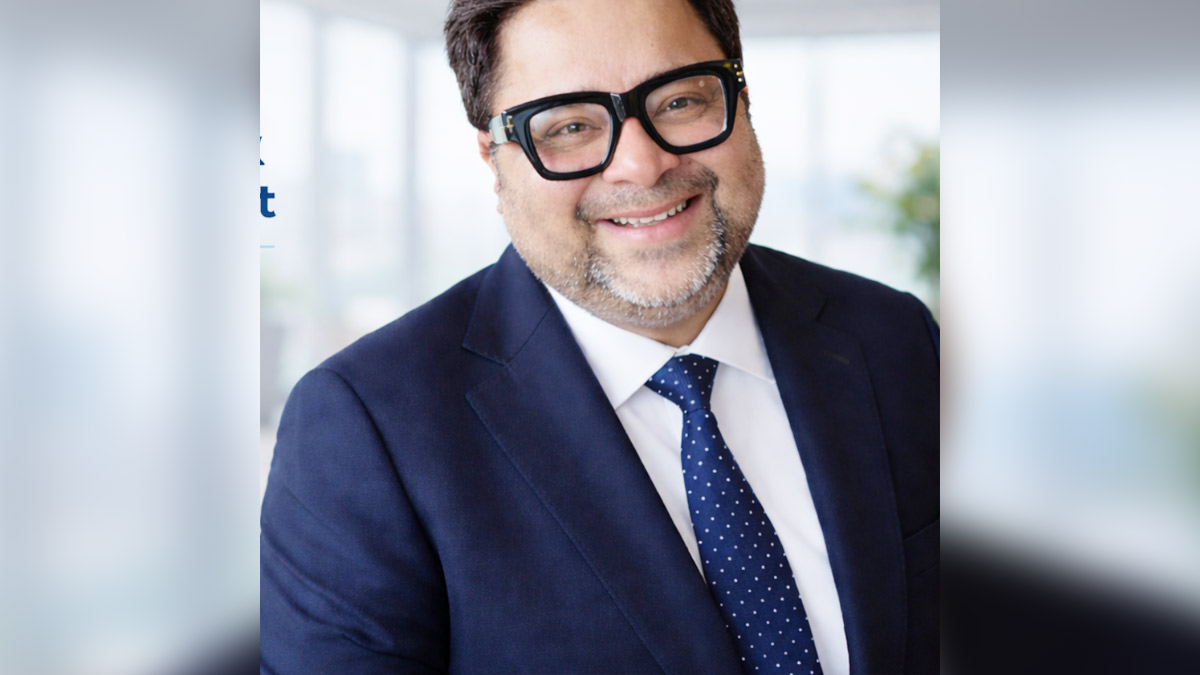
NOIDA: Piyush Thakur has stepped away from Inshorts Group after nearly 10 years with the company, marking the end of a long tenure that culminated in his role as chief revenue officer.
In a farewell note, Thakur said he was “turning a new page” after almost a decade at Inshorts, calling it one of the hardest professional decisions he has made. He added that his exit was not driven by uncertainty about the future, but by reflection on a long association with the company.
Thakur joined Inshorts in October 2016 as vice president and spent around seven years in the role before being elevated to chief revenue officer in April 2024, a position he held until April 2026.
He said his tenure was defined by “thousands of mornings, late nights, product debates and breakthrough moments”, as the company evolved into a large-scale digital news platform used by millions.
In his note, Thakur emphasised that Inshorts’ growth was a collective effort across teams, adding that engineers, designers, sales teams and customer support staff all contributed to building the platform. He said the company’s success was not the result of individuals but of “everyone who stayed, passed through, and left their mark”.
Before Inshorts, Thakur worked across several digital media and business development roles. At ESPN, he served as senior regional manager from October 2015 to October 2016, focusing on growth initiatives, strategic opportunities and video distribution.
At Times Internet, he worked for nearly three years, including as head of business development from April 2015 to September 2015 and chief manager from January 2013 to March 2015. His responsibilities included monetisation of mobile platforms, managing media and developer partnerships, and driving revenue across digital properties such as The Times of India and The Economic Times.
Earlier, he worked at Brandmovers as head of business development from June 2012 to June 2013, handling digital, mobile and social media marketing solutions, client development and strategic consulting. During this period, he also worked on advertising revenue, brand strategy and CRM-based solutions.
At Inshorts, Thakur’s role focused on revenue strategy, mobile and media partnerships, and growth initiatives across platforms. His profile highlights experience in mobile product management, digital business models, partner ecosystems and revenue expansion in high-growth environments.







