Applications
Google rolls out live headphone translation, supercharges Translate with Gemini

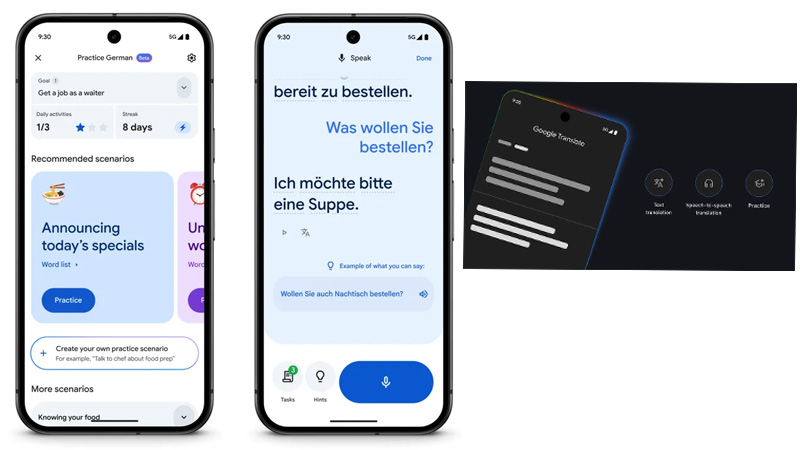
MUMBAI: Google has begun rolling out a beta feature that delivers real-time language translation directly through headphones, turning any pair into a live, one-way interpreter.
Announced on Friday, the update allows users to hear spoken translations while preserving the speaker’s tone, cadence and emphasis, making conversations easier to follow. The feature is accessed via the Google Translate app by tapping “Live translate”.
The beta is now live on Android in the US, Mexico and India, supporting over 70 languages and working with any headphones. Google plans to extend the feature to iOS and additional markets in 2026.

Google is also adding advanced Gemini-powered capabilities to Translate, promising smarter and more natural translations, particularly for idioms, slang and local expressions. Phrases such as “stealing my thunder” will now be translated by meaning rather than word-for-word.
The Gemini update is rolling out in the U.S. and India, enabling translations between English and nearly 20 languages, including Spanish, Arabic, Chinese, Japanese and German, across Android, iOS and the web.
In parallel, Google is expanding its language-learning tools to nearly 20 new countries, including India, Germany, Sweden and Taiwan. New features include personalised speaking feedback, progress streak tracking and broader language support, bringing the experience closer to dedicated learning apps such as Duolingo.







Applications
With 57 per cent single new users, Ashley Madison rebrands as discreet dating platform
Platform says majority of new members now identify as single

INDIA: Ashley Madison is shedding the “married-dating” label that defined it for two decades, repositioning itself as a platform for discreet dating in what it calls the post-social media age.
The rebrand, unveiled in India on 27 February, 2026, marks a structural shift in business model and identity. Once synonymous with married dating, the company now describes itself as the “premier destination for discreet dating” under a new tagline: Where Desire Meets Discretion.
The pivot is data-driven. Internal figures show that 57 per cent of global sign-ups between 1 January and 31 December, 2025 identified as single: a notable departure from the platform’s married core. The company argues that its community has already evolved beyond its original positioning.
“In an age where our lives have been constantly put on public display, privacy has become the new luxury,” said Ashley Madison chief strategy officer Paul Keable. He framed the platform’s offering as “ethical discretion” for singles, separated, divorced and non-monogamous users seeking private connections.
The shift also taps into wider digital fatigue. A global survey conducted by YouGov for Ashley Madison, covering 13,071 adults across Australia, Brazil, Canada, Germany, India, Italy, Mexico, Spain, Switzerland, the UK and the US, found mounting discomfort with hyper-public online lives.
Among dating app users, 30 per cent cited constant swiping and messaging as a source of fatigue, while 24 per cent pointed to pressure to curate public-facing profiles and early personal disclosure. Some 27 per cent said fears of screenshots or information being shared contributed to exhaustion; an equal share cited unwanted attention.
The retreat from oversharing appears broader. According to the survey, 46 per cent of adults actively try to keep most aspects of their life private online. Only 8 per cent feel comfortable sharing most aspects publicly, while 35 per cent say they are becoming more selective about what they disclose.
Ashley Madison is betting that this cultural recalibration towards controlled visibility can be monetised. By doubling down on privacy infrastructure and reframing itself around discretion rather than infidelity, the company is attempting to convert reputational baggage into a premium proposition.






