GECs
GoM shelves Convergence Bill plan

NEW DELHI: India today dumped onto the backburner its attempt to have an over-arching law for the convergence era (telecom, broadcasting and infotech) with a high-powered group of ministers (GoM) today deciding against pursuing the Convergence Communications Bill (CCB) as broadcasting issues cannot be covered entirely under it.
The GoM on telecom also recommended that the 49 per cent cap on foreign direct investment (FDI) and foreign institutional investors (FII) be hiked to 74 per cent in the telecom sector, but the management control should remain with the Indian operator. However, the panel did not deliberate whether a similar foreign investment cap in cable ventures should also be raised.
The GoM is of the view that since content and other broadcasting relating issues is being unable to be brought under the CCB, the law “is not being pursued” at the moment, communications minister Arun Shourie told reporters after the first week of GoM, which is headed by finance minister Jaswant Singh.

According to Shourie, the GoM felt that the fast developments in the broadcast sector needs a separate regulatory body and cannot wait for the CCB to be enacted into a law after looking into the amendments suggested by a parliamentary panel.
With this move, the proposal to have a separate regulatory body for broadcast sector gets a major fillip.
Though information and broadcasting minister Ravi Shankar Prasad tried to play down this victory of sorts, sources in the ministry indicated that now work on a broadcast regulatory authority would be speeded up.
In principle, Prasad has been in favour of a separate broadcasting regulatory authority or a commission to oversee issues related to the sector like CAS, surrogate advertising, direct-to-home(DTH) television service and content on TV channels that did not adhere to the programming code of India.
Ministry sources said that the proposed broadcast authority would be more or less in line with a similar framework that had been outlined in the Broadcast Bill, 1997 introduced in Parliament by the then United Front government. The Bill could not be pursued as the government was voted out of power at the Center
Contacted by indiantelevision.com, a senior executive of a foreign-owned media company said that a separate broadcast regulatory framework is a positive step.
Meanwhile, the FDI cap will stay at 49 per cent for the telecom sector, while FIIs would be allowed to go for another 25 per cent stake, taking the total foreign investment limit to 74 per cent, Shourie explained.
The GoM has also finalised its recommendations on six of the eight issues referred to it, and the remaining two issues would be taken up at the next meeting on October four, he said.







GECs
Pocket FM partners with Indian Open Pickleball 2026
Audio platform joins forces with major tournament to engage young fans.
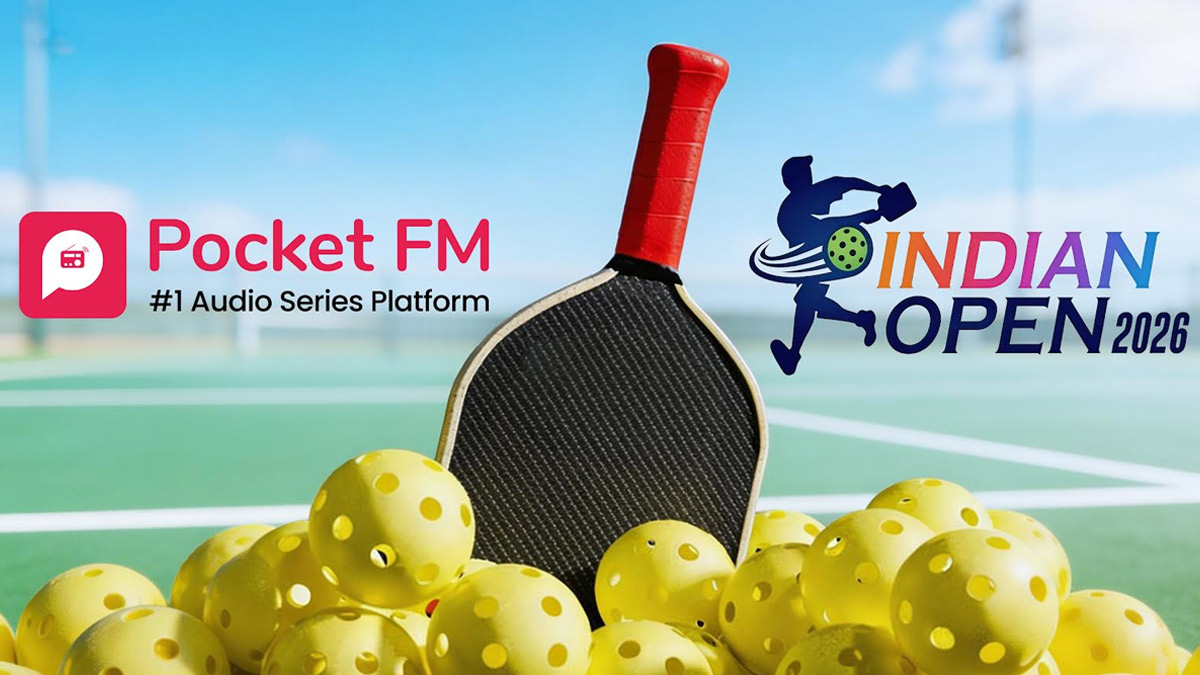
MUMBAI: Pocket FM just served up a perfect partnership because when audio storytelling meets pickleball’s fast-paced rallies, even the sidelines start listening. Pocket FM, the world’s largest audio series platform, has announced a strategic partnership with Indian Open 2026, one of India’s biggest pickleball tournaments organised by Global Sports in Hyderabad in association with Pickl’Out and Crosscourts Sports Club.
The collaboration brings Pocket FM’s immersive storytelling to one of the fastest-growing emerging sports in India. Pickleball, known for its accessibility, energy and strong community appeal, is rapidly attracting younger, digitally savvy audiences making it an ideal platform for Pocket FM to deepen its cultural relevance.
Under the partnership, Pocket FM will enjoy extensive on-ground and digital visibility throughout the tournament, which begins on 1 April 2026. This includes centre court branding, venue-wide presence, presenting rights for select matches, player lounge branding, team jersey integration, and strong integration across live streaming and social media.
Pocket FM, SVP and global head for brand marketing and partnerships Vineet Singh said, “Pickleball is building a strong connection with young and engaged audiences in India. This partnership allows us to connect with people in a meaningful way through strong on-ground presence and digital visibility.”
Global Sports and Indian Open 2026, founder Hemal Jain added, “Partnering with Pocket FM adds an exciting new dimension to the experience. As a brand that has built deep resonance with young audiences, Pocket FM is a strong fit for the energy and ambition of this tournament.”
The move reflects Pocket FM’s continued strategy of aligning with emerging passion points and building deeper engagement with communities driven by competition and shared experiences.
In a country where sports and stories often collide, Pocket FM isn’t just sponsoring a tournament, it’s turning every rally into a narrative, proving that the best audio moments sometimes happen when the paddle meets the ball.









